The Story of Cigar Boy
has moved! You can find the all new and improved version here! (http://www.guitar-muse.com/unlikely-connections-unison-tapping-7805)

The Story of Cigar Boy
has moved! You can find the all new and improved version here! (http://www.guitar-muse.com/unlikely-connections-unison-tapping-7805)
6/5/12
.
The official version of this book has been released as both a print and PDF version, so I’m leaving this page up as a pointer for historical purposes (and so that people who are interested in the book can get some more detailed information).
.
All ordering information (including an overview of the book and jpegs of sample pages) can be found here.
.
Thanks!
-SC
Hello all,
.
I wanted to take a break from the excerpts from the modes book I’ve been posting and post a lesson that’s based on material from my new Harmonic Combinatorics Book. In that book, I have an entire section about using triads and 7th chords to create more complex sounds.
.
Here’s the two sentence synopsis:
.
Seeing (and making sense of ) the bigger picture:
.
When beginning players see a 3rd position C major chord they see something like this:
.
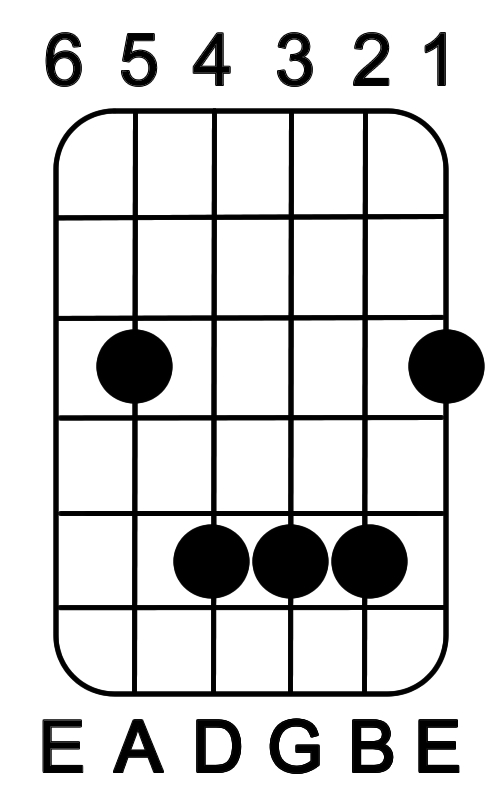
.
But an experienced player sees something more like this:
.
One of the secrets to seeing more of the fretboard is to see chord tones relationally. I’ll show you how to do that by applying some of the approaches from a previous Triad Transformation lesson:
.
Taking a C major chord:
.

C Major Triad
.
(here’s a reference chord):
.
.
Lowering the root a 1/2 step gives you a major 7 chord:
.
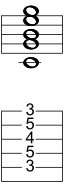
C Major 7
.
C Major 7:
.
.
Lowering the 3rd a 1/2 step gives you a 9th. Since there’s no other 3rd in the chord – this becomes a slash chord of G Major over C (written G/C). It has a lot of the sound of a major 9th chord – but because it’s missing the 3rd it really only implies the tonality.
.
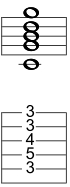
G / C
.
G/C:
.
.
If you want this to sound like a Major 9th, we’ll need to add a 3rd in as well.
.

C Major 9
.
C Maj 9
.
.
Lowering the 5th a 1/2 step gives us the #4 (aka the # 11). Here I’ve kept the 3rd to make it a Major 9 (#11) chord.
.

C Major 9 (#11)
.
C Maj 9 (#11)
.
.
Notice that if we lower the root a 1/2 step – we have a B minor triad:
.

B Minor
.
So, as a short cut, playing a B minor over C we imply the sound of a C major 9 (#11) chord without having to memorize a separate voicing.
.
Melodic Application
This extends into lead playing as well. Rather than just playing a C major arpeggio over a C chord, here I’ve replaced the bottom note of a B minor arpeggio with a C and resolved it to C:
.

B min / C or C Lydian Lick
.
C Lydian lick (louder than the chord mp3s- FYI):
.
.
Here’s another chord voicing of B minor/C:
.
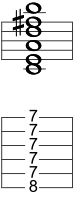
B minor / C
.
When I see voicings that use the middle notes of the 7th fret, I generally try to think of ways to incorporate harmonics into it. In this example, I’ve added harmonics in to fill out a B minor arpeggio with some encircling to resolve it to C. I forgot the fermata on the first chord – but you’ll figure it out when you hear the mp3.
.
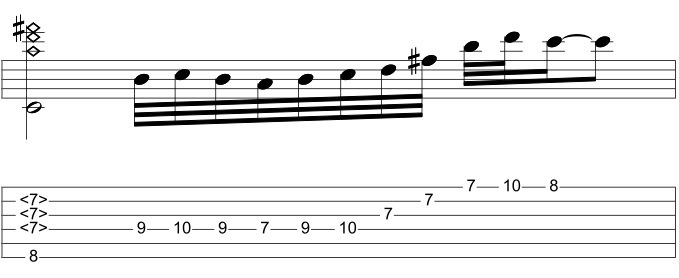
B min / C aka C Lydian Lick 2
.
C Lydian Lick 2:
.
.
Now we’ll take this in a different direction: playing B minor over A minor implies a cool A minor 13 sound. I’ve added an A to lick #1, and a semi-chromatic run that skips the 3rd and makes it a more open sound.
.

B min / A min – A Dorian Lick
.
B min/A Dorian Lick:
.
.
I’ve resolved the lines to the root notes of the chords I’m playing over – but you may want to stay on a tension depending on the context.
.
With any approach like this – always use your ears as a guide for what sounds good and what doesn’t.
.
The Quiz:
Did you notice anything about the C major voicings? Using a B minor triad doesn’t take it to the 13th.
.
In any chord tone voicing, raising the 5th a step gives you the 6th (if no 7th is in the chord) or (in this case) the 13th So using our initial voicings, the easiest way to bring in the 13th is to raise the G on the high E string to A.
.
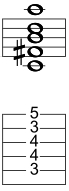
B min 7 / C Implying C maj 13 (#11)
.
.
Looking at at a little deeper,
if we fully spell out this chord:
.
the top 3 notes form a D major chord. As a modified rule for playing over a major chord:
.
.
As with any material here, pay attention to the 3 T’s (Timing, (hand) Tension and Tone) and just go through the lesson at your own pace and return to it as you need to.
.
I hope this helps and as always, thanks for reading!
.
-SC
.
P.S. If you like this post – you may also like:
Welcome to the part eight of the GuitArcitecture Mode Visualization lesson series.
If you see anything unfamiliar here, you may want to check out:
.
.
In the last lesson, I took a look at adapting minor chords to modes and modal interchange. In this lesson – I’m going to apply the same process to major chords.
.
Note:
I’ve outlined this process thoroughly in part 7, so if you have questions – just check the instructions there.
.
One Chord Modal Interchange Exercise – Major
.
Of the parent major scale modes I’ve been covering – there are 3 that can be used over an A major chord:
.
.
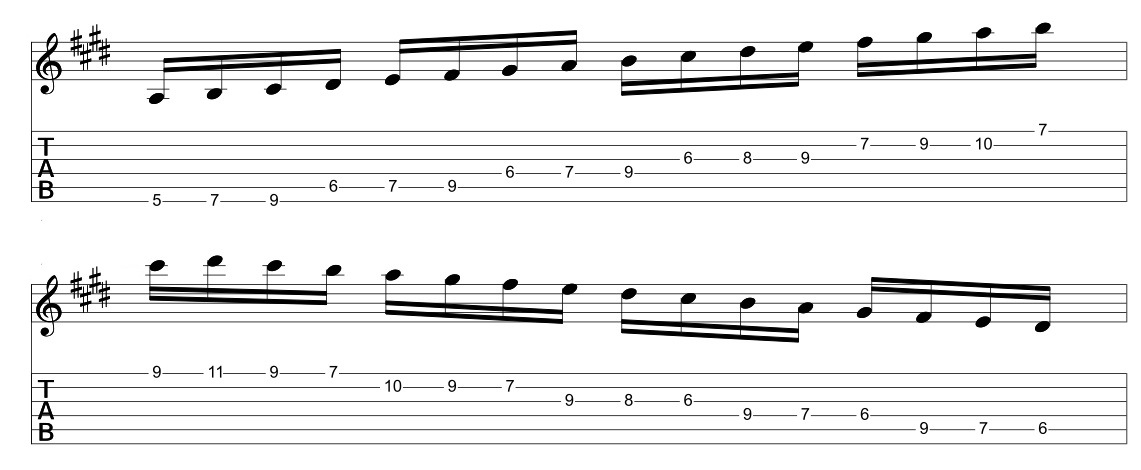
A Lydian – Click to enlarge
.
.

A Ionian – Click to enlarge
.
.
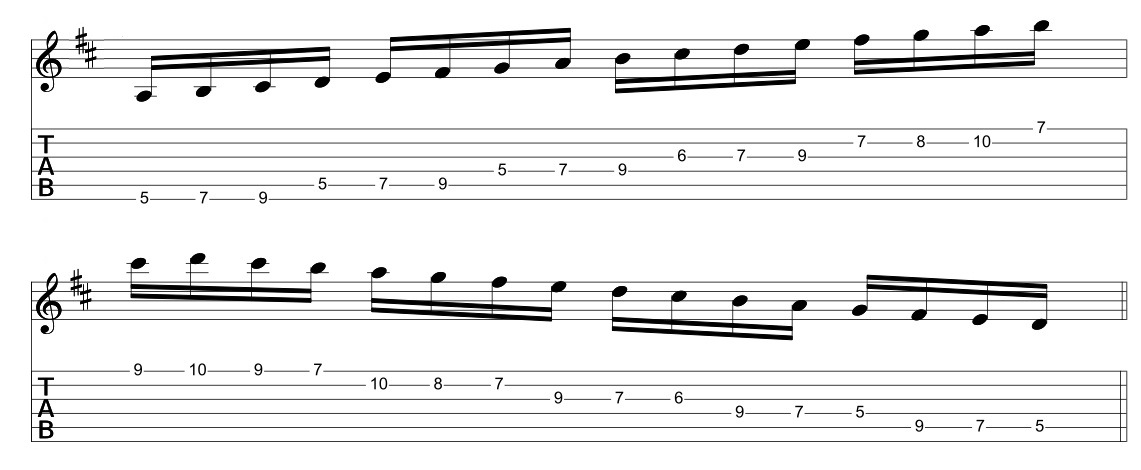
A Mixolydian – Click to enlarge
.
Here’s the major-based chord progression:
.
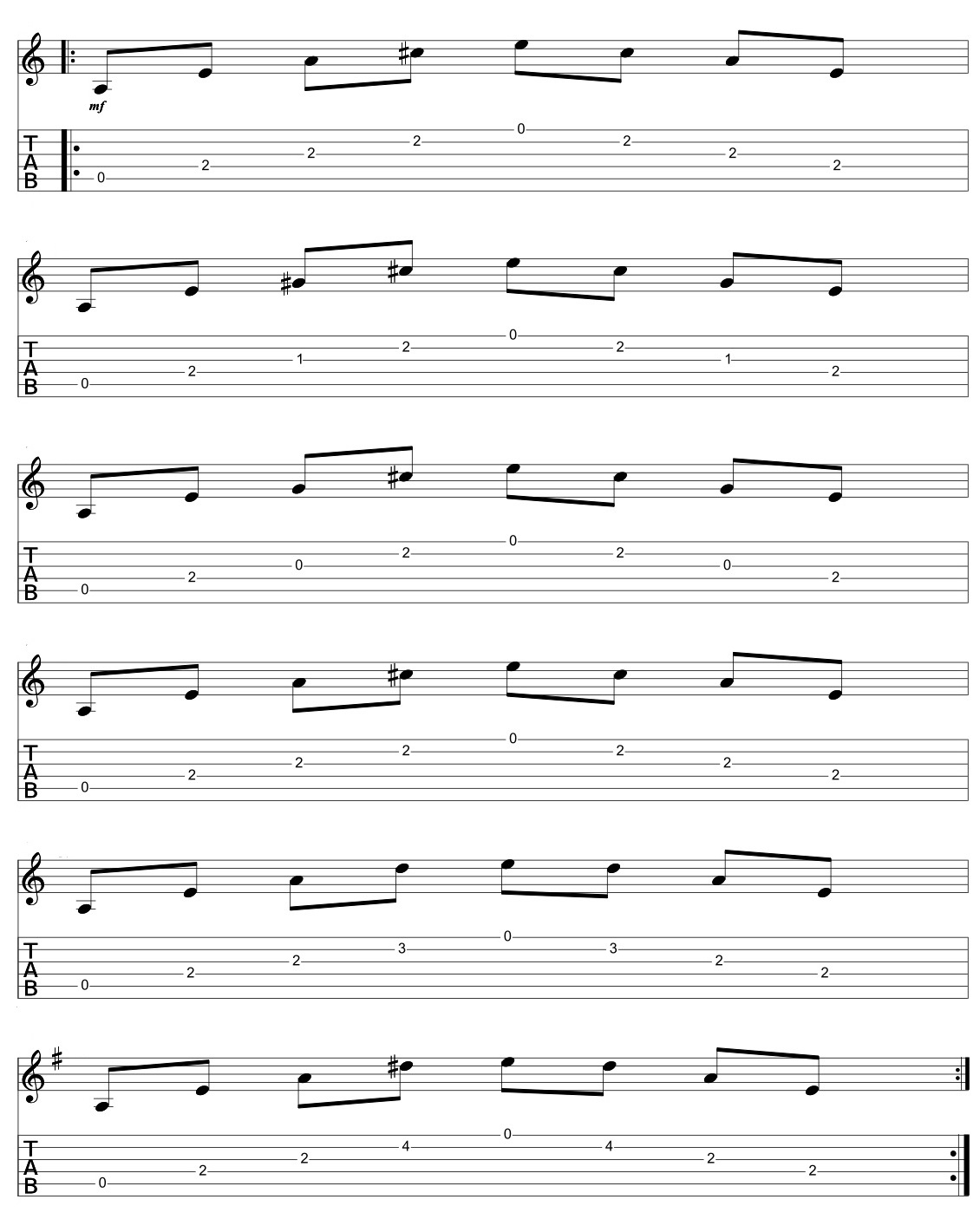
Repeat each bar 2-4 times ** Click to enlarge**
.
Here are the steps (repeated from Part 7):
.
Note:
Make sure you don’t start every bar with the low A root!
The goal of this is to be able to switch between modes “mid-stream”. As a first step, when playing these ascending and descending make sure that wherever you are in the pattern ascending or descending that you transition into the next mode smoothly. The initial goal here isn’t speed – it’s fluidity and being in control of switching between modes.
(See the melodic note below for some other tips once you get comfortable with the transition).
.
Now let’s examine each chord (and mode) individually:
.
..

A Major – Play A Lydian, A Ionian or A Mixolydian – Click to enlarge
.
The modes could be played over this chord are:
.
A Lydian (recommended), A Ionian (be careful of the 4th) and A Mixolydian
.
.
Lowering the root to G# creates an A major 7 chord – which works with either A Lydian or A Ionian.
.

A Major 7 – Play A Lydian or A Ionian – Click to enlarge
.
.

A7 – Play A Mixolydian – Click to enlarge
.
.
.

A sus4 – Play A Ionian or A Mixolydian – Click to enlarge
.
.

A Major (add #11) – Play A Lydian – Click to enlarge
.
The chord progression then goes back to A major where any of the 3 modes could be used.
.
Notes:
.
.
.
The nice thing about playing with human beings (rather than sequences) is that people can introduce random factors into playing. A person can make all kinds of melodic or harmonic decisions that require the other person to change and adapt. It develops a dialog and allows people to become more attune to playing with other people (and ultimately more musical).
.
The next lesson will cover a go a little deeper into modal chord progressions and offer some new challenges. As before, just go through the lesson at your own pace and return to it as you need to. Also please feel free to post any questions you might have (or pm me at guitar.blueprint@gmail.com).
.
I hope this helps and as always, thanks for reading!
.
-SC
.
P.S. If you like this post – you may also like:
Welcome to the seventh installment of the GuitArcitecture Mode Visualization lesson series.
If you see anything unfamiliar here, you may want to check out:
.
.
In the last lesson, I took a look at the modes and the circle of 5ths. In this lesson, I’m going to:
.
.
Complimenting Modes with Chords
.
A lot of print has been used to describe how modes fit with chords but substantially less has been written about modifying chords to fit various modes. I’ve developed this approach as an introductory way to work on modal interchange it does three things:
.
(All useful skills to have – btw). Since I’ve been dealing with C major – I’m going to look at A minor (the relative minor chord) first.
.
One Chord Modal Interchange Exercise – Minor
.
Before we get into the exercise, let’s make sure we’re clear about the modes we’ll be using. Of the parent major scale modes I’ve covered – there are 3 that can be used over an A minor chord:
.
.

Click to enlarge
.
.
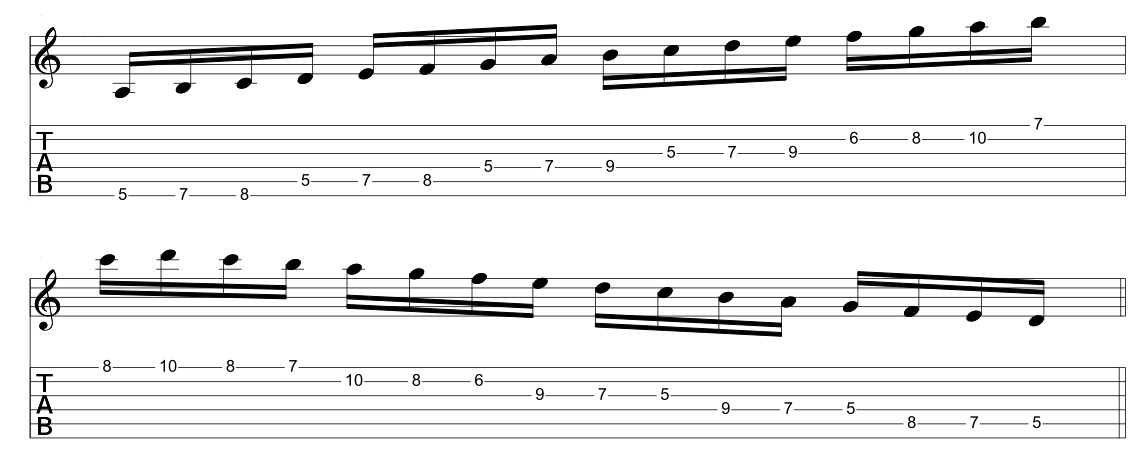
Click to enlarge
.
.

Click to enlarge
.
Here’s the accompaniment pattern:
..

Repeat each bar 2-4 times ** Click to enlarge**
.
Here are the steps:
.
Note:
Make sure you don’t start every bar with the low A root!
The goal of this is to be able to switch between modes “mid-stream”. As a first step, when playing these ascending and descending make sure that wherever you are in the pattern ascending or descending that you transition into the next mode smoothly. The initial goal here isn’t speed – it’s fluidity and being in control of switching between modes.
(See the melodic note below for some other tips once you get comfortable with the transition).
.
Now let’s examine each chord (and mode) individually:
.
.

A minor – Play A Dorian, A Aeolian or A Phrygian – Click to enlarge
.
In order of increasing darkness, the modes could be played over that chord are:
.
A Dorian, A Aeolian and A Phrygian
.
.
The first mode explored in this example will be A Phrygian. Since Phrygian’s characteristic note is the b2, I’ll change the 2nd root (A) with the b2 (Bb) creating an A minor (add b9).
.

A minor add b9 – Play A Phrygian – Click to enlarge
.
.

A minor add 9 – Play A Dorian or A Aeolian – Click to enlarge
.
.

A minor add 9 add b6 – Play A Aeolian – click to enlarge
.
.
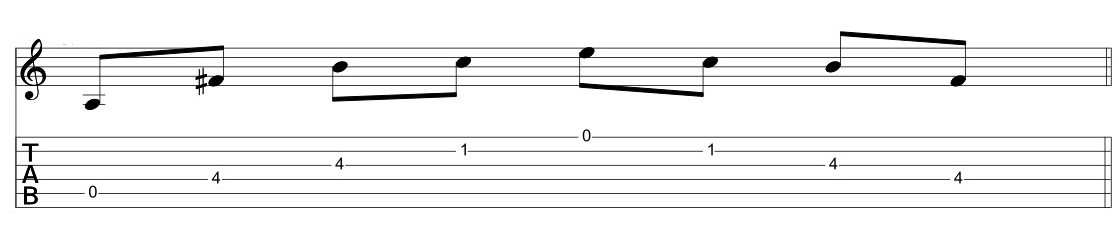
A minor add 6, 9 – Play A Dorian – Click to enlarge
.
The chord progression then goes back to A minor where any of the 3 modes could be used.
.
Notes:
.
.
The nice thing about playing with human beings (rather than sequences) is that people can introduce random factors into playing. A person can make all kinds of melodic or harmonic decisions that require the other person to change and adapt. It develops a dialog and allows people to become more attune to playing with other people (and ultimately more musical).
.
The next lesson will cover Major chord variations in this same style. But if you want to get a head start the process is the same as what I just covered, the characteristic notes for the major modes are:
.
Lydian: #4
Major: Natural 7
Mixolydian: b7
.
As before, just go through the lesson at your own pace and return to it as you need to. Also please feel free to post any questions you might have (or pm me at guitar.blueprint@gmail.com).
.
I hope this helps and as always, thanks for reading!
.
-SC
.
P.S. If you like this post – you may also like:
Welcome to the sixth installment of the GuitArcitecture Mode Visualization lesson series.
If you see anything unfamiliar here, you may want to check out:
.
.
In the last lesson, I took a look at using one fingering pattern to play all of the modes. I wanted to get the sounds under your fingers a little bit and then start to explain a context for them a little more.
In this lesson, I’m going to go into modal interchange more in-depth. To get deeper into modes, we need to talk about Relative Modes versus Parallel Modes, examine tonal centers and keys and talk about Modal Interchange.
..
Organizing the sounds of the different modes:
.
.
For Example:
To determine the scale formula of, say, C Mixolydian, the notes of C Mixolydian would be compared to the notes of a C major scale.
.
Relative versus Parallel Major
C major is the relative major scale to A natural minor (A Aeolian) because both are part of the same parent major scale
.
C major is the parallel major scale of C natural minor (C Aeolian).
In this case they share a common root, but C natural minor has a different parent major scale than C major.
.
Here’s a table that shows the parallel modes of C Major and their scale formula.
.

..
.
The Tonal Cycle of 5ths
.
Listing the modes in order of scale degree (Ionian, Dorian, etc.) is one way to work through the modes but a more logical way to see the relationship of the modes is to place them in a tonal circle of 5ths. So first let’s talk about the circle of 5ths versus the tonal circle.
.
The circle of 5ths:
The circle of fifths is a way to see all of the major and minor keys and key signatures in a logical order. The Wikipedia page on it offers an excellent detailed explanation – but seeing the actual circle will help clear things up.
.

.
From the pitch C :
..
This is a very handy and compact way to see tonal centers and relative major/minor scales – but adapting it to a tonal circle of 5ths will help clarify modes in a very unique way.
.
The Tonal Cycle of 5ths:
.
In a tonal circle of 5ths, the circle moves in diatonic 5ths (and thus stays in a particular key). In the key of C it looks like this:
.
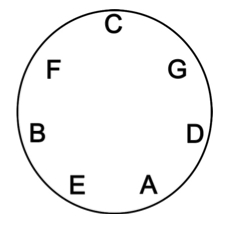
The next note in a circle of 5ths after B would be F#, but keeping it in a tonal cycle of 5ths the key of C major, the next note would be F natural.
Now that we have a tonal cycle of 5ths in C Major, let’s fill in the modes associated with each note of C Major.
.

.
Now let’s insert the scale formula of each mode:
.
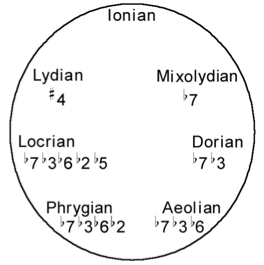
.
Note:
the scale formula is listed as a series of cumulative alterations rather than sequential.
In general, the more flats in the modal scale formula, the darker the sound.
.
 ..
..
Modal Interchange
.
The key to using these to create modal sounds is what is called Modal Interchange.
.
As a simplified definition – a mode associated with a specific chord will work over the same chord in any other key. In other words, D Dorian could be played over any D minor 7 chord in any other key that has a D minor 7 chord in it.
.
Rather than thinking of modal ideas when I play, an easier way (for me) to think about modal sounds is to think of parent scales since all the modes are derived from a parent scale (and it’s less to keep track of).
.
If I’m playing a song in the key of F major:
If I use notes from the F major scale, I’m playing in D Aeolian.
If I use notes from the Bb major scale, I’m playing in D Phrygian.
.
Since I’ve been dealing with C major – I’ll give a C parallel mode example:
.
If you want a C Lydian sound – you’re really talking about playing a G parent major scale over a C Major / C Major 7th) chord or a C major chord progression. Here’s a shortcut:
.

.
Note (repeated from part 5):
This is a tricky area. While I use a parent scale approach to visualize how I solo over chords, I am aware of the chord tones (and tensions) and tend to focus on those melodically.
Just running up and down a scale isn’t going to help you really nail changes in the long run, it’s just going to fill space that often doesn’t need filling sonically.
That being said, the first step in any playing process is knowing where to put your fingers – so working through scales is as good a place to start as any….
For beginning or intermediate players new to this – like I said before, just worry about associating the modes, fingerings and sounds for now.
..
Next Steps
.
In the next part of this series I’m going to give some major and minor positional approaches and talk about a cool way to use modes to modify chords. In the meantime you may want to familiarize yourself with the shapes in part 3b of the lesson series.
As before, just go through the lesson at your own pace and return to it as you need to and please feel free to post any questions you might have (or pm me at guitar.blueprint@gmail.com).
.
I hope this helps and as always, thanks for reading!
.
-SC
.
P.S. If you like this post – you may also like:
In the better late than never category, SooperLooper snuck out a new update last week (v1.6.18). SooperLooper is an awesome FREE software version of the Gibson Echoplex EDP.
.
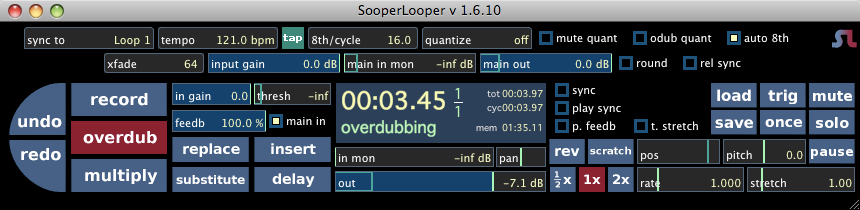
Image from http://www.essej.net/sooperlooper/
.You can download it here.
.
From the website:
“SooperLooper is a live looping sampler capable of immediate loop recording, overdubbing, multiplying, reversing and more. It allows for multiple simultaneous multi-channel loops limited only by your computer’s available memory.
The application is a standalone JACK client with an engine controllable via OSC and MIDI. It also includes a GUI which communicates with the engine via OSC (even over a network) for user-friendly control on a desktop. However, this kind of live performance looping tool is most effectively used via hardware (midi footpedals, etc) and the engine can be run standalone on a computer without a monitor.
SooperLooper is currently supported on Linux and Mac OS X, and any other platforms that support JACK. The Mac OS X package is usable with at least the 0.6 release of JACK OS X. Note that for OS X Tiger, you’ll need to get at least version 0.7 of JACK-OSX.
A Mac OS X Audio Unit version is included which does not require JACK to run.”
.
This is a critical component of my live laptop rig. It offers unparalleled opportunities for live sonic mangling. If you have a mac (or run Linux) you should stop whatever you’re doing and download it now!
(Then if you keep it – please throw Jesse (the developer) some money for the tip jar. He’s put a lot of work into it!)
.
Thanks for reading!
-SC
.
P.S. If you like this post you may also like:
Hello!
Thanks for visiting this page!
This post has been moved to my other site Guit-A-Grip.com.
You can read it here.
Thanks again!
-Scott
Welcome to the fifth installment of the GuitArcitecture Mode Visualization lesson series.
If you see anything unfamiliar here, you may want to check out:
.
.
About The Modal Exchange Example
Since describing how interchanging modes work doesn’t really get you any closer to hearing how they work – I’m going to present a simple exercise first and then explain the process of what’s going on theoretically in the post following this one.
.
Using one pattern to get all the sounds of the major scale modes:
.
As I’ve discussed before the modes of the C major scale are all related. Each individual mode has a different root but all belong to the same parent scale.
.

.
That being said, if I use any C major pattern (like this one with C played with the first finger on the 8th fret of the low E string):
.

C Ionian
.
and move the note C to different scale degrees – I’ll have all of the parallel modes (or modes have the same root notes – but belong to different parent scales) based on the pitch C.
.
So if, for example, I take the same pattern and move C to the 2nd scale degree (with C played with the second finger on the 8th fret of the low E string) I’ll have C Dorian.
.
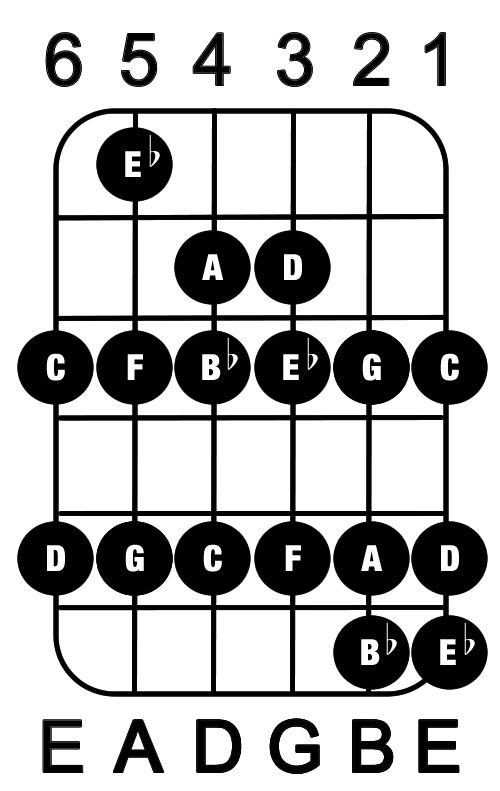
C Dorian
.
Moving it to the 3rd scale degree (with C played with the 4th finger on the 8th fret of the low E string) produces C Phrygian.
.
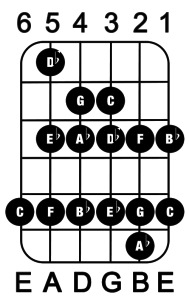 .
.
On the 4th scale degree (with C played with the first finger on the 3rd fret of the A string) – I’ll have C Lydian.
.

C Lydian
.
The 5th scale degree (with C played with the second finger on the 3rd fret of the A string) – produces C Mixolydian.
.

C Mixolydian
.
On the 6th scale degree (with C played with the fourth finger on the 15th fret of the A string) – I’ll have C Aeolian.
.
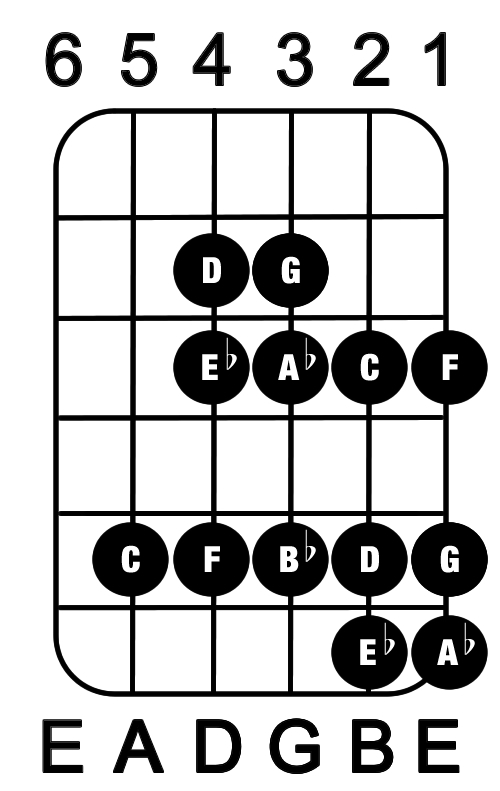
C Aeolian
.
And finally, if I move it to the 7th scale degree (with C played with the first finger on the 10th fret of the D string) – I’ll have C Locrian.
.
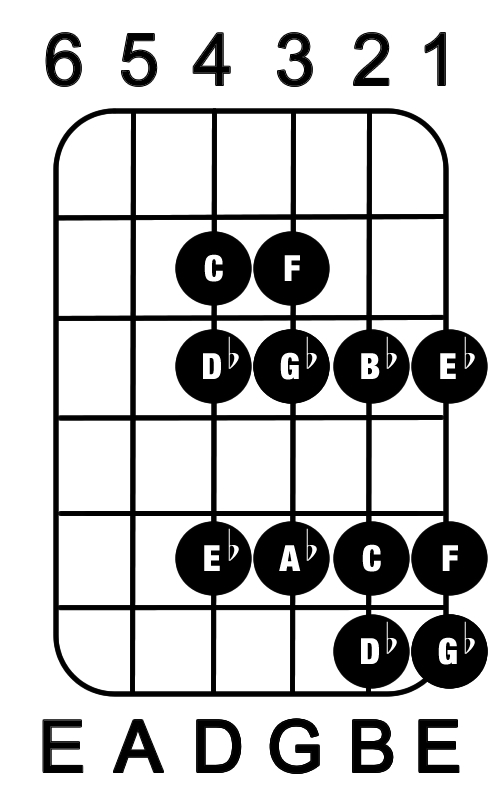
C Locrian
.
Taking stock of the exchange:
.
Now I’ll show a musical example that uses this one shape to play all of the parent major scale/natural minor scale modes.
.
Note:
This is not the most efficient way to get around the fingerboard but it can help with 3 things.
.
What you’ll need
.
.
The drone is very important because the drone and the combination of notes will be what helps you hear the change in modes (and tonality).
.
Playing the Example
.
I’ve created a simple one bar phrase for each mode.
All you have to do is play them over the C drone, in the order I’ve listed below and in time.
.
That being said, here are some additional things to keep in mind:
.
.
Note:
If you really want to get something more out of it – try singing along with the pitches as you’re playing them. This sounds goofy to most people but singing really is the way to get the sounds into your ear.
.
Take this as a piece of advice learned by many people who take four terms of ear training at the collegiate level. If you look at those 4 terms as 3 units each that’s 12 units or a full term load (at most for-profit colleges at $18-19,000 a term).
.
In other words, people spend a lot of money to sing things to train their ear, doing it for free on your own is a good idea.
.
.
First, here are the individual measures.
..

C Lydian

C Ionian
.

C Mixolydian
.

C Dorian
.

C Aeolian
.

C Phrygian
.

C Locrian Option 1
.
If you want to keep a low register pattern – you can try starting the Db Major pattern from the 7th putting 4 notes on the low E string).
.

C Locrian Option 2
.
and here’s the whole thing:
(Just click to see full size)
.

 .
.
Going Further
.
.

C Lydian Lick
.
.
Note: The scale degrees stay the same when I move to C Ionian but the F# becomes F natural.
.

C Ionian Lick
.
The same phrase changes the B to Bb when moved to C Mixolydian:
.

C Mixolydian
.
The lack of an Eb in the phrase means that the notes are the same between Mixolydian and Dorian in this case – just played in different position.
.

.
Moving it to Aeolian, the A natural becomes Ab.
.

C Aeolian Lick
.
The D becomes Db in C Phrygian.
.

C Phrygian Lick
.
And finally, changes the G to Gb for C Locrian:
.

C Locrian Lick
.
From the light to the Dark.:
I’ll be talking about how I derived the order I’m using for the mode progression in the next lesson post on the circle of 5ths, the tonal circle of 5ths and talk about how these relate to modal interchange. For now here’s a shortcut to consider until next time.
.
In general the more flats a mode has in its scale formula – the darker its sound.
.
.
Note:
This is a tricky area for intermediate students. While I use a parent scale approach to visualize how I solo over chords, I am aware of the chord tones (and tensions) and tend to focus on those melodically.
When soloing, Just running up and down a scale isn’t going to help you really nail changes – it’s just going to fill space that often doesn’t need filling sonically.
.
For beginning or intermediate players new to this – like I said before, for now just worry about associating the modes, fingerings and sounds.
.
I’ll be talking about each of the modes in-depth in future posts, but for now understand that each mode of Major, Melodic Minor or Harmonic Minor has its own unique characteristics that are worth exploring.
.
As before, just go through the lesson at your own pace and return to it as you need to and please feel free to post any questions you might have (or pm me at guitar.blueprint@gmail.com).
.
I hope this helps and as always, thanks for reading!
.
-SC
.
P.S. If you like this post – you may also like:
A routine can be a powerful thing in productivity. It helps instil a sense of inertia and, as I’ve talked about in posts like this, or this one , keeping the ball rolling is usually a lot easier than initially getting it to roll. The counter-intuitive reality behind doing things is that:
.
Activity leads to other activity. It creates its own inertia.
Bodies at rest tend to stay at rest.
.
The counter-intuitive part of this is when you’re sitting on a sofa and think, “I’m really tired. I just have to rest for a second and mentally gear myself up for this”. Inertia is working at keeping you sitting on the couch. If there’s a TV on or an internet connection – it’s working double time.
.
The reality is that just getting up and doing the thing actually takes less energy that expending the energy debating with yourself about whether or not you have the tools or the energy to do something.
.
The caveat is that this assumes we’re talking about moderate activity. If you’ve just run a marathon, I’m not advocating staying on your feet if you need to rest. I’m talking about procrastination versus physical exhaustion.
.
Procrastination is an energy suck
.
Completing projects is invigorating. It’s that energy that comes from getting something done and thinking, “All right – what’s next?” It takes way more mental energy to keep putting something off than to just deal with it.
.
Here are some tips that may be helpful:
.
.
I Done This
Neither a typo or an obscure pop reference, I want to thank my friend Daren Burns for bringing this to my attention. I done this.com is a cool free online productivity tool that combines some of the tips that I’ve mentioned above, Here’s a quote from the web page:
.
“iDoneThis is an email-based productivity log. This evening, you’ll receive your first email from us asking, “What’d you get done today?” Just respond to our email and we record what you wrote into your calendar. Use your progress from yesterday to motivate you today.”
By helping to monitor progress and helping keep consistency and accountability, this could be something to help get the ball rolling for you. If you have something you’ve been putting off doing (like practicing) try it for a week and see what happens.
.
I hope this helps! Thanks for reading.
.
-SC
.

 GuitArchitecture.org
