Rough Hewn Trio – Some Live Excerpts

The Rough Hewn Trio –  an instrumental trio consisting of Chris Lavender on Warr guitar, Craig Bunch on drums and myself on guitar are getting back into the rehearsal cycle and gearing up for some shows this spring.  To get a feel for what the shows will be like here are some live excerpts from some improvisations we did this fall.  The live sets – will include a combination of pre-composed and improvised material.

For those of you who are interested – this session is all drums and laptops.  I’m running Pod Farm and Sooperlooper and Chris is using Guitar Rig. (an amp was used to re-amp the guitar in 1C – which had some gnarly digital distortion tho…)

Note:

mp3 playback is sometimes a little glitchy in Safari.  If it doesn’t play in your web browser – you may just have to reload/refresh the playback page.

Enjoy!

-SC

Improv 2b

Improv 2a

Improv 1c

Guitarchitecture Post Featured In Guitar Player Holiday 2010 Issue – Quick Licks Section

It’s been a couple of productive days – The pentatonic/blues lick that was featured in the quick lick/rig du jour post has been featured in the Guitar Player Holiday 2010 issue. It’s the issue with Santana on the cover.  Thanks again to Matt Blackett  and the GP staff!

The long overdue Tubtime cd, “We Bleed The Sun And Make It Pay” – is finally up for sale on Itunes and on the CD baby tubtime page. Featuring the talents of Patty Barkas, Geof Chase, Joe Rauen and Keichi Hashimoto – Tubtime was the first project I was involved with that was based solely on of structured improvisation and in many mays was a cornerstone of what I do now. In addition to cd baby and Itunes – it’s also available on emusic should be available on Amazon and any other digital distribution service over the next several months.

Rough Hewn Trio @ CalArts was a big hit!  We should have video/audio up soon.

More info coing soon!  Thanks for dropping by!

Tubtime: “We Bleed The Sun And Make It Pay” now available on CD Baby

The long overdue Tubtime cd, “We Bleed The Sun And Make It Pay” – is finally up for sale on the CD baby tubtime page, and should be available on Itunes and Amazon over the next several months.

Featuring the talents of Patty Barkas, Geof Chase, Joe Rauen and Keichi Hashimoto – Tubtime is an experiment in 2003 to see if an accessible cd of structured improvisation could be successfully executed.

The CD notes are below:

Tubtime has its roots in work in the unholy union of drummer/engineer Geoff Chase’s “Directive 4″ project that featured rock improvisation with various Boston musicians and guitarist Scott Collins’ goal to be able to work with musicians of such a high caliber that they could perform a full set of improvised material that sounded pre-composed.

Over the course of 2003-2004 Tubtime ended up with several cds worth of material that will all hopefully see the light of day. The music is being finally released after numerous relocations and other various hold ups, because we kept running into people who had heard of us (or heard the tracks) despite having never played live. While we haven’t performed since then – the threat of more music is always a real one.

“We Bleed The Sun And Make It Pay” was the culmination of 4 such sessions. All of the music was written and tracked live and in real time (although, Geoff took some of the improvised material and used it as transitional material on transitional tracks.)

The poem on the cover photo (taken by Joe Rauen) was inspired by a quote attributed to Dick Cheney who rationalized a series of governmental policies by saying, “this is out due.” It was such an incredibly brazen sense of entitlement that the poetic fragment was written around it.

Visually, the Tubtime project was working around a “disturbed child” aesthetic with lots of pictures with distorted perspective and coloring outside of the lines. I think that the music captures some of that as well. There is a certain honesty of immediacy that comes from real improvisation – and hopefully that translates as well.

There was no real concept when we recorded the tracks, but I developed one when assembling the cd. As the tracks were mixed and sequences there was a specific story line worked out involving themes of narcissism, paranoia and altered states of perception.

“We Bleed The Sun and Make It Pay” is a type of sonic documentary of where we all were at the time of recording it. As it takes a couple of minutes to develop each of the pieces – I think It works best as a bumpy 58 minute sonic journey. I hope you enjoy both the turbulence and the scenery.

The tracks were performed by:
Patty Barkas – vocals
Geoff Chase – drums
Scott Collins –guitar & loops
Keichi Hashimoto – trumpet
Joe Rauen – bass & loops

Thanks for reading!

Rough Hewn Trio

I just wanted to take a second to announce a new project I’ve been working on with Chris Lavender  and Craig Bunch.  Rough Hewn Trio is a project that mixes through composed ideas with heavy doses of improvisation.

We have our first gig this Thursday @ CalArts where we’ll be accompanying Germaine Dulac’s La Souriante Madame Beudet (The Smiling Madame Beudet) and Teinosuke Kinugasa’s  Brilliant “lost” film – Kurutta Ippeiji, (aka Page of Madness or Page out of order).

Craig and I have done a preliminary mix of some live recordings we’ve made – so we should have videos and mp3s up on a dedicated site soon with other novel things like an EPK and a bio.

Thanks for reading!  More info coming soon.

An observation from a session

Last night I had an improv session with Warr Guitarist Chris Lavender and Drummer Craig Bunch.

We had originally planned on using amps – but with a limitation on the bass amp as a DI – we ended up going direct.

I ran out the FX send of my atomic to the laptop for cab sims (IR’s) and  looping – Chris went direct out of his Guitar Rig control.  With the Atomic – I don’t know if the signal hits the FX send Pre or post poweramp – but it sounded really good.

Craig ran both signals to mic pres (i didn’t get the make) before going into Pro-tools.

Headphone mixes were a little iffy -but everyone was listening through the mains nodding their head with an – “oh yeah”!

Next time we’re bypassing the amps entirely.  We figure we can use them live but the recording sounds were strong enough that we’re willing to go direct.

I can’t tell you how many years I’ve waited to have a feasible laptop guitar rig.   Pretty amazing to actually have it here.

No ringing in my ears today also was a nice touch as well…

Guitar Street in Ho Chi Minh City Vietnam

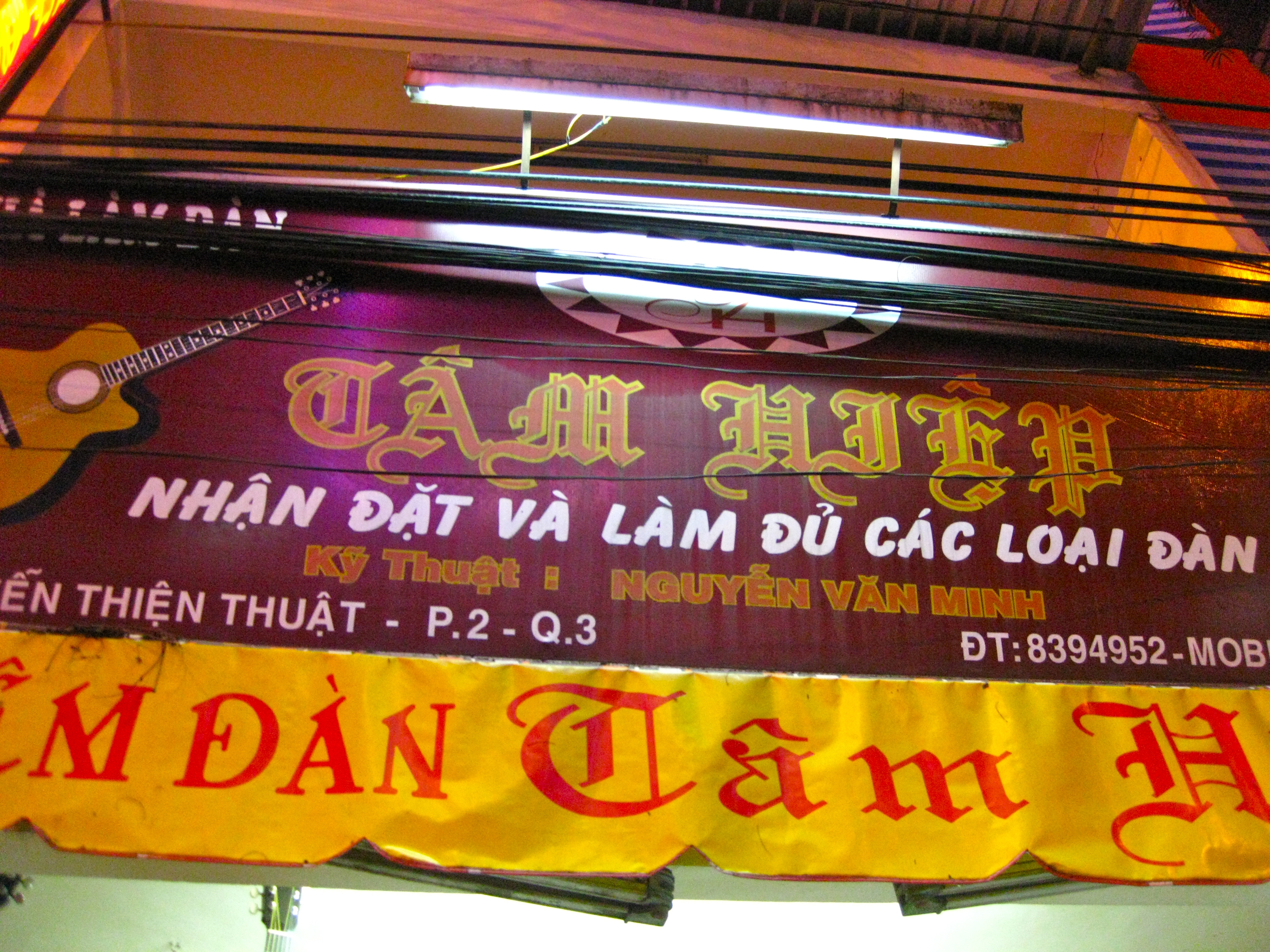
After reading a great set for forum posts on harmony central (link is broken) about a guitar factory in Vietnam – I decided to try to find the guitar street – a 500 meter stretch of Nguyen Thien Thuat street (between Nguyen Thi Minh Khai and Nguyen Dinh Chieu) with over 20 guitar shops.  The one that I’ve read about online the most is Duy Ngoc (named after the owner), but the harmony central article mentioned another builder, Binh – who works out of Tam Hiep @ 36 Nguyen Thien Thuat.
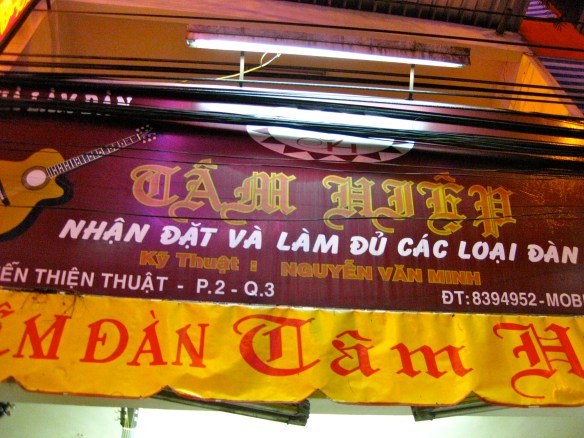
Binh is an awesome guy and has a large number of low end guitars and some really impressive handmade instruments.

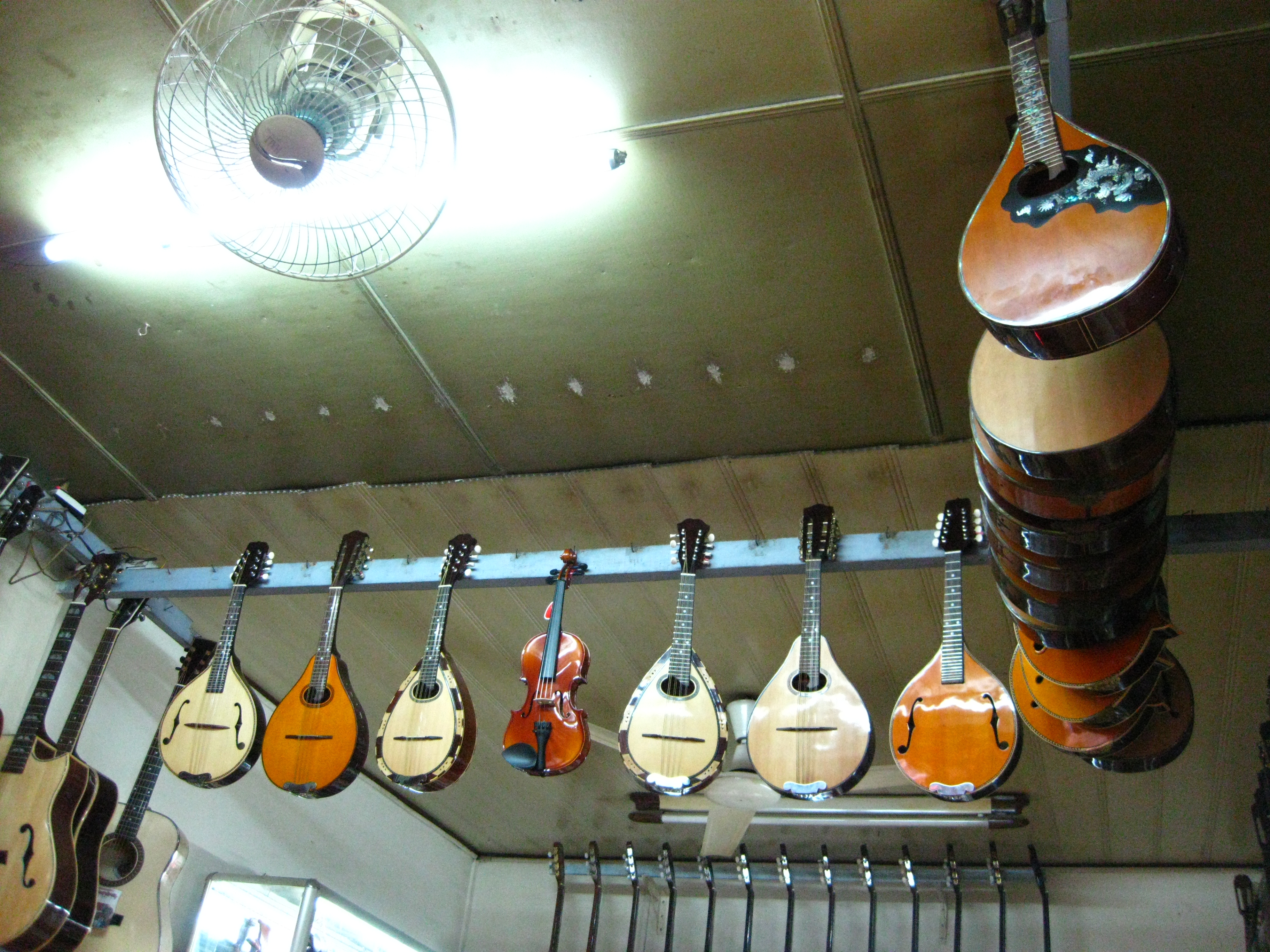
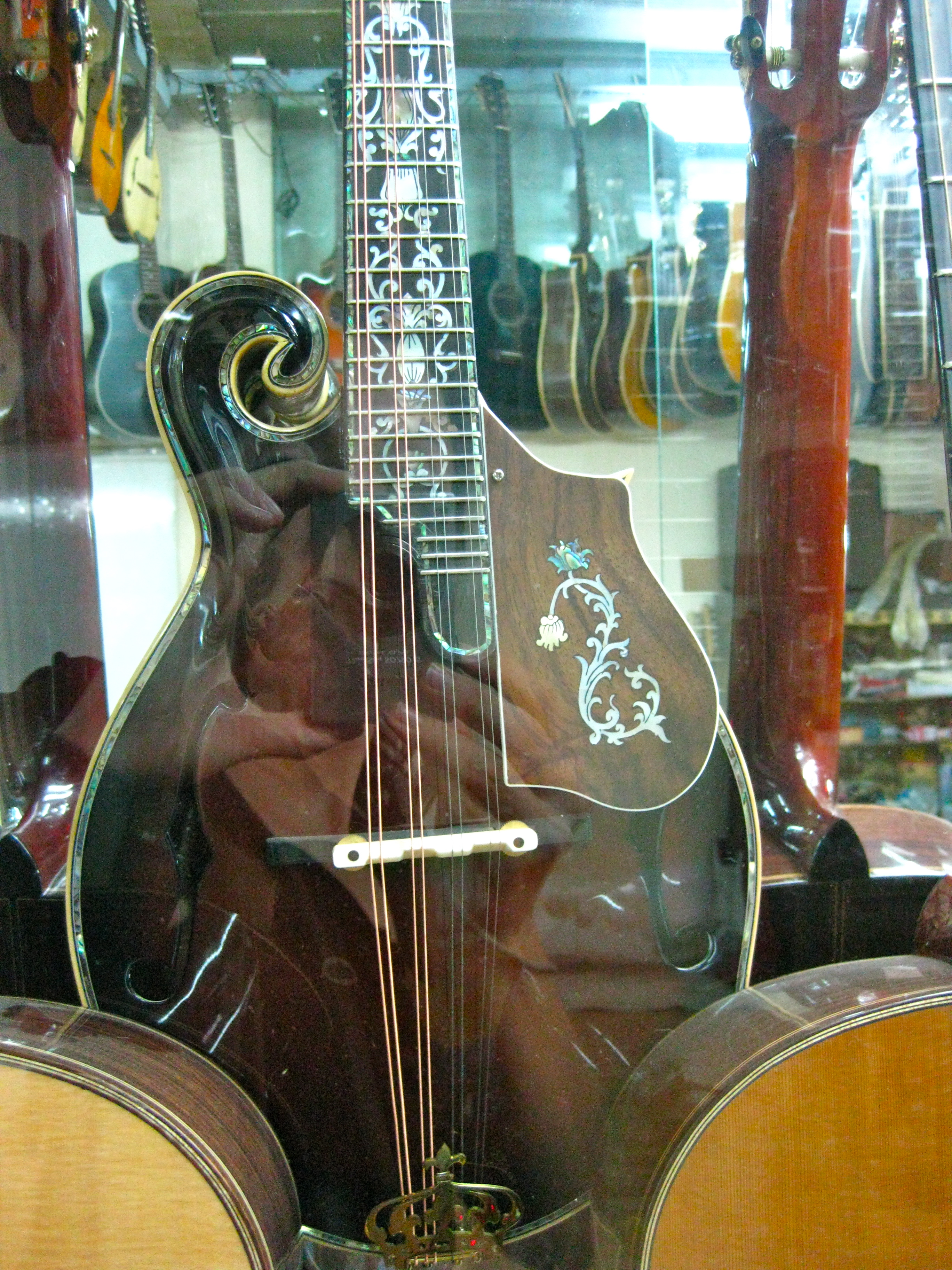
Here’s some mandos and other instruments up on the walls (including the arch top cut away on the left).

.
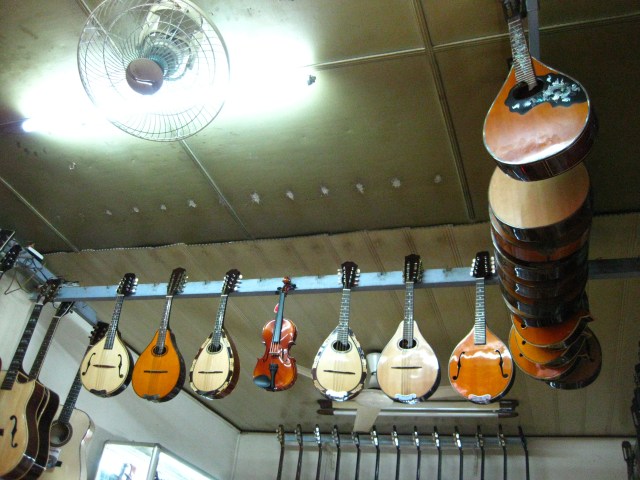
And more of the budget guitars on the side wall.

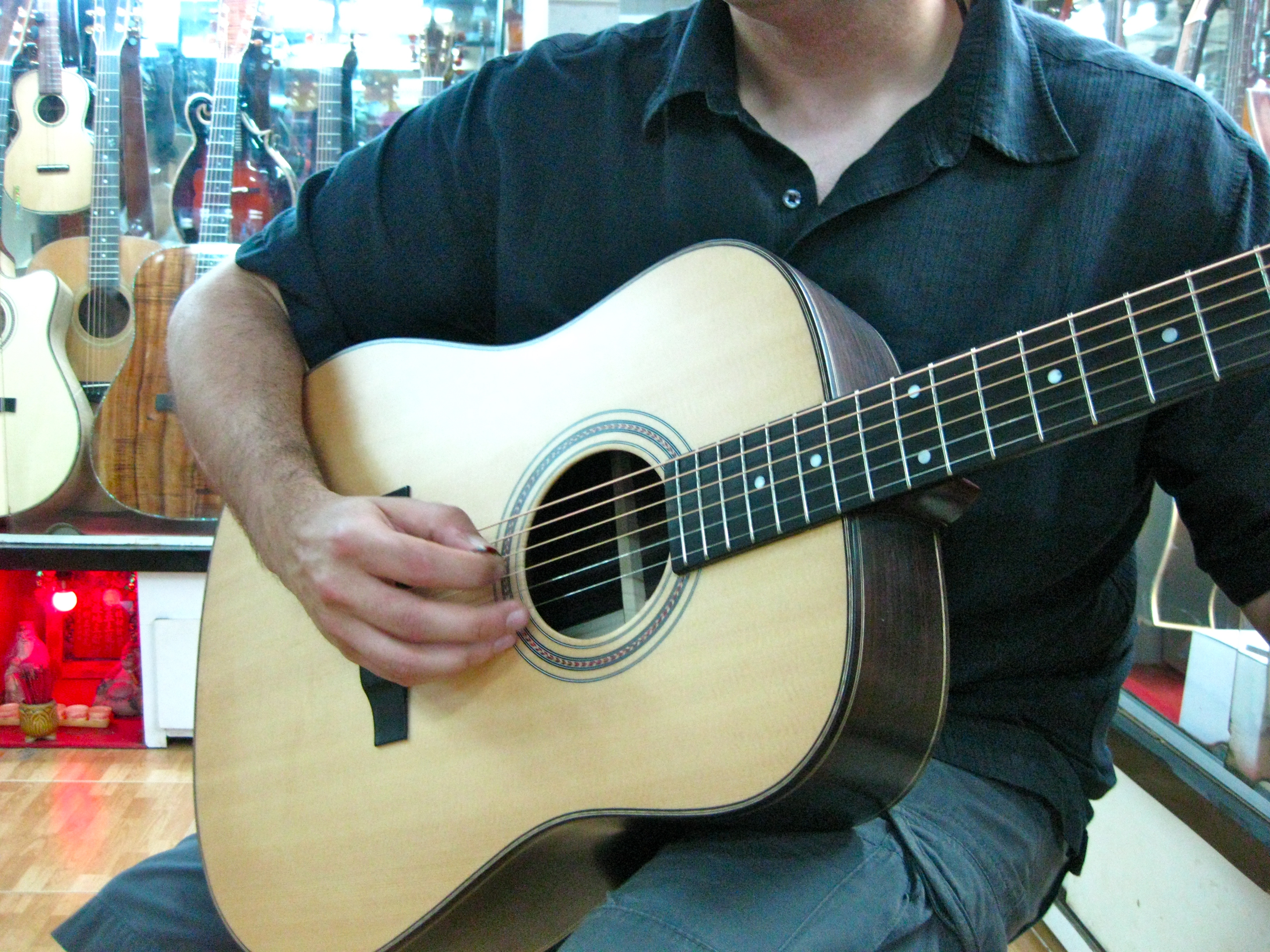
I played one of the guitars that the owner said was the best. (it was in the glass case)  A dreadnought copy.

.
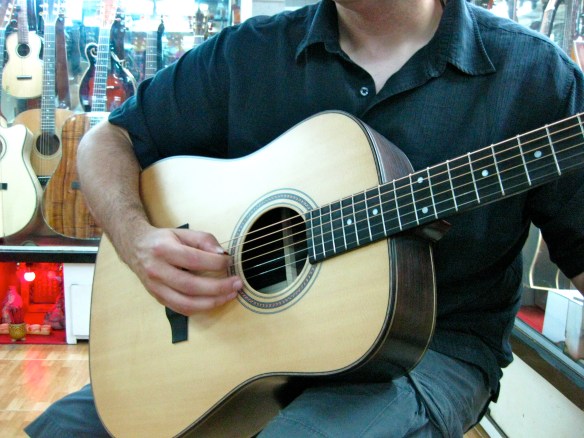
One of the loudest acoustics I’ve ever played.  Just projected really well.  Very even tone.  All hand made with excellent fretwork and construction.

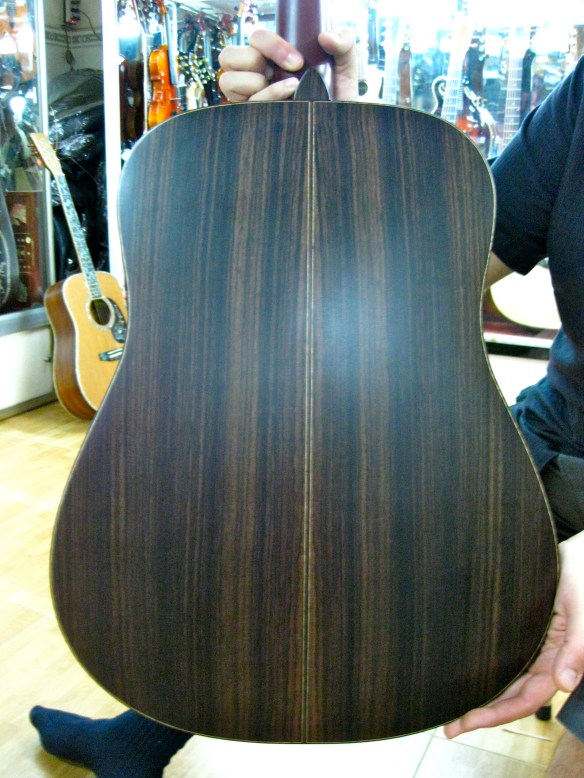
Here’s the back of the guitar (I had to take my shoes off to enter the store hence the socks!)

.
.

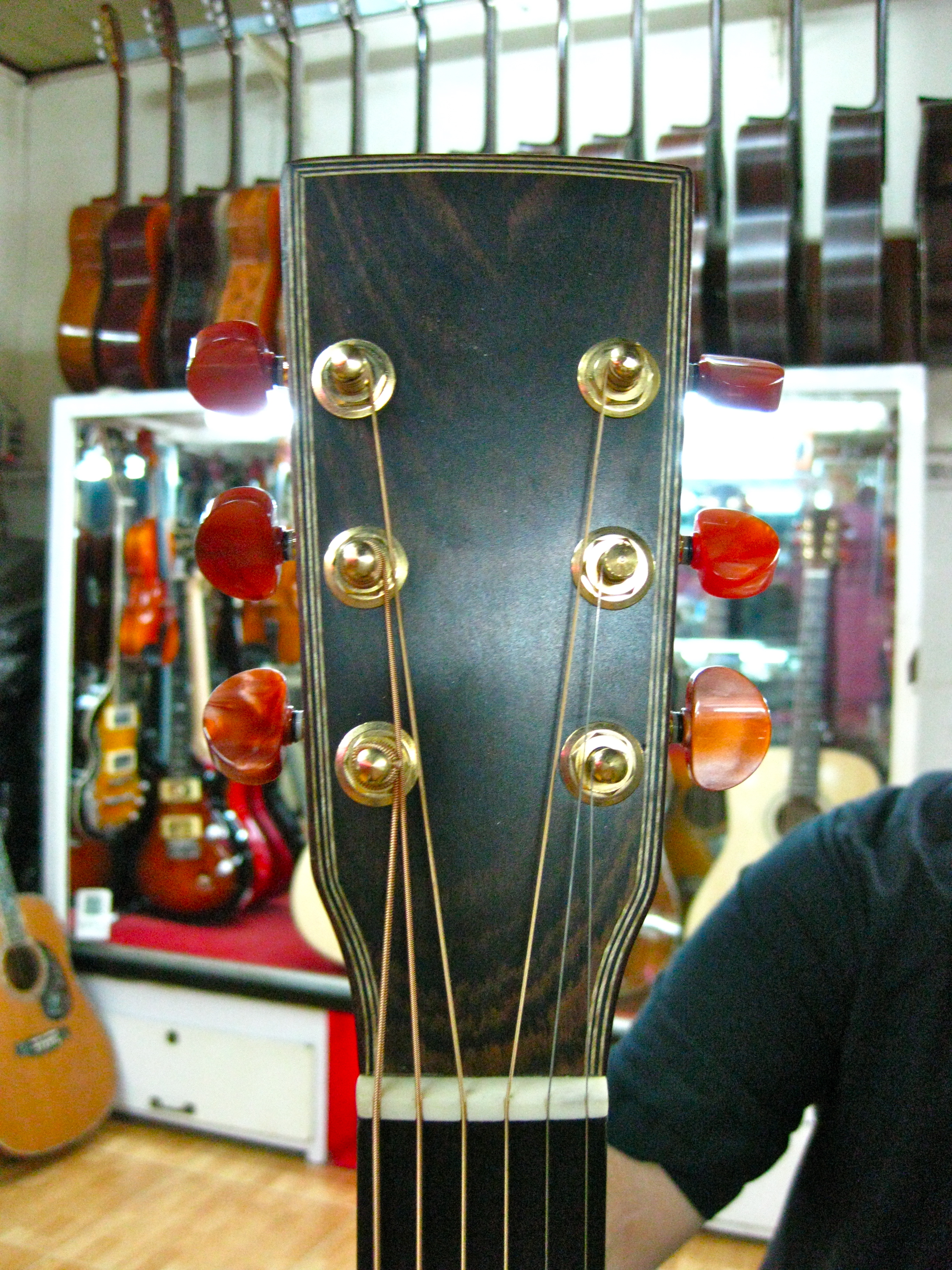
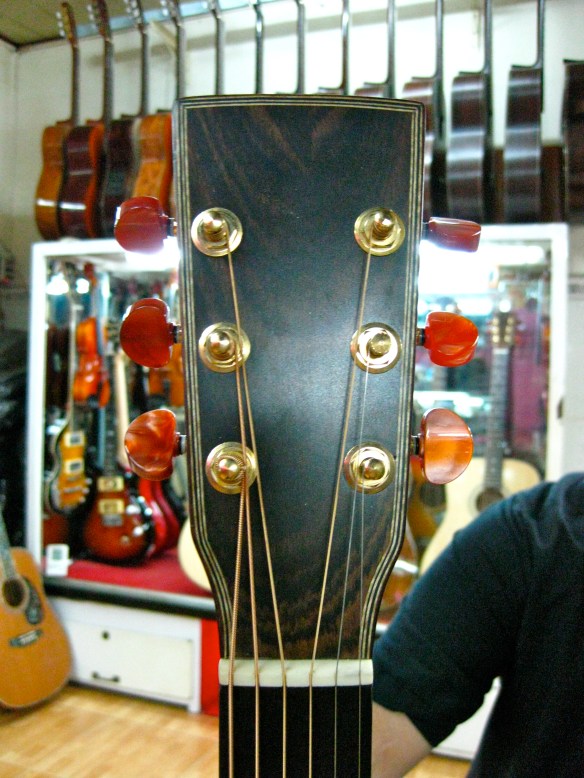
And here’s the headstock (note the inlay):

.
.

The tuners were okay but could have been better.  Otherwise, everything was a professional level build and execution.   He wanted 8,000,000 vn – About $420.

He then said – you should see this one as well.  Same build but with a glossy finish:

.
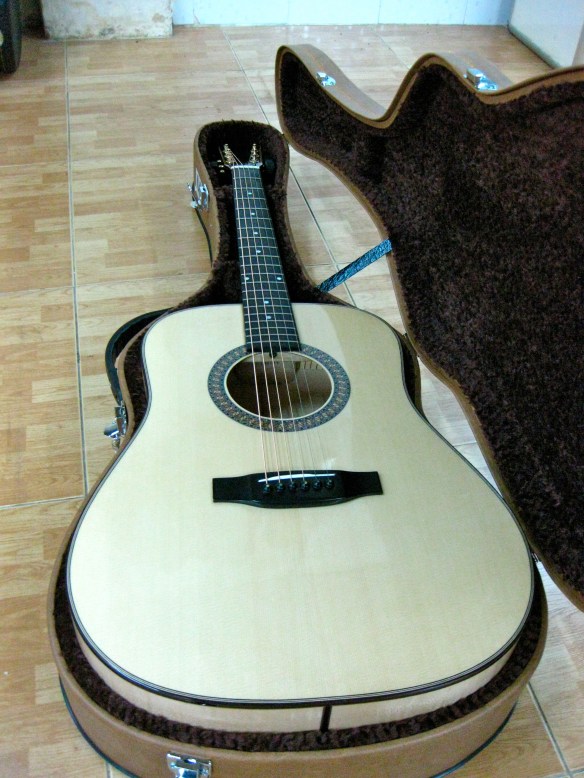
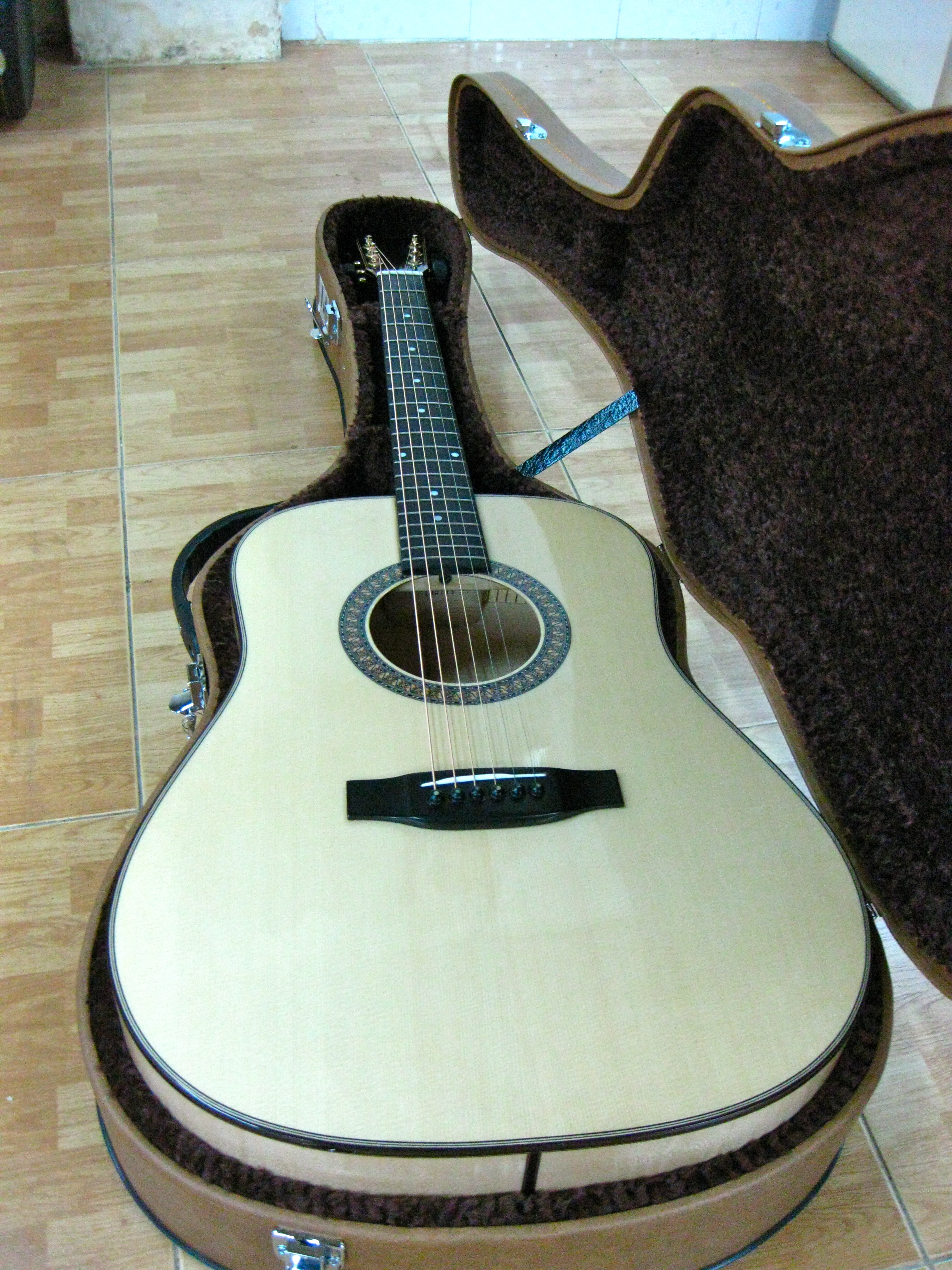
This one sounded even better.  A little more pronounced bass.   I only hesitated trying it because I’m not a huge fan of finished necks but I hated to put it down.This one was the same price – about $420 us with case.  Reminder – this is a hand made guitar!  Not a cnc router in sight!!!

This guitar was no joke – I’m talking about something that was easily a $1200-$1500 guitar in the US for a factory made instrument if not more.

That’s why it made it home with me.  I talked him down to about $410 US with a hardshell.  

(You can see a brief video with a low fi camera of the guitar here.)

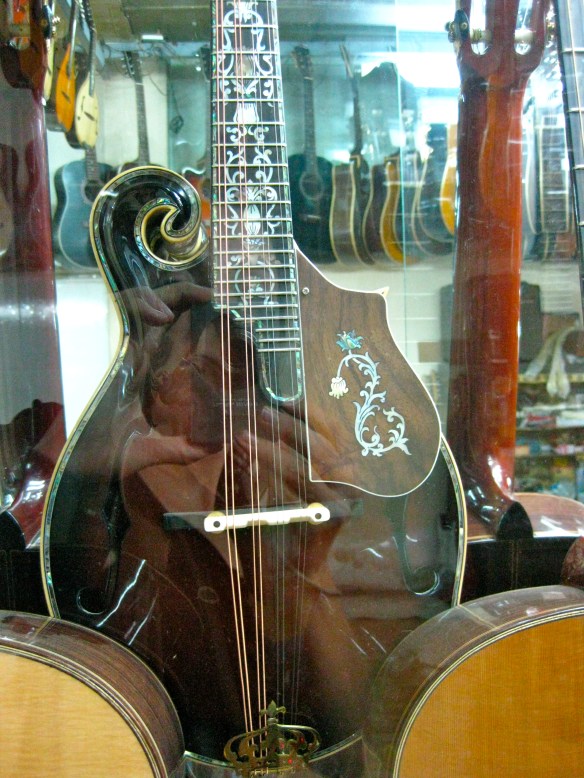
Here’s an archtop mando I was able to try.  Check out the fingerbaord inlay:

.
.

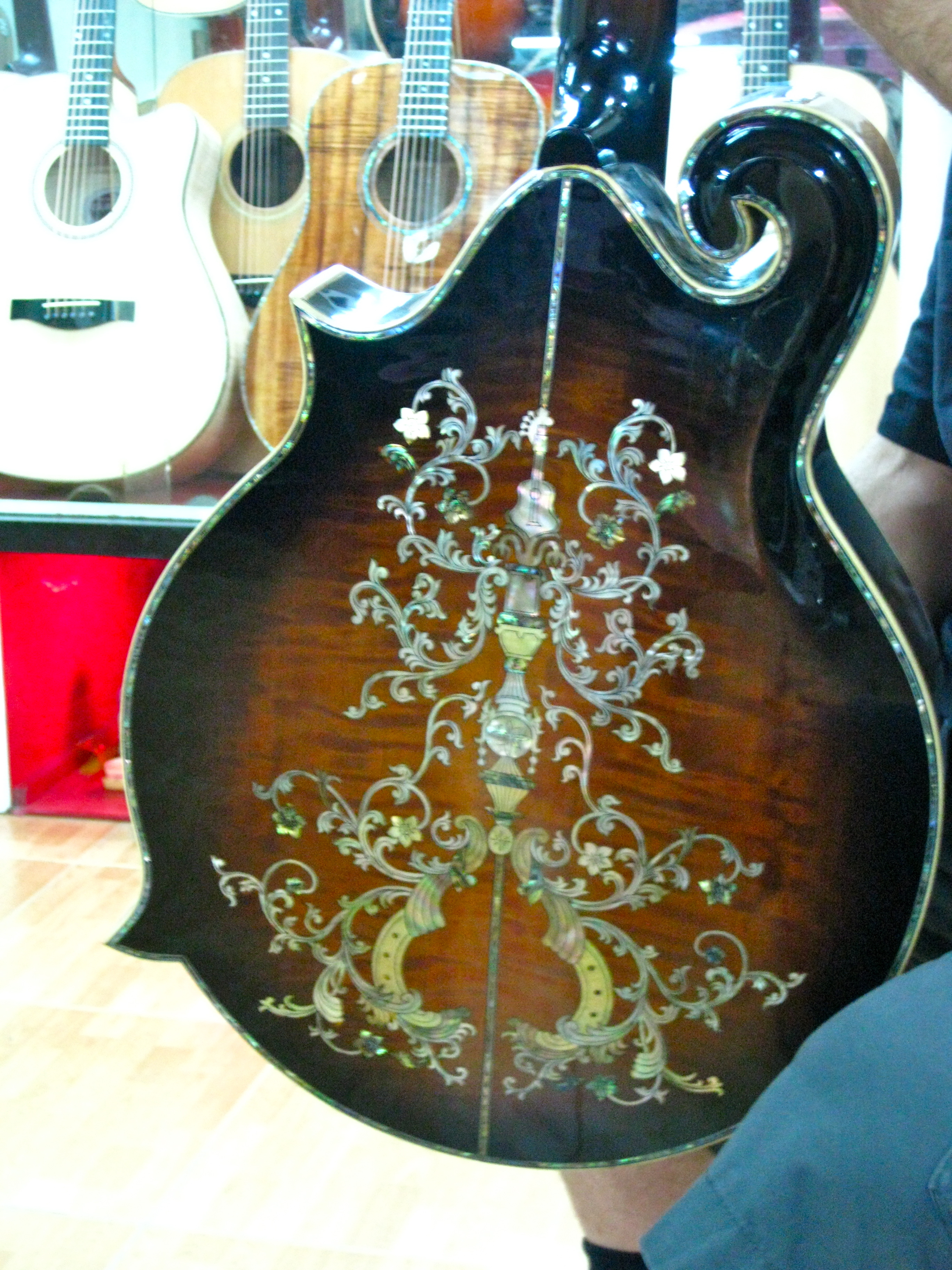
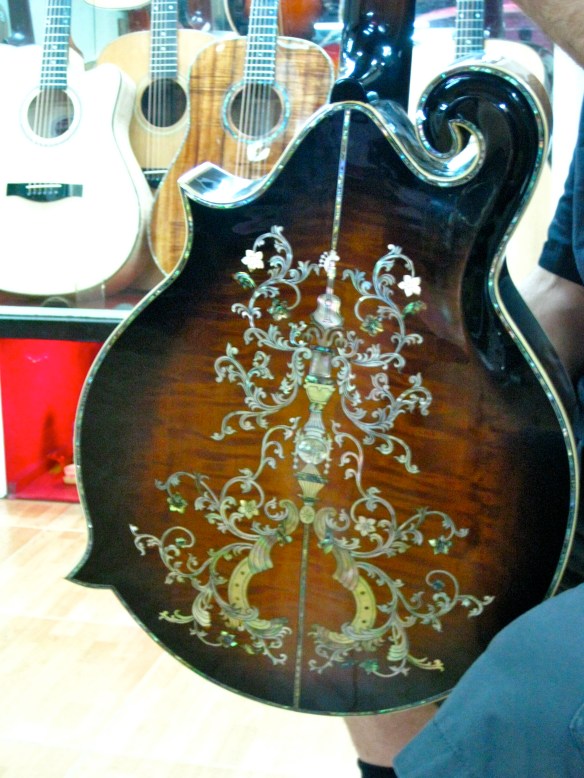
The 6 string version had a similar font inlay.  I thought I got a fretboard photo – but missed it.  Here’s the back inlay:

.
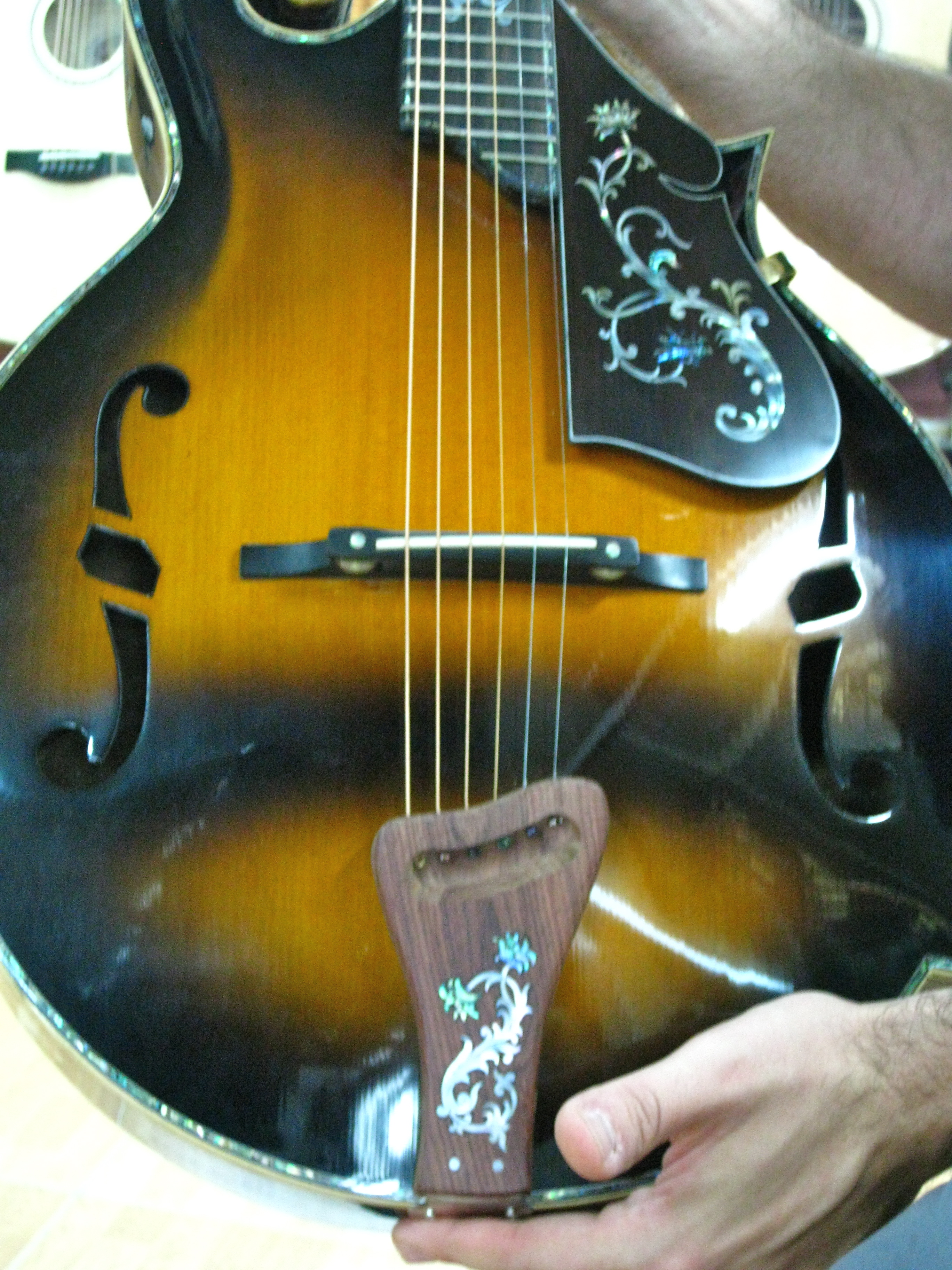
And the tailpiece as well:
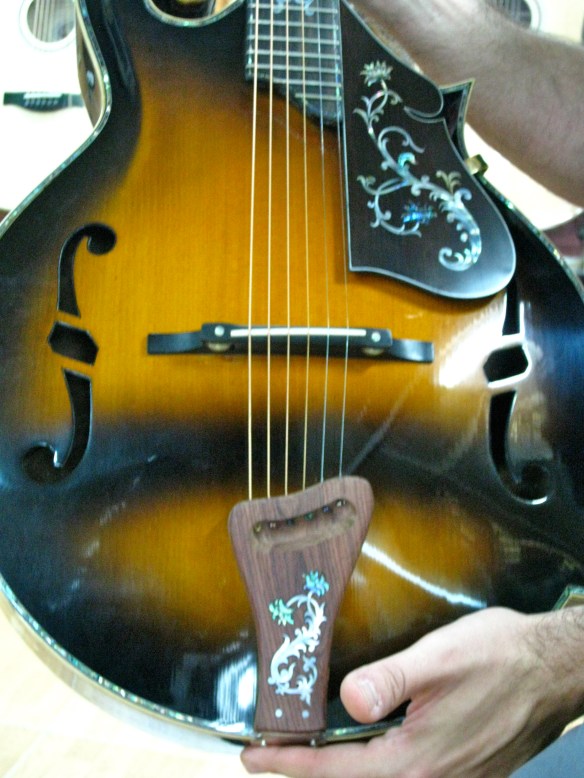
Again this thing was LOUD – and projected really well.  Very even tone.  Just a knockout.  The work around the inlay was a little more noticible but for a $400 guitar there was really nothing to complain about.

The harmony central article linked above mentioned that for about $600 they could make a custom guitar.  If I had baritone dimensions – I would probably be all over that.

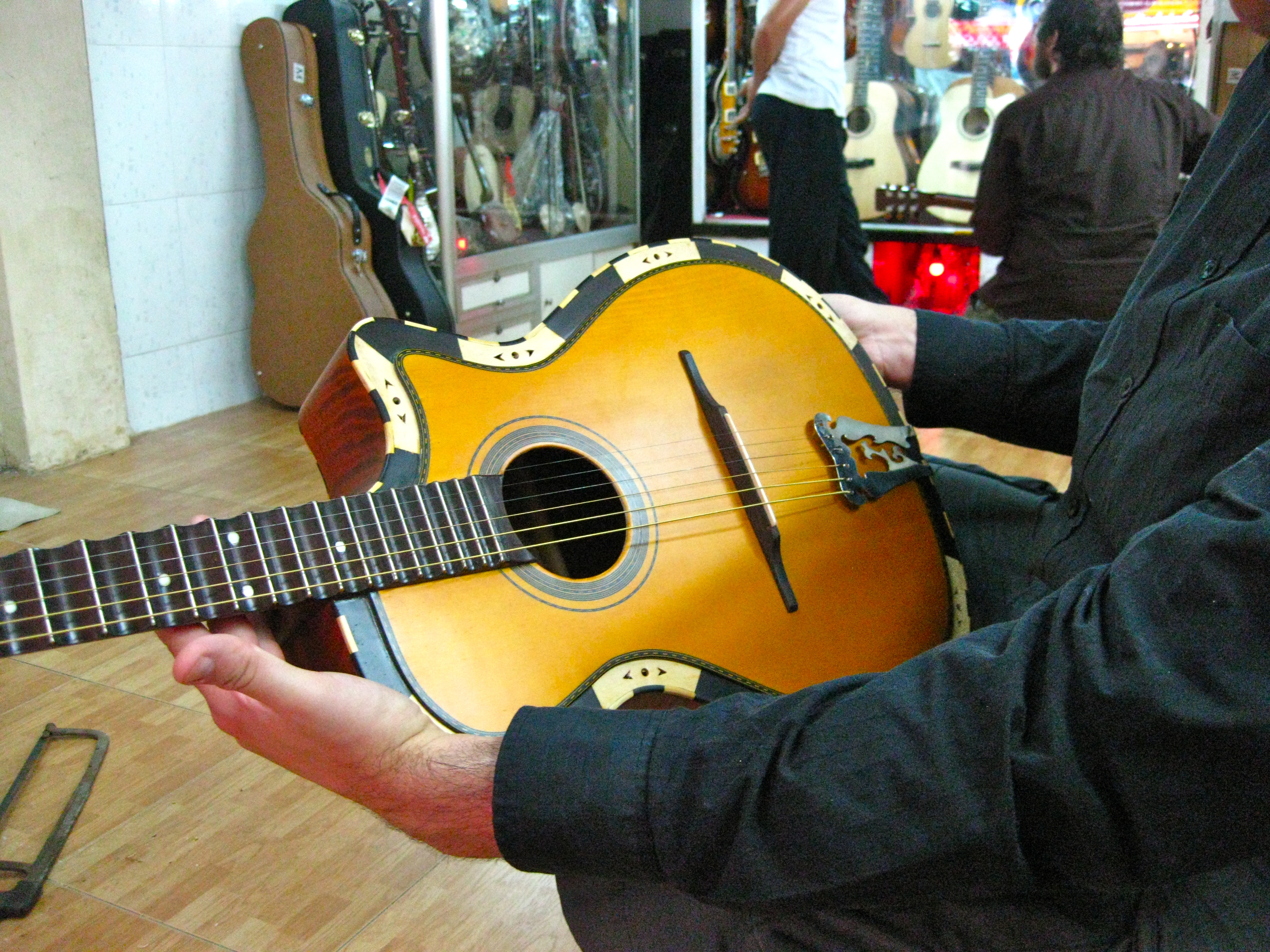
Here I’m holding a Vietnamese style guitar.

.
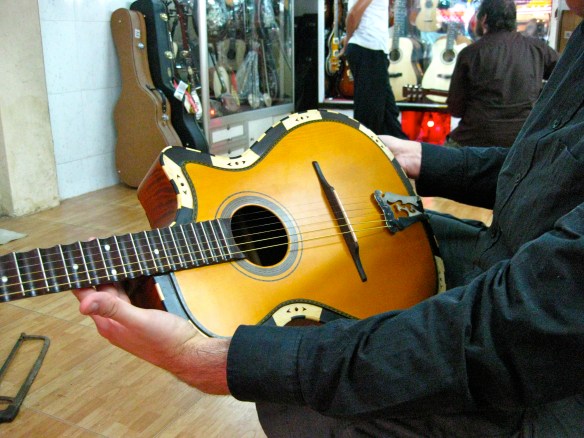
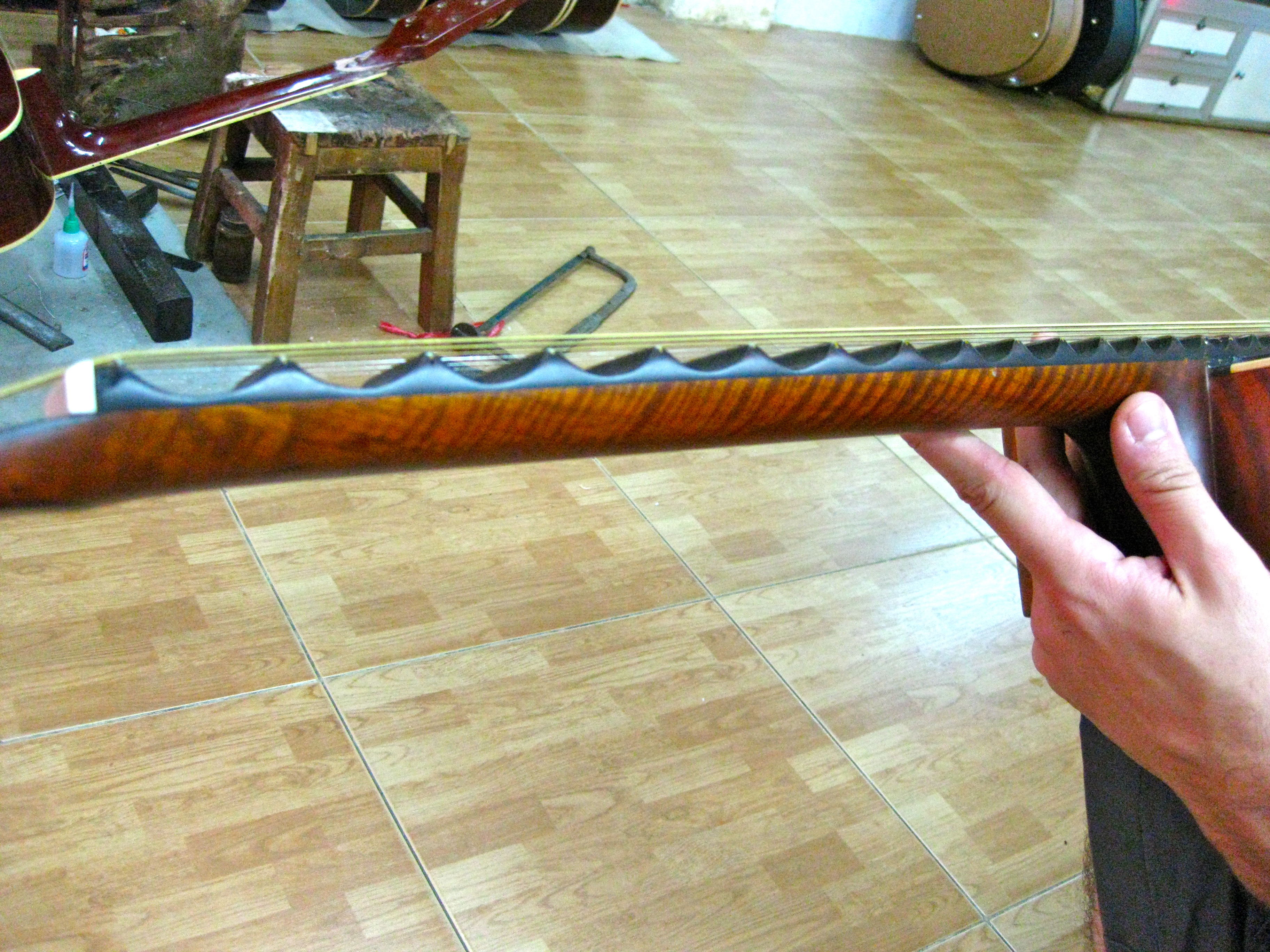
Bizarre tuning and the body construction was lower quality so the tone was very tinny. Note the scalloped fingerboard. There’s a better photo below of just how deep the scallop is.

(It’s also interesting to note that all of the repair and set up work is being done on the floor like the use of a stool of a headstock rest.)

.
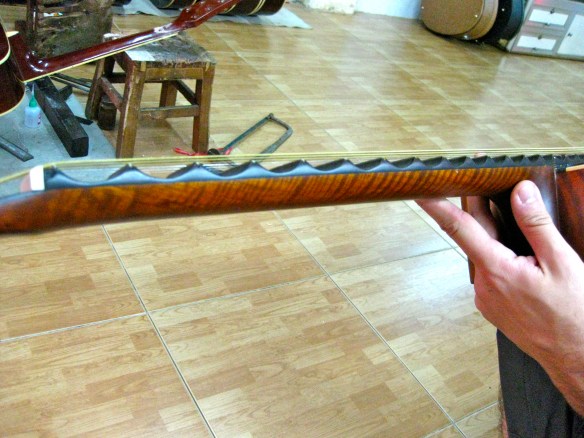
.

This was about $150 US.  This was tempting but when put into standard tuning – the top 2 strings crapped out on big bends.  The low E-G strings were very cool though!! Also it was kind of a drag about the body  because I would have really liked to have heard the dreadnought copy with that scalloping!  A number of the other shops has a similar style body – So I don’t know if he made this one or just set it up.

.

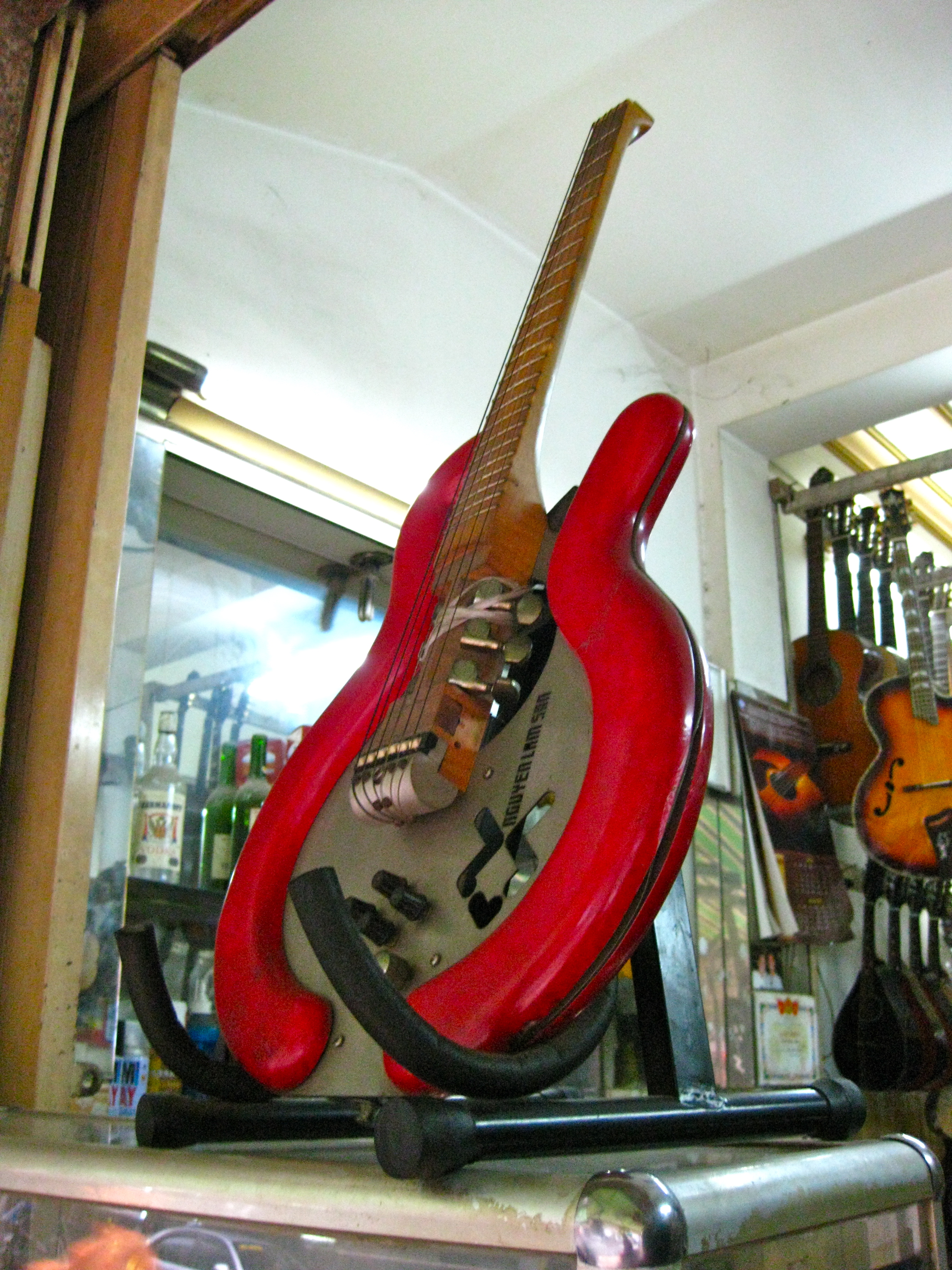
This next one was special.  That was at a 2nd hand shop about 4 doors down on the other side of the street.  A piece of sheet metal with wood bracing on the sides. The wood on the lower bout was cracked in the middle.   The back of the neck had kind of a Stevens cutaway if you remember those.  It looks like there was a magnetic pickup towards the bridge that was filled in with wood.  and maybe one by the neck.  There was a plastic bag tying it to the guitar stand – and I don’t know Vietnamese so unfortunatelyI was only able to guess that the woman filling in at the store didn’t know if it was for sale or not.  I’m not even sure it was functional but that didn’t stop me from lusting after it.

.
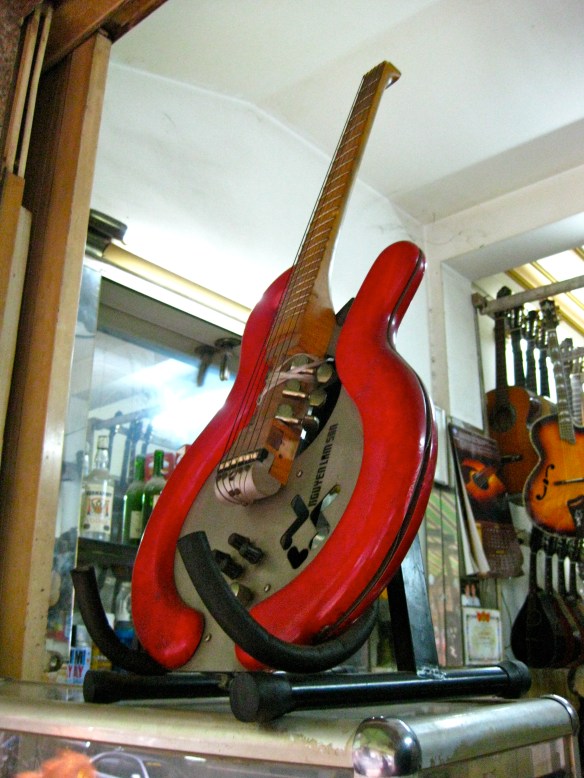
A couple of doors town they had a guitar that was called a “teisco”  with that scalloping seen above and a built in ring mod/octave switch.  They wanted 1,9000,000 vn (about $100).  That one didn’t end up coming back with me as there was no gig bag and probably too fragile to get home.  I couldn’t get them to come down on price – so they showed me a “fender” with the same scalloping, a trem and built in flange/auto wah switch for 900,000 vn.

Binh’s contact info is on the sign – but his e-mail address is in the almost 20 page harmony central post that started it all off for me. (binhguitar@yahoo.com)

.
Thanks for dropping by!

.

PS – If you like this post you may also like the guitars of Vietnam post I wrote for the mighty Joe Gore’s Tone-Fiend column.

A quick lick – and a rig du jour update from Ho Chi Minh City

Greetings from the former/current Saigon. (Technically Ho Chi Minh City but many of the locals call it Saigon).  I had hoped to post a couple of blog updates up before I left, but instead was running around checking things for the trip. Now a jet lagged – iced coffee and soon to be bahn mi –  fueled post:

.

1 lick or 2?

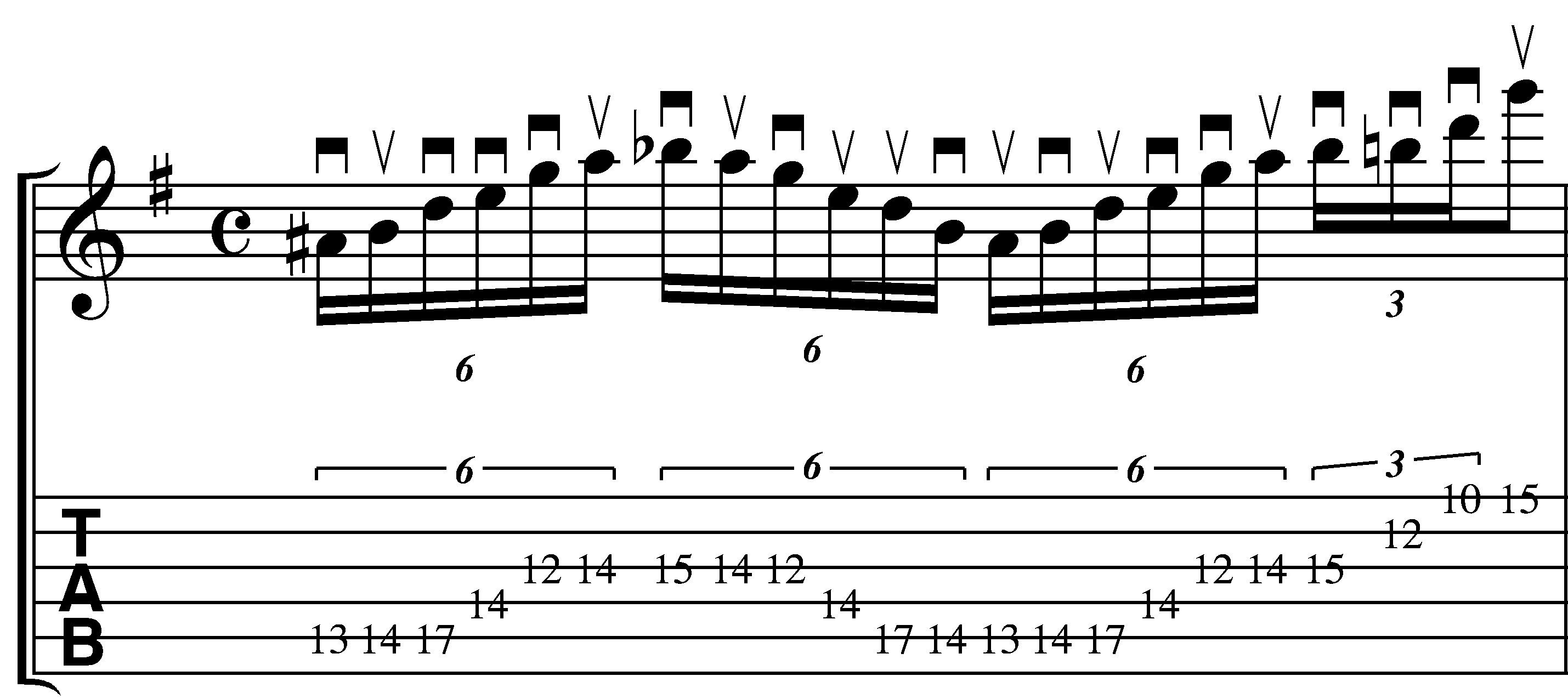
So first – here is a lick that works off of the swept pentatonic idea (alternating 3 and 1 note per string ideas) that I explored in the last online lesson (you can find a pdf of that lesson here).  While the online lessons have focused a lot on pentatonics – I wanted to add the tritone to make “the blues scale” and show how this approach could be adapted.  Here is the idea ascending:

.

It’s very scalar – but I added  a couple of points of interest:

1. the little descending turn around allows you to play the basic ascending idea starting on both up and down strokes.

2.  I started on the tritone (if played over E minor) or the b3 (if played over G major) instead of the root.  If you’re playing this over G – think Bluegrass metal ; )

3.  The motion is more diagonally oriented than the strict pentatonic example but is the same basic approach.  I start the lick with my first finger and then shift positions for the D on the 12th fret of the D string and the D on the HighE.

.

Here is an mp3: Lick1

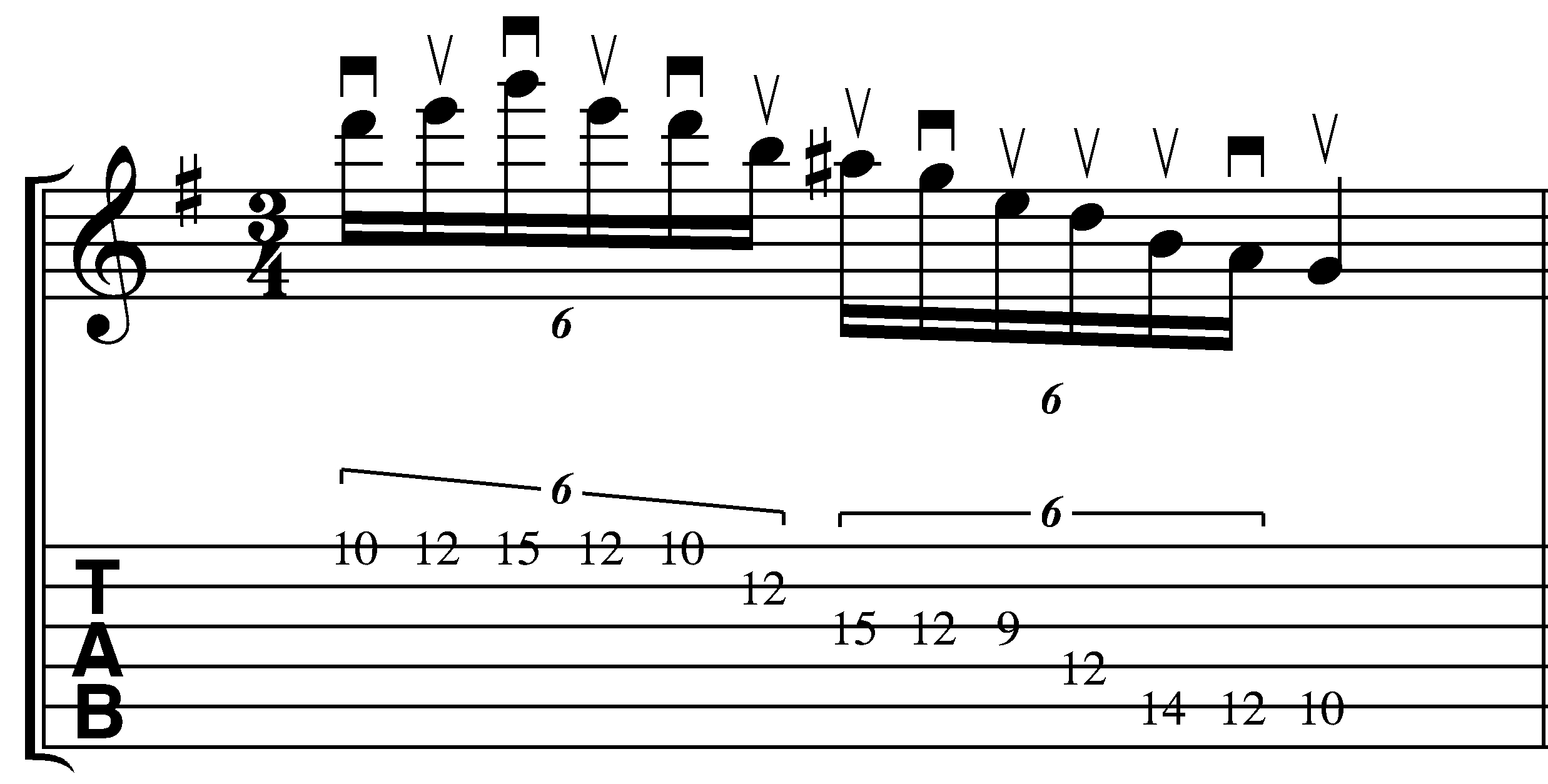
As variation – I took the same concept and applied it in a more positional approach.  Be careful with this stretch!  If it hurts stop immediately!!!

.

.

Here is an mp3: Lick 2

And finally here are the 2 licks played back to back:  backtoback 1

.

Laptop Rig

So I bit the bullet and got an apogee duet.  WOW!  It really has made a stunning difference in resolution and I suspect will help a lot with future mixes I’m working on. With that in mind I wanted to share with the rig I used for the mp3s above.

Here was the basic amp setting I used in Pod Farm 2.0.  This was based on a customtone forum patch called Electric Gypsy.  I just swapped in a tube screamer and bypassed the cab (using the Recabinet impulse responses instead).  One of the big revelations that I found in pod farm is that I could put preamps AFTER the power amp.  Adding that in to the signal chain opened it up a lot.

.

.

I blogged about using impulse responses over the cabs before.  The lie 6 cabs sound good – but to my ears the IR’s add a whole other area of depth.  Here are the IR’s I used – these were from the Modern 1960 4×12 set.  The screen shot is from LA convolver.

.

.

Finally – a screenshot of how it all lays out in AULab.  I just hit the record button in au lab and edited out the noise before and after the take in fission.

.

.

FNH Guitar –> Apogee Duet–>AULAB–>PSP Vintage Warmer–>Pod Farm 2.0–>La Convolver (w. Recabinet IRs)–>Sooperlooper

.

I’m still tweaking things – but I think that soundwise everything is improving a lot from where it was even a month ago.  Once I get an A/B set with the floorboard – I think that the laptop is going to be the rig du jour.

One last note – the macbook has is using 4 gigs of ram and was updated with a 7200 rpm Seagte internal drive. (500 gig from OWC).  My computer accepts a 4gig chip in 1 slot – so I may go up to 6 gigs – but the faster internal drive made a big performance difference in the machine. I’d say you’d really need to have that if you’re going to try to go this route.

* Note – I’ve recently posted more on this topic here which may be of interest to you.

Festival Wrap Up

Just got back from finishing up the last day at the Cha’ak’ab Paaxil Festival in Mérida.

For the concert – Carmina and I wanted to do something with Page of Madness but we were limited to 35 minutes and there was no way to really edit it without destroying the narrative – so we ended up having to use part of Decasia by Bill Morrison.  We edited it that afternoon and performed it at Ule – which was a really great space.  I was having some tech trouble before the show and we got through it with a well recieved set.

The Structured Improvisation with Film Workshop went well and had great participants. While Carmina and I have a lot of experience working with film – trying to present that in a 3 hour package and then having Carmina translate my rambling in real time was particularly challenging.  But everyone rose to the occasion and I was just knocked out by the quality of how well everyone adapted to the situation.  Special thanks to Juan Garcia for organizing the event and the College of Arts of Yucatan for hosting it.

Innumerable performance highlights but the Mandorla [Manrico Montero + Fernando Vigueras + Juanjosé Rivas] set stayed with me for days, as well as the Bhob Rainey + Manrico Montero, Bhob Rainey + Juanjosé Rivas performances and the No.Estacion.Arte [Aimée Theriot + Eli Pinto + Alfredo Bojorquez + Juan Garcia] sets.  But really all of them were memorable.  I didn’t come with any expectations (Except for Fernando who I knew from Linfa and like his playing a lot) and was just knocked out by the quality of the musicians.  How I didn’t know about Chris Cogburn or Manrico or Juanjosé before is just troubling to me.  But I plan on making up for lost time.  It was also fascinating how even though I was in Boston for years and knew about Vic Rawling and Bhob Rainey – I’d never heard them live until the festival.  The irony of that wasn’t lost on me either.

Everyone here has been awesome!

Thanks to:

Gerardo Alejos, Rejon Enrique Palma, Juan García and everyone else involved in the festival organization.
The musicians: Juanjosé Rivas, Manrico Montero, Armando Martín, Remi Álvarez, Chris Cogburn, Bhob Rainey, Vic Rawlings,  Mauricio Valdés, Milo Tamez, Elí Pinto, Aimée Theriot, Alfredo Bojórquez, Oscar García & Camilo Solís (I hope I didn’t forget anyone!!!)  You were all great and I hope we can play together in the future.
The really awesome audiences!

Special Thanks to:

mi nuevo amigo –  Fernando Vigueras (for putting up with a lot of me in a short period of time).  Getting to know him alone made the festival worthwhile.
mi mejor amiga – Carmina Escobar (for endless translating, friendship and truly great collaborations)

Line 6 Pod Farm 2.0 Overview

I’ve taken advantage of Line 6’s free 14 day download of POD Farm Platinum 2.0 ilok version and have been working on formulating somethings for a review.  I won’t be able to post a full review now, but I wanted to post a couple of brief observations.

1.  The demo version was a little glitchy in standalone version, so I’ve been using it with AU LAB.  For those of you who don’t know about it (I had to find out about it on the super looper forum) – AU Lab is a free app that comes with the OSX Xcode Tools.  It was designed to test AU plug ins with but its a stand alone app with a fully configurable mixer ( inputs, outputs, effects busses) .  It records output and even generates midi clock!  Also it makes a very small cpu impact – so it’s perfect for hosting something like Pod Farm and say SooperLooper.

2.  2.0 supports midi – which means you can control it with a foot controller like the FBV shortboard MKII or the Behringer FCB1010.  I didn’t get to work with this yet – but this brings the live laptop rig very feasible for me.

3.  Stereo rigs which you can A/B/Y!!!  which alone would have been really cool – but you can use multiple effects in the same rig – something you can’t do on the POD for example.

Here’s a screen shot of a modification I made on the Outer Space preset.  I just added a preamp in the beginning of the chain.

So here is an mp3 of a guitar track I improvised with this setting:

Outerspace II

This was made with a FNH ultrasonic guitar, Behringer FCA202,  Macbook Pro (2007), and AU Lab.  No post processing.

So this particular sample doesn’t sound very guitarish – but that’s part of the reason I really like this approach.  You can create things that you never could create with pedals without a ton of gear and/or a ton of noise.

As with many other sims – getting usable clean tones is pretty easy and getting dirty tones that respond the way an amp would is a little trickier.  But the presets on all of these models are light years away from older line 6 presets that I’ve heard.  It’s pretty easy to get a tone in the ball park and tweak it from there.

Line 6 has some great audio/video demos on their site, so I wont go into too much here for demos as they’ve done it really well.   Also the May lesson uses the same signal chain for all the mp3s that will be posted there.

I need to also give kudos in that all of the sounds on the sites are included in the presets and they have also noted processed vs unprocessed sounds.  Yes there is a big difference between the two, and it’s important to note those differences so that when you dial up a preset you know what to expect.

The only thing I wish it had was a dedicated looper, but that’s not a deal breaker.

If you have an I-LOK I’d say to definitely check it out.  It’s more flexible than the POD and does some very cool things.

For further applications of this set up you can also  go here or here.