How NOT To Network Part 2 – Getting Press And Or Getting Reviewed


Recap: The Power Of The Negative Example

In part 1 of this post I discussed a few key points:

  • Networking is a process of building a mutually advantageous relationship with other people, and not a way to manipulate people into getting what you want from them. Given that networking is a critical component in any success in any endeavor, it’s important to put some effort into doing it the right way.
  • I also talked about the power of negative example and illustrated how somethings successful completion can often be tied to numerous factors but its failure is generally tied into only one or two reasons.  Therefore in project management, it sometimes makes more sense to reverse engineer against failure (“This is what I don’t want to have happen”) instead of solely planning for success.

That Muse of Guitar

Some of you may be familiar with my interview/gear review/lesson series on Guitar-Muse.com With that in mind, I thought I’d write a little about my experience about networking with the media as someone who has conducted and given interviews and talk about some things that I’ve learned about dealing with the press taken from both sides of the isle.

Accentuate The Positive

In contrast to part one of this series, the list of things you should do in an interview is very short.

  • You should always be professional.
  • You should always respect people’s time
  • You should always be prepared.

While the list is short, there’s a great deal that goes into every bullet point, so I’ll use the space below to hit some talking points.

.

A Tale Of 3 Reviews

The first tale

The first tale revolves an email from someone who saw my name in a review and then sent the following paraphrased e-mail (I couldn’t find the original in my in box).

“Hey.  Here’s my new release.  It’s great!  It would be good if you could get a review of it posted in the next week or so.  Also, I might be able to do an interview this week as well, but it’s pretty busy – so let me know.”

While a variation of this would be a perfectly appropriate email to send to your PR person on payroll,  I never heard of this guy before.  Or his music. I didn’t bother downloading the recording.  I’ve never heard of him since the “request” either.

  • Understand what you bring to the table.

Reviewers don’t work for you.  If they’re professional, they suffer through a lot of dreck trying to get 500 words out at a time and live for the moments that the discover things that actually move them.  They (generally) want to find new things but are innundated with content.

So while they don’t work for you, you (potentially) have fuel for their fire.

The second tale

In this second story, Jonathan Wilson, a friend of mine who created the awesome Togaman Guitatviol, had announced on his Facecook page that he had a new CD out.  I had already interviewed him for Guitar-Muse and had played with him before so I knew what he was doing and was interested in the CD.  I sent him a message and said that if he sent me a copy that I’d write a review.  He asked what I would need and I gave him the parameters (mp3s and jpegs of the cover art).  He mailed me the materials right away and when I sent him questions about the material and followed up with answers in short order.

  • Be visible

If writer’s don’t know about what you’re doing, they can’t write about it.

  • Be flexible and be prepared

Different publications will have different parameters for what they’ll want.  Since many blogs pay for bandwidth they’ll want small jpegs or gifs.  When I did an interview for an article in PW Magazine, the editor asked for headshots at 600 DPI and all variety of jpegs (none of which got used in the article).  You can’t be prepared for every scenario, but you should have head shots, promo photos and cover art in a variety of formats in case people need them.  Publications generally work on tight deadlines so when these things are asked for, you won’t have a lot of time to get them out the door.

The third tale

In another situation, I was contacted by someone who read an interview I did with a similar artist and sent me an email.  He introduced himself, explained how he found me, explained why I might be interested in his cd and asked if he could send me a copy.  He was sending the cd from overseas and the first copy never made it past customs.  He sent e-mails every week or two and then sent another cd when it was obvious the first CD never came.  He e-mailed sporadically and kept it on my radar.  He also sent me a thank you note after the interview.

This is pretty much an example of everything you should do for a review.

  • Be succinct

Don’t write an introductory page of material and make the pitch at the bottom.  Get right to it.  Here’s a sample outline:

  • Polite introduction – explanation of why you’re contacting them
  • here’s what I do/have
  • here’s why it might appeal to you or your readers
  • here’s where you can contact me
  • thank you

If you’re writing someone for the first time, don’t skip any of those points.  Especially the contact information and thanks.

  • Do your research

Don’t send your metal cd to a Jazz website unless it has some very concrete jazz element to it.  Read other reviews and interviews and target writers that may be sympathetic to what you’re doing.

  • Follow up

This is pretty much the perfect amount of follow up.  In contrast, I could point to the numerous people who just never responded to e-mails or the subject of the interview who  was e-mailing hourly and finally building to more than 10 e-mails an hour with revisions.  Either one of those is going to burn a bridge.

Research/Read. Write. Send. Follow up. Revise. Repeat.

Read other people’s press releases.  Get a sense of what is out there.  Make notes of what works and what doesn’t.

When you start writing to people, start from a position of being able to describe what you do in 5 words or less, knowing who you are trying to reach and why.  Write as succinctly as possible but write enough to entice.  The fan dancer entices an audience by the possibility of what they might see rather than what they actually do see.

Send and follow up are the same thing.

Revise your materials and your pitch.

The main thing with this is to build some inertia.  You might spend days relentlessly editing materials for your first pitch, but after you’ve sent out a few dozen you’ll get in a rhythm and get your time down to anywhere from a minute to a 1/2 hour.

Also, be sure to be balanced and don’t get hung up on your current project.  You always want to have a new project in your pocket as a goal on the horizon.  And you’ll need to cross the bridges you build now for everything in the future.

Remember:  The golden question of networking then isn’t, “What’s in it for me?” but instead is, “What’s in it for us?”  Build relationships sincerely and without an evil (i.e.  completely self serving) agenda.

That’s it for now.  Perhaps I’ll fill this out with a part three at some point but in the meantime I hope this helps!

-SC
Touring Fiction And Fact

This Road Starts With Metal

This post is borne from a series of blog articles in the metal community that went viral.

To start, MetalSucks posted an piece that corporate sponsors may be detrimental to some touring acts which was followed by a rebuttal to the contrary.  All of which lead to the latest “Hey here’s the economic reality of being in a touring band” post courtesy of Shane Bley of the band Oh, Sleeper.  He describes the group as a mid-level band which with a $300 guarantee in various venues is probably only a slight exaggeration in stature (Try getting a $300 guarantee from a club you’ve never played in x 10 or 20 venues.  You have to have some kind of stature to get that guarantee) .

I’ve posted some excerpts below (you can read the full post here):

“On tour bands have two ways to make money. Guaranties, and Merchandise.

On tour bands have big bills. The biggest are: Managers, Booking agent, Merch Rates, Merch bills, Food, and of course.. the Gas bill.  Our last headliner tour was an east coast run with 3 other bands. The average guaranty per band was 300$ per band, and around 300$ in merch. This was the average for all 4 bands, for the entire tour.So we have a 600$ gross income per night.

Now lets break this down.  Merchandise is bough, printed, and shipped on the bands dollar….$300(gross) – $150(merch cost) – $75(merch venue rate) = $75 (Net profit for the band.) BUT the breakdown doesnt stop there. If the band has a manager, he takes 15% of Net profit of merch.SO MERCH TOTAL PER NIGHT:$75 X .15 = $11.25$75 – $11.15 = $63.75( TOTAL Net profit in merch for the band.)

Guaranties:$300(gross guaranty) – $45(managers cut 15%) – $30(booking agents cut 10%) = $225 Average Gas bill is around $150. some days way better some days way worse….Most west coast tours we do the average gas bill is around 200–250…but ill use 150 for this example.$225(guaranty after manage and agent deductions) – $150(gas bill) = $75We have 6 people on tour, our 5 Guys, and our merch guy “The maze”. We give everyone $10 bucks a day to eat on. (This isnt enough when your 6 4 and 200lbs like micah and i by the way)6 people x $10 = $60$75 – $60 = $15$15 Total net profit in Guaranties.

$63.75(Net merch) + $15(Net guaranty) =$78.75 for the band for the night. out of $600 gross.if you divide that 6 ways its $13.12 a day per band member.———-This doesnt include hotel costs. which are usually 50–60 bucks. Most bands dont get hotels or shower to save money to pay for phone bills. This does not include Tires/Van payment/Oil changes/Van upkeep registration bla bla/Trailer tires/Gear/etc. This doesnt include taxes. This doesnt include ROAD TOLLS. Which in the northeast can add up to 20–40bucks a day.”

.

Is this an oversimplification of the economics of touring?

Yes it is.

There are a number of tweaks that could be made to the above example to make it more profitable.

But it’s also accurate of the current climate and, for many bands looking to this as an example,  it’s putting the cart in front of the horse.

Wait there’s history lecture here?

Touring – as described above –  is a dinosaur.

It’s a relic from the old music business model where you would:

  • sign to a major label
  • get in debt up to your eyeballs releasing a debt record
  • get label support to go out on the road an promote the record to sell more records for the label.

What was lost to most acts in this equation was the fact that touring expenses were generally recoupable to the label, so it was pretty much impossible for most artists to make their money back.  That was one reason why you had bands on the road for years that would come home and not have any money to show for it.

The labels had these bands tour relentlessly to sell records, but some of them ended up building a fan base.  This is a double edged sword for a label as a popular band that switches labels is now someone else’s money maker.  This became really important later on when the bands would break up and the singer or principle member of the band formed new band and had to take it on the road as there was a built in audience to draw from.

DIY

Punk (oddly enough like the folk, bluegrass and other musical examples that didn’t have label support before them) came along and turned this model on it’s head.  DIY had a new ethos:

  • bands did the legwork
  • they booked their own shows
  • released their own records and merch and
  • kept the money for themselves.

When DIY worked (and it didn’t always work) – it did so because of local scenes.  It worked because local scenes had loyalty and community.  There would be people who would go to the VFW on a Sunday afternoon just because some hardcore band was playing.  In other words, it was as much about the scene as it was about the music.  Each one built off the other.

We’re not in Kansas anymore Dorothy

A funny thing happened on the way to the forum.

We de-contextualized art with the advent of the internet.  Gradually, we didn’t have to go to a venue to see a band, or go to a cd store to find new music because we could see videos of bands playing and hear their music for free online.

We orphaned tracks from albums and took away the context for listening to songs.  We took away the ritual of finding something exciting in a store and getting it home and popping it in a tape deck or playing it on a turn table while reading the liner notes to find out more about what we were listening to.

Scenes gradually became online communities which has the potential to reach more people in more places but largely removed localization.

So to recap:

The way consumers acquired music changed and no longer required a physical place to buy or hear music.

The way music was sold, no longer required selling to people in person.

The way people experienced music was now (largely) relegated to another component in an ADHD addled cocktail of a lifestyle.

File under: not much of a silver lining

The thing is, the old system was already broken.  It was already unsustainable, and all of these factors coming together simply put a light on the accounting parlour trick that was the old label system that had run its course.

Most people were never making big money anyway.  It’s the old joke about a musician being a person who loads $5000 dollars worth of gear into a $1000 van to drive 100 miles for a gig that pays $50.

I previously posted an article that (allegedly) showed the houses the band Manowar lived in in upstate NY and the article was written with a lot of snark because there was a real disconnect between the fantasy of being in a band and the reality of being in one.  Manowar sells out several thousand seat halls in Europe and (according to the article) have members that still live at home with their folks.

So, we now see the little man behind the curtain.  That’s probably a god thing, because it means we can get real.

What to do

I think one answer lies in the idea behind kickstarter.

Mind you, I don’t think the answer is kickstarter.  Crowdfunding already has a stink around it for many people who see it as a sign of desperation but Kickstarter doesn’t just smell funny, it’s already dead.  It’s already passe.  The mainstream hasn’t fully caught up yet – but what was the last crowd sourced start up you funded through kickstarter?

Kickstarter isn’t the answer but the idea behind it is more important than ever.

The idea behind it is tapping into the online community.  Seth Godin would probably talk about building your tribe, I think of it as building a scene.

The future is regional and global.

Global access, regional development and support.

The future is in scenes, fans and community.

The internet was supposed to be the great uniter.  It was supposed to be the thing that brought us all together, and instead it put all of us alone in a room staring at a smart phone screen looking for the next thing to entertain us.

People feel isolated.  They want to experience things.  They want to belong to something bigger than themselves.

One thing I hear musicians say all the time is, “No one wants to go out to shows anymore.”

Locally, Proctor’s Theatre in Schenectady had ticket sales for a Book of Mormon run there  that broke the theater ticket system from the crushing demand.  We’re talking about lines around the block.  My Valentines Day present of tickets for a show in NYC with  Mrs. Collins ended up running me $300 or so (and those were the cheap seats!) and, like it was for the months before and after that Valentines Day, the venue was completely sold out.

People will go out to shows that are events.  They will not go spend $10 on a cover and pay for a two-drink minimum to see their friend Dave’s band play at 11pm on a Tuesday night when, consciously or subconsciously, they can go see him anytime.

There’s value in scarcity.

Back to that touring thing.

I’m not saying don’t tour.

I’m saying tour smaller and keep your expenses low.  I think it was Ellis Paul who toured for years in a car with just his manager for company.  That’s a profitable touring model.  Taking your musical collective of 12 people on the road and making money?  No chance.

I’m saying tour smaller in scope – Think local then regional.

BUILD YOUR SCENE!  Be a big fish in a small pond, and support that small pond to keep it well stocked.  Find compatible acts and create events that people want to go to.  Give people something that they want to belong to.  Some of the pop up restaurants are a brilliant example of this idea.

Find alternate sources of income.

This is critical.  They days of making all your money from one thing are over for most people.  Musicians with diverse skill sets who do multiple things well will be more likely to  keep their head above water.

In the first article I mentioned there was a very interesting post from MattBandhappy, who it turns out is the drummer in Periphery.  Periphery is a djent band with a sizeable following.  They’ve been on the cover of magazines.  They play expensive custom gear and it turns out that none of them are making much money off Periphery.

“This article explains one of the exact reasons why i started teaching on tour and online. I play drums in Periphery, and believe me, we need more than just the band to make money. Because of this need, I created bandhappy.com – A global marketplace for live, online, video chat and on tour music lessons. Through our video chat platform, working musicians can teach their fans all over the world without any geographic limitations right from home, as well as being able to schedule, communicate, get paid, and promote their lessons. Artists can also use our scheduling and payment tools to teach lessons on-tour from city to city at every venue they play…This site really gives working musicians a way to tap into their fan bases, make a supplemental income for themselves, and tour without the worry of where their next dollar or meal are coming from.

.

Embrace “tour support” when possible.

A lot of times it’s not DIY or Die but is instead DIY AND Die.

You need support when you go on the road.  This is traditionally been fans.  For some acts this has been corporate funded sponsorship, privately funded sponsorship (like grants)  or public funded sponsorship (like paid public performances).

There are acoustic acts that have done this for years.  They book a tour of school districts to play because they know they can get x amount of dollars to play a school assembly, book a series of house concerts and then book other events around those to fill in.

10 years ago, I would have said the way to do a tour for a mainstream type act would have been to partner with someone like Starbucks.  Try to get them to pay transportation costs to every Starbucks you could do an unplugged set into and then play the local venue.

Now I would say that there are better partners and after you have a few small successes you may even be able to crowdfund future efforts with real fans, and not simply faceless Avatars who have no connection to you other than to perpetually stalk you with cries of, “HEY WHERE’S THAT MONEY I PAID YOU?”

So, build a fan base.  Build a scene.  Build community.  And if you’re going to tour – tour smart in ways that make sense for you and not simply ways that are simply always the way they’ve been done.

As always, thanks for reading!

-SC

Do You Want To Be Right Or Do You Want To Be Paid?

Don’t leave your music business in the hands of other people

It began, as so many of these things do now, on Facebook.

A well-meaning person posted a question in a musician’s group.

ARE THERE ANY BOOKING AGENTS AROUND TO TRY AND BOOK OUR JAZZ TRIO. THANK YOU [name and email removed]

I’ve already written about a number of problems with this scenario in my The 3 Secret Problems with Jazz post on guitarchitecture.org, but the main problems with this specific scenario are the following:

  • These gigs don’t typically pay well.
  • These gigs don’t typically draw.  If your jazz group brings 100 people to a restaurant on a Tuesday night, you won’t need a booking agent because you’ll have an open invitation.
  • No one in a band wants to book these gigs, because booking requires a lot of leg work.
  • No one outside of a band wants to do the legwork because there’s no money to be made.

From a music business perspective, it’s a Catch-22.  If you have to ask for a booking agent, you probably don’t have enough of a draw to get a good one.

Still, I wanted to be helpful and not draw direct attention to the real issue at play.  Here was my (heavily edited) reply.

Hey [name],

My best suggestion is to look at it from the booking agent’s perspective. Do you have a big enough draw to make enough money to make it worth the booking agent’s time to call all the places he or she will need to to set up a gig?

If you can show that you have a draw and that there’s money to be made, you’ll probably find that the resources will present themselves to you.

Good luck!!

This was met almost immediately with the following response:

Or you can find a club owner that knows how to market his club. You entertain HIS customers.

.

To be fair – he’s right.

Club owners should promote music acts.

But clubs are notoriously bad at promoting music, jazz clubs are almost non-existant, jazz is usually relegated to lounges, bars or restaurants of some type and music acts are usually the Hail Mary pass of a restaurant.

(i.e. “Geesh, we only had 20 people here tonight.  Maybe if we got some live music and did a happy hour type of thing…”)

In other words, it’s usually an afterthought.

When I was in Boston – I remember the exact moment when I saw the death knell for a local live music career there.

It was a Friday night on Landsdowne Street, there were lines outside every door, and every club had a DJ instead of bands.

I thought about it from the venue’s perspective and came up with the following.

  • The draw is better with a DJ than it is on most band nights.
  • Dealing with a DJ means dealing with (and paying) one person instead of dealing with 3 bands and 12-15 people.

There wasn’t much incentive for them to book local live music.  As a live musician, that’s a substantial problem.

Looking at it from the other side of the equation, we come back to the topic question:

Do you want to be right or do you want to be paid?

If you go to a venue and rely on their promotion alone, you are playing dice with the house and in the end the house always wins.  Sure, you get to say that you’re playing a gig but playing to an empty room can not only be a huge kick in the teeth, but it also won’t convert many in the audience to coming to see you again.

Being right and not getting paid means that regardless of whatever’s happening that you’re wrong.  Sometimes you have to move past who is right and who is wrong and get to the central idea of weas in coming up with an answer to how do we both get what we need out of this?

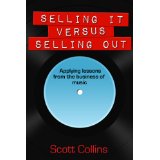
If you like this post, you can find The 3 Secret Problems of Jazz (and a number of other music business posts) in my kindle e-book, Selling It Versus Selling Out.

You may want to also check out my Indie Musician Wake up Call e-book as well!

AnIndieMusicianWakeUpCall

As always, thanks for reading!

-SC

The Power Of Negative Example or How NOT To Network Part 1

The Power Of Negative Example

Years ago, I had helped some friends of mine organize a music festival at CalArts.  I was originally brought in because they “thought I’d be good with money”, but pretty quickly I ended up taking on a co-leadership role and helping to organize an event that had 40+ acts in three performance spaces for a full day.  It was exhilarating and exhausting and in many ways worth all of the work that went into it.

After the festival, one of the co-organizers way kind enough to say the following to me.

“You know I learned an incredible lesson from you.  I kept thinking about how we were going to do something and your approach was, ‘It’s fine that we want to do that but this is what I don’t want to have happen…’ and just making sure a few things didn’t go wrong made it much easier to get the things we wanted to go right done.”

Success can be due to a myriad number of factors but when things fail, they typically only do so for one or two reasons.

Therefore, if you set up the basic conditions for your desired outcome to occur and then actively work against things that could go wrong, it’s much easier to troubleshoot than trying to create all of the conditions for success.

In other words, the “don’t do this” list is usually much shorter and more actionable  than the “do this” list.

With that in mind, I’m going to detail some serious pitfalls that I’ve seen and experienced in networking.  Networking is a vital component to artistic survival in the 21st century.  If you don’t build communities with people you’re going to be relegated to creating things in isolation and for most people that’s unsustainable.

Look for the deeper lesson

My recommendation with this approach is in looking at what goes wrong with networking look for the deeper lesson and see what you can do right.

How NOT to network

.

1.  View networking as an end goal.

I could have also said, use networking as an intransitive verb.  “We are going to network with that person…” is something that I heard come out of more than one music business major’s mouth while I was at Berklee.

Networking is a process of building a mutually advantageous relationship with other people, not a way to manipulate people into getting what you want from them.

Go to a music business conference and you will see the people who are there solely to network a thousand miles away.  Everyone else will as well.  There’s a stench of desperation that will clear a room out faster than a pungent fart.

2.  Be insincere.

Some of the more Machiavelli-insprired readers may take a page from The Prince and try to “network” and hide their self-serving intentions.  I would advise you to just be honest and transparent when dealing with people, but even if you were approaching this from the most Machiavellian perspective, I would say that there is no advantage to being insincere. Most people are not good enough actors to pull this off, and there’s no reason to.  Even if you were to fool people at the offset, they’re going to figure it out eventually.

3.  Try to capitalize on a non-existant relationship at the get-go.

I had someone contact me out of the blue from CalArts who wanted me to help him promote his release.  He wrote the e-mail like we hung out all the time or had a personal connection and in truth, I only vaguely knew who he was from his dealings with another person.  If this was a really good friend of mine, or someone that I knew it would be fine but it just came across as shallow manipulation.

I never think of networking as such.  I think of it as making friends and acquaintances.  I ask people I know for favors, and give favors to friends who ask me for them.  THAT’S networking.  If you approach networking with the same approach as you’d have in making new friends it will take you much further in getting you to the end result.

4.  Make it all about you.

No one likes a parasite.  If you don’t have a symbiotic relationship with people they won’t help sustain you in the long run.  Also, being really needy and constantly asking people for things is another way to get people off your radar.

5.  Don’t pay it back.

Ask for a favor and then be too busy to help people with something when they need it.  See how long that sustains you in the industry.

6.  Do poor work.

This one isn’t so obvious but you have to have something to offer to a relationship.   If you don’t play particularly well and you’re billing yourself as a performer that’s going to be a problem.  If you’re a singer songwriter and you neither sing or play well there’s not going to be a whole lot of reason to recommend you.  Building relationships is easier when you are that person people go to for things.

7.  Be irresponsible and/or don’t follow up.

This one boggles my mind.   The number of times that people don’t show for things or don’t do what they say they’re going to do is astounding to me.  Those people tend to move to the periphery of the scene or become absent entirely.

Related to #6, if you’re the best at what you do people may cut you a little slack, but if you flake out on things, people just won’t deal with you.

.

An Illustrative Story

There’s a lot more about networking that  I’ll cover in part 2, but in the meantime here’s an illustrative story that will cover much of what I’ve talked about.

I got an email from a student at Berklee who read my bio and wanted to talk with me about being a guitarist in New York City and wanted to know if we could meet up.  Even though I never got any assistance from anyone (much less alumni) when I went to school, I thought I’d help this guy anyways by paying it forward even though I knew that this meeting would fall into a professional guitarist/life-coaching area that I am generally compensated for.

We met at a Pret A Manger.  He asked a lot of random questions about what I did and about the scene and wrote down all of my answers.  I was shocked at how little research he had done.  He had been in the city for 3 days and hadn’t even picked up a copy of the Voice to see what was going on.    I gave him the best answers I could and helped him identify a specific niche that he could serve for his teaching and gave him a number of contacts.  He had a small journal and took about 5 pages of notes.  I gave him a card (which he left on the table) and wished him well.  I never heard from him again.

The sad thing is that I’m sure someone in a music business class told him to try to network with people already in the scene and while it really couldn’t have gone much worse for him from a networking angle, I’m also sure he thought the meeting went really really well.

There’s so much to learn from the mistakes above!  But let me put the scenario in a different light that may affect how you approach networking in the future.

Other than a story, what do I get out of this interaction?

You have to give people something if you’re going to continue a relationship with them.  Even if it’s nothing more than a thank you or offering to get them a cup of coffee.

If he had bought a book, or directed people to my website, or even sent a follow up e-mail that simply said, “thank you for your time” it might have given me something.

Do I regret helping him?  Absolutely not, but that door is closed for him in the future.

I’ll never hear from that guy again and it’s too bad for him because if he had handled that interchange better, I could have really helped him get the pieces in place that he needed to relocate and do what he wanted to do.

The golden question of networking then isn’t, “What’s in it for me?” but instead is, “What’s in it for us?”

In part 2 of this post, I’ll talk about how not to network with regards to getting reviewed.

Hope to see you there.  As always thanks for reading, I hope it helps!

-SC

False Victories, Paying Dues and Being The Bigger Person

Please note: this post started on Facebook.

Which is fine, some of my most popular posts start there but almost all of my friends of FB are people that I know professionally, and this perception is one that might help people in various stages of their musical journey and not just people who are professional musicians.

“Awesome!  That’s Telling Them!”

This email exchange has gotten a lot of traffic for the Dangerous Minds website.

http://dangerousminds.net/comments/how_to_say_no_whiteys_perfect_reply_to_a_tv_company_who_wanted

If you haven’t read it, a UK recording artist Whitey was apparently asked by a company called Betty TV to use his music for free and, in reply, Whitey wrote an angry screed, that had a lot of truths in it (such as the fact that companies should allocate money for budgets for music if they want to use it.).

So Whitey yelled at the man (that sounds strange but I’m sure you don’t choose a name like Whitey without wanting to be confrontational) and this act resonated with a number of artists – understandably so as it’s perceived as spitting truth to power and I only know a handful of artists who are fairly compensated for what they do.

On the other hand, just like the  high-fiving reactions to the Amanda Palmer crowdfunding success (later on to be known as the railroad spike in the coffin of Amanda Palmer’s career), the reaction to this bothered me as well.  On FB, along with the link to the article, I wrote the following:

This has made the rounds lately. Loads of attaboys and that’s tellin’ ’em.

Yawn.

Here’s what companies do when they get a long winded screed. They read the first sentence or two, discard it and go to musical act #3,184 who are more than happy to give their tracks away for free for exposure.

Musicians have been taken advantage of long before Col. Tom Parker ever met Elvis. You can write your ex a long letter telling them that you’re great and they’re awful and get identical emotional satisfaction.

It’s a hollow victory.

I felt a little bad for the ranting so commented on it about a 1/2 minute later:

Sorry, I’m just so weary of false congratulations. It’s being psyched that someone didn’t pry the quarter out of your hand and not realizing that your wallet was already stolen before you ever left home.

In response, a man I truly perceive to be a brother from another mother, wrote this:

I’ve worked in enough ad agencies to know that’s true. So what will it take to get more fair compensation for the creative class?

.

Perception of economic success.

That’s what it will take.

No one expects Sean Combs or Jay Z to give tracks away for free because they know that both people are already wealthy.

This tells us several things:

  1. Those artists can afford to say no to any business dealings because they are perceived as self sufficient.
  2. Those artists have money because they have large fan-bases and are perceived to be successful.

The other factor

There’s a third factor in this as well. Because people who work in mid-level jobs in ad agencies or the Film/ TV/ Music or Book industries either go big to try to claw their way up the ladder or do everything they can do to not get fired.  Expect most people to reside in category B 95% of the time and leaping over to category A when they think it’s a sure thing.

These people want to get artists with name recognition when possible because if the project tanks someone will have to get sacrificed to the god of client accountability.  If they have someone with a proven track record they can fall back on, “I don’t know what to tell you.  We used this person who they used for (insert successful movie/ad/etc here).

At the production level, you generally have people who have unimaginably tight deadlines. Those people want content that will fit the scene (or at least not draw attention away from the scene) and then move on to the next edit in the infinite number of edits for that project and future projects to come.

This is why placement companies are always looking for music.  I did some of this in college, working for a company where I’d listen to a huge number of tracks in their music library and then categorize each track in as many pre-defined parameters that it fit (“Happy”, “Uplifting”, “Major”, “Light”, etc).  This all got attached to a database, and then when a project came in and the director or the editor said, “I need something sad” or “minor” or “slow”, they’d have a hundred tracks ready to slip in.

Putting The Danger Back In Dangerous Minds

Production work is all about speed and efficiency and minimizing expenses where ever possible.

It’s somewhat odd to me that the Dangerous Minds page has gotten traction as the only dangers present are ones that neither the e-mail author or the website author have addressed.

The main hidden danger is tipping your hand in a weak negotiating position in the face of decreased sources of viable economic revenue.  A couple of other posts from DigitalMusicNews.com have also made the rounds in musician’s circles on FB.  This one talks about 5 companies that won’t be here 5 years from now (Pandora, one of the remaining 3 major labels, Spotify, Live Nation and MySpace music).  This one, talks about “the 13 most pervasive insidious lies of the music industry” and while it’s pretty dean on for it’s not pretty).

Realize that people in positions of power do not write long screeds about why they won’t do something.  They say no.  They may explain that answer (politely) in a sentence or two, but generally they’ll make a counter offer and they move to the next thing.

Why do they do that?

Because what comes up, invariably comes down at some point.

Because this is  an industry that is completely fueled by perception and networking.

Because there is no advantage to burning bridges.

So when you go off on someone in self righteous indignation, you just tip your hand let people know that you have no negotiating power and that you’re likely to be difficult in the future.

I’ve never heard of Whitey.  I doubt I’ll ever hear of him again.

So how do you get perceived economic success?

You pay dues.

I wrote about this in my e-book Selling It Versus Selling Out, but let me offer up a few things that augment that material well.

When one entrepreneur started her PR company from scratch, she knew that she would have to establish a track record to get paid.  Her plan then was to contact local businesses with bad advertising and PR campaigns and offer an initial service for free.  If they got better results, they could pay her for their next campaign.

She gutted it out and two things happened.

Many of the businesses that had increased revenue came back to her for their next campaign.

With a proven track record of success, she could go to other businesses and promote her services.

In a chapter about paying dues from that book, I stated that:

As an artist, you will very likely experience a long road of strange requests and expectations known in the business as “paying dues”.  Even your rock star idols have to do it.  Trust me, no one wants to get up at 4 am to play a 7 am set for morning television to promote their new release/concert/tour.

.

The thing to remember is that paying dues is a reciprocal relationship.


When you get to the TV or radio studio at 4 or 5 am to try to be ready to rock out by 7 or 8 am, you are doing so to promote yourself.  You are doing so to generate interest and to try to get people to follow what you are doing.  When you are starting a band, you will have to play a lot of venues for (in a best case scenario) little if any money.  This is done to get the band some exposure, to get some word of mouth promotion happening and to get the band’s live show together.  All valid points.  You aren’t getting paid, but you are getting something for your time.

.

A number of people will attempt to capitalize on this mindset to exploit you whenever possible.

.

Often this is not the Machiavellian plotting that the above statement would initially imply but is instead, merely misguided expectation. People are so used to seeing musicians willing to jump through hoops to play for free that it creates an expectation that is status quo.

.

This mindset is unique to music. If you work at an office and people find out that you play guitar, expect that they will ask you to play birthday parties or other events for free.  To contrast this idea, next time you have a plumbing problem, try calling a plumber and asking if he or she would be willing to show up and fix the problem for free and see what happens.

.


…This is an old challenge in business put in a new wrapper. 

As an [emerging] artist you’re probably going to have to convince people that they should pay for your services….You should expect to get your hands dirty and put in work if you want to adjust some people’s mindset.


Again, this is an industry that is fueled by product and largely driven by perception.

The Catch-22

I read an interview with James Hetfield once where he said that if he goes to Guitar Center and someone sees him playing an amp that by the time he gets home that the amp company has contacted him about a possible endorsement deal.  He went on to say something to the effect of, “Where were these people when I was using the same set of guitar strings for moths at a time because I couldn’t afford to change them?  Now that I actually have the money to buy whatever amp I want – they want to give them to me for free.”

By the time that you have the clout to be in the alpha negotiating position, you won’t need to make the deal.  The person who can walk away is always the one with more power.

Understand the landscape

If you’re an unknown or emerging artist starting a new band and you are playing your own music in a bar/club/non-traditional venue, you might not get paid.  If there is no audience, and no guarantee for the venue – this is a reasonable expectation. (And most pro musicians would avoid this scenario like the plague unless they wanted to rehearse their set in a live context).  There’s a difference between making no money to pay dues and making no money to pay the bar owner.  As a professional, you should know what you are getting into and make an informed decision and roll the dice that playing out will pay dividends somewhere down the road.

There’s a recent guit-a-grip post that addresses an important aspect of this:

If you’re currently making six figures a year in your day job, you are sorely mistaken (or outright delusional) if you’re taking on something new at the ground level and assuming that your time in your new venture will initially have the same value as what you’re currently making.

.

This also applies to many established artists as well.

Several years ago, I had the opportunity to work with a master musician who was releasing his first solo cd after having lived the shadows of being a member of a well known band.  His music was really good, challenging and a lot of fun to play.  I pulled a group together for him and we rehearsed for the better part of a year to promote an upcoming tour.

He got an offer to play at REDCAT in Los Angeles and turned it down because the pay was only $800.  The cd has been out for about a year at that point, and sales were low.  It had recouped none of the money that was advanced.  The band was solid and a gig like that would have gotten a lot of press and he would have sold whatever CDs he brought with him.  It could have been something that kickstarted other opportunities.

Instead, we played an outdoor memorial gig for free in a park with a backline that was largely non-functional.  That project faded and now he’s touring with an incarnation of the same group that he was trying to break free from because that group can demand a higher premium for shows.

Getting back to the initial subject.

Am I saying Whitey has to give his music away?  Absolutely not.  He has some clout but what he should have done is used the moment to discuss the point calmly and maturely.

There’s an old expression about relieving yourself where you eat.

  • In the entertainment industry, you’re likely to find your meals as scattered scraps initially so be very careful what you say to who and how you say it.  The intern today might be the music director tomorrow.
  • Be the bigger person and try to treat everyone well, whether their behavior deserves it or not.
  • Be prepared to educate people and to have to demonstrate your value to increase your negotiating position.
  • Rome wasn’t built in a day, this industry is as much about people who can do high quality work quickly and consistently as it is about being able to endure in the meantime.
  • UItimately, this is about understanding your value, increasing your visibility and aligning other people’s perception with your own.  It hinges then, on a belief in yourself or in an oft-quoted paraphrased I stole from Daren Burns,

“If you place no value on yourself – no one else will either.”

So know who and where you are, and don’t tip your hand when you’re not in the best position to negotiate.

As always, thanks for reading!

-SC

.

On Press Releases Or Learning The Right Lesson Part Two

I’ve talked a great deal about prioritizing in relationship to goal setting on the guit-a-grip site but I thought I’d put up a tangentially related

A while back, I was dreading the prospect of writing a press release for my 12-tone book release announcement.  For a long time, I had real trouble writing these types of things because I’m a very modest person by nature and the self congratulating accolades of a press release are an anathema to my presentation style.

But the simple reality is that at the end of the day, this is a business and you have to get people engaged in material before they buy it.  So it’s a necessary discomfort that eased with time.

Previously, I had released a short pdf on fiverr which was positively received and found someone there who has done all of my book covers for an extremely generous rate.

So I thought I’d give the press release a try. “Let’s see what someone who’s doing 20-40 of these a day (at $5 a pop) is generating.”  I was given a brief questionaire and told to answer the questions as specifically as possible.  5 days later I got the following Press Release: (Hint, you need to read it out load to someone near you to get the real effect of the writing).

.

FOR IMMEDIATE RELEASE

Contact: Scott Collins

Company: Guitarchitecture.org

Address: Brooklyn, NY

Email: https://guitarchitecture.org/2013/01/31/the-guitarchitects-guide-to-symmetrical-twelve-tone-patterns-is-out-now/

Guitarchitecture’s Symmetrical Twelve-Tone A New Book Release

A new book was released in one of the mostly misunderstood area. This is a one of kind book wherein they are offering a free tutorial for those who want to learn how to play the guitar. It is all about academic matters for those who want to explore a new composition of sounds. This book has all the important files on how everyone can learn the basic sessions for guitar.

.

The new book is about 100 pages and it all contains a lot of information regarding the keys, tones, examples and instructions of the guitar. This book helps the reader maximize their potential in doing their first love which is to play the guitar. Since it is newly released, there is an assurance that everyone can learn the guitar easier and faster. Scott Collins is a guitarist, clinician, educator and the author of this book.

.

The Symmetrical Twelve-Tone helps the guitar trainees in mastering the keys and tones of the guitar. There are several patterns that everyone can follow so that they can deal with the different kinds of compositions and improvisation. A lot of people are now enjoying playing the guitars because this more fun and exciting to play than other musical instruments. This is also the reason why many people want to learn how to play the guitar. This book is offered at a very affordable price, so there is no need to worry about the budget because anyone can afford this book.

.

The Guitarchitecture released their new book that can help everyone who wants to learn how to play the guitar. There is no need for everyone to enroll in some tutorial classes because the Symmetrical Twelve-Tone is now offering the best lessons that everyone can learn from. For those who want to explore new keys on the guitar, this book is perfect for everyone.

.

Learning the guitar is very easy if everyone knows how to do it properly. With the help of the Guitarchitect’s Guide to Symmetrical Twelve-Tone, it would be easy for them to learn the basic skills needed. A lot of people are now enjoying guitar lessons using only the Symmetrical Twelve-Tone guidelines. This book has a lot of benefits that can help those who want to learn and master the guitar keys and notes.

###

For more information, please visit https://guitarchitecture.org/2013/01/31/the-guitarchitects-guide-to-symmetrical-twelve-tone-patterns-is-out-now/. 

Ouch!  There are too many problems with this review to count!

At least it was an inexpensive lesson!  Here are a few things it reinforced for me:

  • Be careful of what you farm out and who your farm it out to.
  • If you’re going to experiment, do it early when the stakes are low.
  • You can’t always trust sample writings or reviews (how many times have you walked out of a restaurant disappointed with the meal and said, “I don’t get it.  The Yelp review was really positive….”
  • If you haven’t worked with the person before. prepared to put a lot of preliminary work in for setting it up or to put in a lot of editing work to finish it.
  • By and large you get what you pay for.

What follows is the press release I ended up writing.  It took 60-90 minutes because I edited it endlessly, but the end result was something I could actually use.  I did end up using another Fiver service to promote the book which worked fairly well.

News Release

February 1, 2013

For Immediate Release


New Twelve-Tone Patterns Book Provides New Sounds For Guitarists

The GuitArchitect’s Guide to Symmetrical Twelve-Tone Patterns is the latest release in the popular “GuitArchitect’s Guide To” series.  In Symmetrical Twelve-Tone Patterns, guitarist, educator and author Scott Collins rigorously examines twelve-tone patterns and then breaks the method into a number of core approaches to use in melodic, harmonic, improvisational or compositional exploration. In a topic previously relegated to the halls of academe, Symmetrical Twelve-Tone Patterns investigates the material in an intuitive and accessible way for guitarists at different skill levels.

Among other accolades, guitarist and loop pioneer Andre LaFosse, has praised the method, saying, “Scott [Collins] has an unusual ability to deal with highly esoteric and technical concepts, while simultaneously managing to present them in a very approachable, intuitive, and musical fashion. The scope of his teaching touches on everything from mathematical theory to life philosophy. His writing represents an extremely original – and stunningly well-researched – perspective on the guitar.”

A complimentary digital bundle of musical examples is available to those who purchase either the print or digital edition of the book.  In addition to MIDI files, PDFs and MP3s of all the examples in the book, the bundle also contains Guitar Pro files to help readers maximize their interaction with the material. Having the files in a Guitar Pro format means that the reader can use the Guitar Pro MIDI playback engine to hear the examples at whatever tempo they want thus using it as a phrase trainer to help get the examples to up to speed.

With an undergraduate degree in composition from Berklee College of Music and a graduate degree in guitar performance from CalArts, Scott Collins is an active performer, educator and visual accompanist. He is the author of The GuitArchitect’s Guide: series which includes guitar instructional and references books on topics such as melodic patterns, harmonic combinatorics, positional exploration and chord scales and has released several music business titles for the Kindle platform including, An Indie Musician’s Wake Up Call and Selling It Versus Selling Out.

“The GuitArchitect’s Guide to Symmetrical Twelve-Tone Patterns” is currently available in both print and PDF editions at Lulu.com http://www.lulu.com/spotlight/guitarchitecture.  More information about the book (and links to sample lesson material) is available at https://guitarchitecture.org/books.

ENDS

.

And a review:

In a related note, my 12-tone book just got a pretty humbling review on Amazon that made a lot of the discomfort in creating it seem worthwhile.  You can read the original review here.

This book is groundbreaking and vitally important for the modern guitarist, and I will concisely summarize why. The subject of twelve tone method applied to the guitar has never been anywhere near as well and accessibly explored as it has here, and it is a subject long overdue in the stale guitar world of today. This method, which the indisputably great composer Arnold Schoenberg introduced in the early part of the 20th century had massive repercussions throughout the music world, and ultimately swayed even the mighty Stravinsky. This example of one great composer converting another contemporary great is anomalous in history, only the Haydn-Mozart example is comparable in impact.

The material and examples are laid out in a very easy to grasp manner, and it is extremely helpful as well that the author has listed extensive permutations regarding the method, the latter is an invaluable resource in itself.

I will be expanding upon this review for my blog shortly, however I felt compelled to write this short due to the impression the book made on me.

This book makes all other guitar instruction books from the past fifteen years look completely obsolete, tired. Don’t miss out, the price you pay for this is simply a pittance compared to what you’ll get back.”

I’ve gotten a lot of positive feedback from my books but nothing like that!!

As always, if you’ve purchased a book – please drop a line at guitar.blueprint at gmail[dot]com.  I’d love to hear what you liked or disliked about it and it might make the next book even better!

At any rate, that’s it for now.  I’ll be putting up a music business / book publishing post soon that you might find interesting.  In the meantime, keep playing and as always,

Thanks for reading!

-SC

An Indie Musician Wake Up Call Is Now Available on Kindle

Hello everyone!

My first Kindle book, “An Indie Musician Wake Up Call” is now up on Amazon!   (If you have Amazon Prime, you can read it for free!) If you don’t have a Kindle, the Kindle app to read it on your mac/pc/iPad, etc. is free from Amazon.  The book description from Amazon is below.

An Indie Musician Wake Up Call (aka What Louis CK, Amanda Palmer, David Lowery and Emily White Really Means For The Working Musician) is a prog rock manifesto delivered as a punk rock intervention.

The book is comprised of two extended (but related) essays that address the real impact that Amanda Palmer’s recent Kickstarter campaign and Louis CK’s crowdfunding release has on working musicians (hint: not much), and the REAL problem musicians face with the David Lowery/Emily White NR debacle (hint – it’s not strictly file sharing).

“An Indie Musician Wake Up Call” is a rallying cry for real steps musicians will need to take in the 21st century to move forward and establish their careers.

Wait…”first kindle book”?

In related news, there will be a book of music business essays up on Kindle soon, as well as Nothing Ever Got Done With An Excuse, the book on project management I’m currently editing.

Additionally, the current book on Fiverr (http://fiverr.com/guitarchitect/teach-you-how-to-visualize-the-pentatonic-scale-all-over-the-guitar-fingerboard),

will be serialized and expanded on in a series of Kindle guitar lessons.

Kindle and GuitArchitecture Books

For those of you who have asked about the GuitArchitecture reference books getting moved over to Kindle, I should talk about the Kindle platform, porting the reference books and other materials over to that medium.
.
When I saw that the Kindle was the number one selling item on all of Amazon earlier in the year, I knew that I could reach a lot of people by moving my content there.
.
Files for the Kindle reader work on a proprietary format called .mobi.  Amazon has a converter that will work with a variety of formats (including .doc), but I’ve had better success with the final version looking like what I actually output in my exporting files as HTM (or HTML).
The first problem with the Kindle option for the GuitArchitecture books is that while Kindles can read pdfs, Amazon won’t sell pdfs on their store.  From a marketing point, Amazon’s store front is the biggest reason to move the books over so that plan of action won’t work for me.
.
The death knell, however, of porting the books over in their current form is that I would go broke doing so.
.
First, full disclosure.  If you go to sell Kindle titles on Amazon, there are two revenue options for the author (depending on the pricing of the book).  You can sell with a 70% rate of return or with a 30% rate of return.  Now your initial response to that might be, “Well of course! Take the 70%!” – but hold it right there partner!  If you take 70% option, you also pay the transmission costs for the book to people’s kindle.
.
The reason for this is that Amazon has a server that holds and sends those titles.  With the 30% rate of return, they’ll pay the data transfer rates (up to a certain point) but at 70% the author pays them.  Believe it or not, my rate of return is actually better at 30% than it is at 70%!
.
However, the GuitArchitect’s Guide to… books are SO large that even at the lower rate, I’d have to pay the transfer rates on each book.  This means that  I’d either need to sell them for MUCH more money than the current versions are selling for, or actually lose money at the current rate of sale.
.
This doesn’t mean that the project is doomed, but it does mean that the Kindle Editions of the GuitArcitecture books will have to be radically altered.  They’ll be more list oriented with less graphic representations.  Which will still be a good and useful thing, but it will be a very different book for the ones that have currently been released.
.
For those of you with the current PDF, I’d recommend sticking with it because the Kindle will have way less graphic information on it.
.

Again…Why Kindle?

.
For those of you doing the math, may wonder why someone would even take the time to port to Kindle at such a low rate of return.
.
In a word, volume.
.
Amazon is the largest online retailer on the planet (and probably the largest single retailer by now). Putting something in the Amazon pipeline means that it’s potential exposure to people who don’t know you is huge.  People who have readers want to read books.  They’ll look on Amazon to see what to read.  If people have to make more than one click to buy something, it’s all over.  So if you want to sell to people using Kindles – you have to sell on Amazon.
.
The downside is that the market is a million times bigger but there are also a million other fish in the pond.
.
Volume is a necessity for the author then as well.  The only way to make money at a venture that involves selling books at the $1.99 price point is to have multiple downloads on multiple titles.  If someone like a book generally the first thing they’ll do is see what else you’ve written.
.
Anyway, his is the rationale behind the efforts to release multiple titles on the platform.
.
I’ll have a lot more up about Kindle and branding and the GuitArchitecture site implications in all of this in a future post, but I thought that you might find the behind the scenes interesting.
.
In the meantime, I hope you can check out the books, and as always – thanks for reading!

.

-SC

.

PS – as a reminder you can find out about my other books (Including my new $5 Pentatonic Visualization Lesson Book on Fiverr) here.

Detriment Versus Determination

I wanted to take a moment to talk about balance in terms of vision, execution and success.  And I’d like to do this because, in what has been a challenging transition moving to NY,  I’ve come across a number of posts with well-meaning advice that all seem to work on the universal formula of: following your vision = success.

“You will always be successful if you follow your vision.”

That’s just simply not true.

It’s not only a case of gleaning the wrong lesson from a given situation, it’s a case of giving advice to people that makes them think that they’ve failed when they followed their vision and it didn’t bring them the result that they planned on.

Detriment

I’ve talked here before about the television show Shark Tank (and the much better BBC series Dragon’s Den that it’s based on), and one thing that happens consistently on the show(s) is people investing everything they have (and more) into a bad business.  They’ll present an idea that might seem novel, but when the investors get into the financials it becomes obvious that the business isn’t working.

It’s heartbreaking to watch because, as an outside observer, you can immediately see it’s a bad investment.  The people who have created it however are so passionate and have invested so much of themselves that they’re convinced turning the business around is merely a matter of determination.  They’re convinced that if they just keep at it and invest more money into it, it will succeed.  They’re convinced that it’s some shortage of resources, execution or acumen that’s causing the business to fail.

The Golem

The history of the Golem goes back much earlier in Jewish folklore than the story that I’m telling here,  but the most famous story of the Golem dates back to 16th century Prague.  Rabbi Loew, the chief Rabbi in the Prague ghetto, sculpted a figure out of mud (The Golem) and then (through a secret series of steps) brought him to life to protect the locals from antisemitic attacks.  The Golem went on a murderous rampage and to be stopped, Rabbi Loew erased the first letter of the word “emet” (truth or reality) on the Golem’s forehead leaving the Hebrew word “met” (dead).  The Golem turned back to lifeless mud and, legend has it, was taken to Rabbi Loew’s attic to be reactivated in the event that it was needed again.

Redefining “Success”

Now I don’t think that I’m telling tales out of school, but you can devote the rest of your life to carving anthropomorphic shapes out of the dirt and not make a golem.  Maybe you’ll prove me wrong!  But I don’t think that it’s a constructive use of time – if you’re trying to make a rampaging golem.

If, however, you like working with your hands and like sculpting golems you might find yourself getting good at it.  You might start creating something unique that gets the attention of other people, who ask if you could make a smaller version out of clay.  Or perhaps you document all of the golems that you create with photographs and release a photo book on The Golem project.

The point is, you can be successful in whatever you do but

  • it might not be the success that you planned on
  • any alternative success will only come out of hard, passionate work of high quality that connects with other people.
  • Finding alternate success requires being open to other possibilities.

Determination – A Guitar Story

When I went to Berklee, I had a couple of hometown awards for playing under my belt and had built up quite a bit of speed from practicing the same licks over and over again.

I also didn’t have any formal instruction.  I was practicing things with bad technique in a vacuum.  So while I could play quickly and energetically, I didn’t have anything to say and what I could say I could only express quickly and inarticulately.

I had inadvertently modeled my guitar playing after the way an auctioneer speaks at an auction.

“ihavetwentyfivetwentyfivedoihear3030thirthinthebackdoihear35…”

When I got to Berklee, my first teacher Doug (a killin’ Jazz player – btw), really took me to task on my picking and my timing.  He told me that I’d have to start all over technically.

I was pretty resistant to this idea.  So I said, “to Hell with that” and just kept doing what I did.

And like the people on Shark Tank/Dragon’s Den – my work stagnated.

Sure I got faster, and a little cleaner.  But, as a player I wasn’t getting any better.

Fast forward to going to CalArts. I remember the first lesson with Miroslav Tadic well.  I barely slept the night before and when we met,  I talked about how I wanted to learn repertoire, how I wanted to be able to negotiate odd time signatures in a more fluent way and how I really wanted to work on ornamentation and stylistic elements of Baltic music.

He had me play for about 30 seconds and said, “Your hands are a mess.”  Your fret hand is completely compromised for your playing.”  He told me I’d have to put intensive work in to fix it.

Again, I was resistant to the idea but realizing where I went wrong at Berklee, I decided to give it a shot.  I also took some lessons with Jack Sanders and Jack reinforced everything that Miroslav told me. Then I started the real work.

I started relearning everything that used my pinky.  Ultimately, I had to re-learn everything.

That was a while ago… and I’m STILL working on it.

“Success” – A “Career” Story

One of the primary reasons I went to grad school was because the local music scene I lived in was in a death spiral (in terms of how things had always been done) and I didn’t see that changing in any other scene. I thought if I could get a teaching gig at the collegiate level that it would a.) be something that I could engage in passionately and do really well and b.) give me the financial stability to do what I wanted to do with my musical interests on the side.

When I got out in 2008, the job market was grim.  The following financial crisis made it even worse, and I realized that (in an ever shrinking pool of positions and downsized departments) that (for the few positions I was seeing open) no one was going to even look at my resume without a doctorate.  And a doctorate wasn’t in my future.

I realized that the only way I was going to get into that building was through the back door.  So I worked on books and tried to establish myself more as a player.  And then, I was informed that without a lengthy peer-reviewed process with a limited release on a “name” publisher that no one in academe was going to take my books seriously.

(This despite the fact that no one in academe has released 1200 pages of guitar reference texts, much less done so in the same academic year.  There’s an extended rant in my pocket about the whole outdated academe publishing scam that I’ll save for another post.)

It was the last reinforcement I needed.  For the foreseeable future, I was going to have to go it on my own.

If I viewed going to CalArts solely as a stepping stone to a university faculty position, it would (thus far) be a profound failure.

But I don’t look at it that way.

In addition to the incredible knowledge I got there, my books would never have been done if I didn’t go to CalArts.  I never would have gotten the video game credits I have if I wasn’t there. This blog wouldn’t exist and I wouldn’t be writing for Guitar-Muse.

Even more importantly, I never would have met (and played with) people like Miroslav Tadic, Vinny Golia, Randy Gloss, Susie Allen, Wadada Leo Smith, Butch Morris, Carmina Escobar, Daren Burns, Sahba Motallebi, Craig Bunch, Eric Klerks, Sarah Phillips, Andre LaFosse, George McMullin, Don McLeod, John French, Jonathan Wilson or the dozens of other people I was fortunate enough to meet and play with being there.  Some of these people will be lifelong friends and (while my creditors would disagree) you can’t put a price on that.

.

In other words, it paid off in different ways and was a success in other ways, but not in the way I initially planned for it to be.


And so…

Be determined and passionate and present in whatever you do, but be balanced enough to know when you’re making progress, and when you’re trying to make a Golem.

Like the first lesson that Miroslav gave me, putting that advice into practice might take a while to implement.  But trust me, it’s a good use of your time.

.

I hope this helps!  As always, thanks for reading!

-SC

Be Wary Of The “To Kill A Mockingbird” Production Model

Harper Lee


I’ve been accused of having pedestrian tastes when listing Harper Lee’s To Kill a Mockingbird as one of my favorite books, but it’s a decision I stand by.  It’s extremely well written with excellent story telling, indelible characters and meticulous language and focus.  It’s truly a classic work.  


Here’s a question though, have you ever read any other Harper Lee books?


In case you’re wondering why you haven’t, it’s a trick question as there aren’t any.  A recent compelling documentary, Hey, Boo: Harper Lee & To Kill a Mockingbird, has brought to light a fantastic back story about the book.  Airline reservationist and author Harper Lee secured a literary agent with some strong short stories and a personal referral and then saw the original manuscript for Mockingbird rejected by 10 publishers before finding an editor in Philadelphia at a publishing firm who saw something real in the work.  The editor liked the idea but saw a series of short stories instead of a unified novel in its submitted form.   So the two of them went to work crafting a novel.


They proceeded to spend two years editing and hashing out the story.  I can only imagine what an exhilarating and agonizing time this must have been for Ms. Lee (she is said to have referred to this period of her life as, “A long and hopeless period of writing the book over and over again.”)  but the payoff was a book (and a movie) that became a classic (and a huge financial success).


Harper Lee hit paydirt with Mockingbird but while she never stopped writing, she never published again.  


Isaac Asimov

On the literary front, an interesting contrast to Harper Lee can be found in Isaac Asimov.  One of the most prolific writers of all time (his Wikipedia page bibliography is approximately 500 books), Azimov was originally a biochemistry professor at Boston University who became a wildly successful and influential author. I don’t know that any of his books have the emotional impact of Mockingbird (and none of them have the civil rights impact that Mockingbird did), but there’s no denying his influence.

.

In terms of artistic output,

I recommend that you don’t hinge all your efforts on any one big payoff.


It’s easy to fall into the trap of pursuing “perfection” in artistic output (particularly with regards to recording), but in my opinion, you shouldn’t hinge all of your efforts on ONE defining work.  This is applicable to any aspect of artistic work, but consider for a moment bands who hole up for years on end recording, editing and mixing their full length “masterpiece”.

.

In addition to the fact that it’s impossible to ascertain how it will hold up over time (I’m sure that there are a lot of former members of ’80s bands listening to the then “hip” electronic drums on old recordings and wondering what they were thinking.), all indications for the current and future economic model for working musicians involves multiple streams of revenue from multiple releases, sources and performance.  

.

In other words, you’re going to need a lot of output and it all has to be high quality.  


Creating a classic work like To Kill A Mockingbird is like hitting the artistic lottery.  Instead of getting stuck on any one big project, work consistently hard, keep enough perspective to know when a project is done (the subject of a much longer future post) and keep outputting material.  

.

As a short term example, 3 four song EPs released over the course of the year might ultimately gain you more traction (and visibility) than 1 full length released every 12-14 months but it will most certainly put you in a better spot that one full length released  every four or five years.

.

(In related news, I’m taking my own advice on this and plan on releasing a lot of Scott Collins output that’s been in a holding pen for a while.)

.

Stay engaged.

Stay productive.

Make everything you do as great as you can

then let it go and move on to the next thing you do.

.

As always, thanks for reading!

-SC