“It only takes one apple” or why customer service matters

Hello everyone!

I’ve written before about my recent relocation, but I had something come up in the move that highlights the importance of every contact we have with other people. 

The Digitech Space Station

The XP-300 is one of my favorite effect pedals of all time.  Having said that:

  • the A/D/A wasn’t great, and it was the exact opposite of transparent in the signal chain.  
  • It had 30-some presets but none of the parameters on any of them were edit-able.  

So while it wasn’t a great pedal on paper,  it actually had some great fx.  In addition to some nice swell sounds (you can hear it here on this Visible Inc. track – I ran out of space on Soundcloud – but I’ll have this up again!)

.

It had some filter sounds that ranged from wild to really musical:

.

and some really cool reverse sounds.  This is from an unreleased TubTime session and a good lesson on how not to solo over a static tonic in 7.  Geoff Chase is killing on drums on all the Tubtime stuff – so a big shout out to him.  Spacestation is in the beginning and the overplaying starts around  1:09.  (As an FYI – If I remember correctly this is a Ernie ball volume pedal, Big Muff Pi, Space Station and a Guyatone MD-2 run through a Fender 4×10 Deville.)

And finally some nice pre-whammy pedal glitch stuff as well (this is actually excerpted from the same piece as the solo above!)

.

Alright – anyway I used it A LOT for a number of years and even when I went to line 6 and laptop rigs it and a volume pedal were often the only external pedals I’d have in the signal chain.  The problem was the power supply connection got a little funky from velcroing it to my pedal board and it started to die on me on various gigs.  So it’s been sitting in a “to do” pile while I hoped that Digitech would get smart and just release the code as an AU or a VST.  (I say get smart because when a pedal sells for 3-400 dollars on ebay there’s clearly a market for it still – so if you already have the code it’s really not that challenging to port it over to a shell and make some money off of it.  But I digress with an aside about quibbles with Digitech’s marketing concept).

During the packing for the move, I had to make a number of decisions about what I was willing to get rid of as I simply couldn’t afford to mail everything.  When I came across the pedal – I went online and read a series of posts that said that Digitech would replace the power supplies for a flat fee of $30-$40 (I don’t remember what it was) so I called the repair center.  I had previously gotten an RMA for a GNX and they did a good job of turning it around so I didn’t expect any problems this time. It took a while to get transferred to the right department but I finally got someone on the phone.

Digitech: “Yeah?”

Me: “I’m sorry I just got transferred here – is this the repair center?”

Digitech: “Oh…yeah it is.  What do you need to get repaired?”

Me: “I just have a power supply on an XP300 that I need to get replaced.”

Digitech: “We don’t repair those anymore.”

Me: “ok…So what do I have to do?”

Digitech: “(Sighs and adopting the most dickish tone imaginable) You need to go to the web page and look for an authorized repair center near you.”

(I should mention that this is problematic for some people because having gone to the web page –  if you don’t live in an area with an authorized repair center you’re directed to the Digitech repair center – i.e. you’re SOL).

Me: “Alright – well the repair centers don’t repair all Digitech products right?”

Digitech: “That’s correct.”

Me: “(Still optimistic here) So is there a way for me to tell from the web page who will repair the unit?”

Digitech: “No you just have to call them all to see who will take it.”

Me: “(pause biting my tongue) So if I do find someone who will repair it they’d still probably have to order the power supply from you correct?” (Now finding this silly since the repair center is still involved on some level in the repair of the unit.)

Digitech: “Yeah probably.”

Me: “(Fed up) Clearly I’m taking up a lot of your valuable time.  So I’m going to let you go.  Thanks for clarifying my relationship with Digitech in the future.”

Digitech: “Ok.”

.

And I threw the pedal out.

That might come across as petulant – but I decided a long time ago that I wasn’t going to deal with poor customer service and what I have a difficult time conveying in the post is the sheer smarminess and exasperation of this person’s response.  

I understand that companies can’t update their products forever – but when a consumer has already purchased a product why would you expect them to go through the legwork when they eventually have to fix it? (Especially when Digitech could have easily just had some unpaid intern contact those repair places and gotten a list of who does what repairs and put that information on the website rather than just say, “Oh we’re not fixing those anymore – so go figure it out.”)

.

The Line 6 Variax

I bought a AC-700 from Sweetwater when they were discontinuing the line and it was a really cool instrument – especially for tracking acoustic guitar parts at home and not having to deal with setting up mics in a noisy apartment.  When the guitar shipped one of the piezos was dead so I contacted Line 6 customer service.  The  person on the phone was really helpful.  They offered to give me a list of repair centers and when I said that I couldn’t be without a guitar for a length of time to get it repaired – he asked me if I was comfortable with soldering (I was) and then said he could just send a replacement piezo and that I could call him when I had to install it when I got them.  He actually mailed me 2 of them (in case one of them didn’t work), and after removing the bad one – the new one worked like a charm.

.

Some thoughts about customer service

.

So the similarity between the two experiences is that I dealt with only one person from each company.  

The difference between the two experiences is that while I will probably never own another Digitech product, I would tell anyone who asked that Line 6 is a good company and that they’re good to deal with.  

.

(In a related note, I have a good relationship with Sweetwater.  Do they always have the cheapest prices?  Nope.  But they have things in stock, they’re knowledgable and they’re pleasant to deal with so when I a/b purchasing something from Sweetwater versus, say Guitar Center and the almost universally awful experiences I’ve had there – it’s a pretty easy decision.)

.

Admittedly, I am over-reacting (and dealing with every other stressful reaction of a move made my desire to deal with repairing something nil) – but the lesson here is that it sometimes only takes one person and one interaction to instill or ruin good will – and it takes a LONG TIME to rebuild that good will. 

.

How many times have you gone online to research a product and found someone just going off on it?  If you really care – you’ll look for other reviews but you only need to find a few of those about a company or product to move on.  Those people kill products and ultimately they hurt companies as well.  

.

As a working musician – you are a business and your business will succeed or fail based on what you offer, who you offer it to and how you offer it to them – so customer service skills are essential.  

.

Please take the preceding and the following as merely the incomplete and well-intentioned advice that came from years of making costly mistakes that it is.  

.

  • Treat every person and every interaction seriously and with respect.


  • Communicate proactively and clearly and put the emphasis on listening rather than speaking.  People generally don’t know how to ask for what they really want – by listening you can help piece together what they are asking for and what they are really looking for/inquiring about.


  • You’re not always going to be able to say yes to everyone or make everyone happy but if you have to say no, offer compromises or other solutions.  Be helpful.  


  • Don’t assume something is clear or understood.  Actively reach out to people you are working with to make sure you’re on the same page and have the same expectations. (I re-learned this lesson again recently the hard way.  So hopefully you’ll benefit from it now!)


  • Be careful of what you say and what you commit to.


  • Never compromise your integrity.  Do what you say you are going to do, but don’t do anything that compromises what you are all about.


  • Create clear expectations and clear boundaries.  There are people who will ask the world of you and trying to give it to them will kill you.  Be firm but fair, and set real limits on what you are trying to do.

.

It’s one thing to say something on a forum or post on the internet – but a whole other thing to deal with people on a personal level.  I’ll talk in more depth about this in the future, but if you don’t already, consider putting real stock in your interactions with people.  If nothing else, in the long run it’s to your advantage to do so.

.

As always, I hope this helps and thanks for reading!

-SC

.

PS. If you like this post, you may also like:

.
Where To Get Your Guitar Repaired In LA Or Lessons For The Self Employed Musician

“A Tale Of Two Cities” – Or A Lesson On Managing Consumer Expectation

.

Surviving The Gig

I’ve been fortunate in that I’ve had the opportunity to play a lot of different styles of music in a number of bands.  In terms of gig referrals, this has pluses and minuses.  In the plus category, when someone needs Frisell-ish textural guitar on one tune, post-tonal shred on another and fretless on a third – I’m on a short list of players that people call.  On the minus side, for generic guitar needs (“We need a (rock, jazz, blues, etc) guy for this track”, other people who specialize in that type of vibe will often get the call.

If you have a stylized sound you’ll get calls for some gigs, but to keep working, you’ll also need a generic enough skill set that you can cover other things if you have to.


Each band I’ve played in has had different challenges to approaching material, but there are two general points of emphasis I’ve come across.  The situations all call for quality, but depending on the quantity, quality may be a very relative term.

How To Learn 110 Songs In 6 Days

Years ago, I had a gig opportunity open up for me when I was living in Boston.   A friend of mine on faculty at Berklee gave me a call  to see if I wanted to take over what we in Boston called a GB (General Business) gig.

GB gigs are typically weddings, corporate gigs or something similar.  The emphasis on these gigs isn’t to make a big spectacle.  Your job is to provide some background entertainment and stay out of the way of the function as much as possible.

The gig pay wasn’t great but there was a challenge that I couldn’t pass up.  I’d have to learn five one-hour sets of music (110 songs) in a week. The songs were mostly covers (60’s to top 40 in scope), and while I had heard most of them, I didn’t know any of them.  There were also at least six originals that I needed to learn as well.

I’ve always liked challenges so I said, “Sure! Let’s see how it goes.”  I got through the gig and ended up making money playing with the band for the better part of a year.  So here’s what I learned.

  • Have a game plan.  Since the gig was in 6 days time, in reality I needed to learn all of the songs in 5 days and would possibly be able to carve out some time to run trouble spots in the 6thday.  Since some of the songs were ones I had already heard a lot, I worked on the assumption that figuring them out would not take a lot of time.

    I started with a plan of getting down 20-30 songs a day (depending on how long it took to learn them.)  The gig itself was only 4 hours, but I wanted to at least have gone through all the tunes in case people called them out.

  • Start with the hardest and/or most unfamiliar tunes first.  They’ll be the longest one’s to get into your head (or your fingers) and if you start them first you’ll be able to review them each day while you work on new material.
  • Top priorities:  PRIMARY SONG elements (the key, main riffs, chord progression and song form).  Day tripperwon’t fly if no one’s playing the opening riff.  The focus here is essentials.Here’s the question to ask when determining essentials.  If the tune was being played as a duo with you and a vocalist, would someone recognize the song?
  • Secondary priorities:  Is there a signature solo?  Are there specific rhythm parts that you need to copy or will generic voicings do?  Are there specific timbral elements unique to the song?  If you’re playing Purple Rain, you better have a chorus or a flange and the right rhythm (and voicings) or it ain’t going to fly.
  • Take notes.  There’s no shame in a messy set list.  I had crib notes everywhere for the gig.  Usually this was just a reminder of what key the song was in and some short notes on progressions on song form

    (i.e  “song x” –

    G (This indicated the key)

    unison intro (just a reminder)

    3rd chorus solo.

    The point was to just have enough notes to jog my memory about the tune.  Unfamiliar tunes had some more detailed notes like chord progressions written in (like a verse or a chorus).

  • Smaller is better and stay flexible.  Tone wise you should have 2-3 primary tones (clean, dirty and lead) that you can tweak to get close to the song.  If you have patches for every single tune, it’s going to fall apart.  I did this gig with a Pod 2.0, pedal switcher and a fender amp.  I never used more than 5 settings.  Part of this is to know your sounds and get close rather than perfect.  Having said that, this rule changes if you’re in a tribute band.  If you’re playing in an Ozzy Tribute band for example, then you better plan on having every tone identical, every lick and every solo note for note.  In gigs like this, the goal is to get it close enough that it doesn’t draw attention to what it is, namely a cover band instead of the real thing.
  • Take lots of breaks.  You’re going to need to stay focused for something like this so plan on taking frequent breaks to recharge and come back to it fresh.
  • Play with good musicians because they will save you.  While the music we were playing wasn’t my favorite, the musicians were very good and had the tracks down cold.  If everyone knew the tunes at the shallow level that I did, we wouldn’t have played the gig nearly as well as we did.  Additionally, since the keyboardist/vocalist and other vocalist knew a ton of tunes, if a request came up and I didn’t know it they could generally do a stripped down version of it as a duo.
  • Be professional.  This is really right next to musicality in importance if you want to gig consistently.  People who show up late, drunk, unprepared, or not at all are people I’ve never seen on a stage more than once.  Gigs are stressful enough that people don’t want to have to worry about you.  Make sure that you’re not part of any problems that come up.
  • Finally, no one wants to work with a jerk.  I don’t care how brilliant a musician you are, it doesn’t mean much if you’re a crappy human being.   This doesn’t mean that you have to suppress your strong opinions and kowtow to everyone around you but it does mean that you’re not the only person at any gig and there’s no reason to act that way.

As general advice, what this really speaks to is the depth of which you know (or need to know) something.   I saw the movie Rock Band again recently and there’s a funny scene early on in the film where Mark Wahlburg’s character stops a band rehearsal over a small discrepancy in a performance and I laughed because I’ve been in situations where rehearsals stopped because I threw a fret hand slide in somewhere or where days were lost because I was required to match tones exactly.  I’ll save that story for another time…

In the meantime – thanks for reading.

-SC

A Lesson In Improvisation And Jargon From A Cooking Show

Improv lessons from a cooking contest show

If you’ve ever watched a cooking competition show – you’ve probably seen some real world improvisation.

.

The Challenge

  • Contestants have an imposed time limit
  • They have an ingredient(s) they have to use
  • There is a mandated outcome – something that has to be done

How is this not improvisation?  You have a skill set that you need to employ to navigate a series of changes that may or may not be unfamiliar to you.

So how do they get through it?

.

The Approach

  • Emphasis on fundamentals.  The chefs have the confidence to execute because they have the basic skill set to do what they need to do.  They have a command of knife skills, cooking techniques and have a developed palate to work from.  These are basic things – using a music analogy – there’s no obscure chord scale or advanced reharmonization happening here – just using the fundamentals as a basis to establish an area of comfort and familiarity from.
  • Emphasis on repertoire.  They have a number of other dishes that they’ve mastered to serve as a template for what they want to do.  If you’ve cooked several thousand past dishes and someone says, “I need you to make me a pasta dish” you’re not going to freak out because it’s in a comfort zone.  If you quote tunes in your solos or comping – you quote tunes that you know so well that you can adapt elements of them at will.  Those trills you use on that klezmer tune you play every set – works their way into a phrase, etc.
  • Adaptability and creativity.  This is really a combination of the two points above.  There’s a constant stream of  plays on things, “This is my play on mac and cheese.”  Previous dishes that are mastered are used as launching points for new innovations.  From a guitar standpoint – maybe those string skips you developed to get that piano solo under your fingers you liked are now being used in a different context for your thrash solo.
  • Being in the moment.  They taste their food.  They monitor multiple components and adapt as necessary.  It may be the closest analogy to improvising a solo over a rhythm section for a tune you’re unfamiliar with.  You listen to the drummer, and the bassist and whoever else is playing and while you create music that enhances that.

.

What the unsuccessful chefs have taught me, is that an approach that works for one thing may not work for everything.   “Oh I want to wow the judges, I’d better use Truffle oil.”  which may or may not work in an ice cream.  I heard an mp3 of Eddie Van Halen jamming w. Holdsworth once and it was grim – because he was just doing the Eddie thing over Holdsworth’s comping and it didn’t work at all.  It sounded like the bleed through of two guys in adjoining practice rooms working on something different at the same time.

When you’re in some kind of timed artificial event (i.e. they’re forced to improvise) – this approach makes sense.  When dealing with something unfamiliar you go with what you know.  You pull out the well-worn licks that have worked their way into your vocabulary. That’s also when you find out just how well you know something.

It’s not just about learning licks to play over ii-v->I’s – improvisation is a mindset as well – if you look for it in sources outside of music – you will find things to adapt and bring into your musical improvisations. It  brings something different to the table than someone who’s learned every Coltrane and Bird lick and nothing else.

.

And now as an example of what not to do: A drinking game

I don’t drink – but if you do and you’re looking for a drinking game here it goes.

  1. Turn on the Food Network.
  2. Take a drink whenever someone says , “Big Flavors” or “Flavor Profile”

.

You’ll probably be drunk in an hour.  It is basically impossible to watch the Food network and not have someone talk about the merits of “Big Flavors” or on some dish’s flavor profile.

And what do these terms mean?  Is there anyone out there trying to cook with small flavors?  And “Flavor profile”?  Really?  How about just calling it “taste” instead?

The thing is, this jargon has been hijacked by foodies and now it’s difficult to watch anything regarding cooking and not hear those terms.  My beef with jargon is that it should serve the function of simplifying a process through language and instead typically acts in an exclusionary manner.

.

Music and jargon

When I did my undergraduate degree I had to take several classes that dealt with post tonal theory.  As a starting point, what does “post tonal theory” mean to anyone other than a composer or an improviser?  Can you imagine seeing a CD cover with a label on it that says, “Now with Post tonal Theory!”?  In terms of accessibility to the layman, it goes radically downhill from there.  Where some of the music created with this mindset is vibrant and exciting, the language and jargon around it explains what’s going on only to those in the know.  It makes no attempt to make inroads to the causal listener, and statistically there are way more music listeners than post tonal theorists.

Music is a language and like any language if you break away the accessibility of it, you doom it to oblivion.  In the 1950’s people still actively studied Latin – it was even taught in high school until it was pushed further and further into the realms of academia (I know Chronicle of Higher EducationAcademe is the new preferred jargon – but academe is a poor shell of a word), and now is only taught in a increasingly fewer places.  It transitioned from a vibrant language to a patchwork of quoted phrases thrown out as part tricks.

The same thing happened to post tonal music.  Inside the hallowed halls of academia, there is a compositional indoctrination that occurs; a self-congratulatory high-five for music that is performed in student recitals to crowds of 10.  The theoretical language that is posted to describe these works often reads like a combination of a repair manual for a 1950s radio delivered with the melodramatic sincerity of an adolescent journal.  Taken on its own merits, it reads as intellectually aloof and emotionally underdeveloped and seems to be defensive before anything has even been sounded.

If the first thing people are exposed to is inaccessible, why would they take the effort to go on?  True, academia tends to support projects and approaches that reinforce the need for academia (i.e. peer reviewed journal entries that are so topic and jargon specific that only other academics will bother to read and understand (read: scrutinize) them); but this doesn’t help make the music more accessible.  It brings up the question of,

.

Is it music if no one hears it?

Sure it can sit in a drawer or live on a cd.  But if no one is listening to it being played is it music?

.

Music requires a performer and an audience.

Like any conversation it requires a speaker and a listener, and the magic is neither in the speaking or the listening – but in the communication itself.  If there’s no listener, there’s no communication, and no music.  This doesn’t mean that quantity equates with quality (it’s not a contest about how many listeners you have) iit’s about being inclusive rather than exclusive.

Just a thought…

Thanks for reading.

-SC

The Double Edged Sword Of “Fix It In The Mix”

Recently, while working on some mix downs of the Rough Hewn Trio improvisations we found a track that we all really liked had some nasty digital distortion on the take.

So as a workaround we decided to see if we could salvage it  by reamping the track through the Atomic Amp.  Craig and I sent the signal through the Duet out into the amp and then threw a 57 on it to see what happened. (From a technical standpoint there was a noticable difference. I’d like to think that the tubes smoothed it out a bit  but I don’t know if it was really a huge sonic improvement over just reamping it in POD Farm.  I’ll have an excerpt online soon.)

“Let’s fix it in the mix” in general is an act of desperation but it’s one that can be rooted in prgamatism (and one that is encouraged in recordings made by the music industry).

DIY Recording

When a new band records something they typically don’t have a lot of cash.  But they have a computer, some recording software (or worse warez) and some USB audio interfaces and think, “Oh hell I got all those great plug ins the pros use, we can record our cd here and it’s going to be amazing.” (and to be fair – sometimes it is and (in general) I’d say the overall quality of sounds people are getting at home is the highest it’s ever been largely due to the quality of samples and processing available –  but if you’re recording everything from scratch you’re usually in for a world of pain.

If said band is a live act with a live drummer then they either buy a bunch of mikes and stands and track it home OR go to a studio and track it there.  If they do it at home – they probably don’t have very good quality microphones, headphones or monitors – and will go to the studio to try to try to fix the problem.  This is the tip of the sonic iceberg.  There will often be a lot of other mix problems and it will either be a sub par recording OR at the bite the bullet point – they will get a professional to come in to fix it.

This is typically expensive (to get it fixed properly) or unsatisfying (if heavily compromised).  Fixing something that has gone horribly wrong is usually very time consuming and therefore very expensive.  With solutions of either have to spend money trying to fix what exists or re-record parts of it, at a certain point new bands simply run out of money and then make the most of what they have.  Again – usually with mixed results.

Let’s look at a major release for a moment.

Another Story Time With Scott

Again, the following has been altered to protect the guilty.

A very good friend of mine is a world class engineer/producer.  Super cool guy.  He was telling me once about a major label session that he did when he first went to NYC with a well known band.  The recording he worked on with them was a multi-platinum release.

“I can’t listen to that cd”, he once told me, “there’s not 4 bars of anyone playing at the same time on it.”

See (it used to be that) when you’re signed to a major label – you got the sweet sweet advance.  On the surface, it’s an intoxicating dollar number and the band is thinking they’re going to be able to live off of it for years!

But then the manager gets a cut, and the agent, and the producer (picked by the label and either working a flat rate or percentage or both), and then there’s the studio with the sweet sweet gear.  Even with the block book rate it’s still costing a pretty penny and it’s all recoupable against media sales.

So the gear gets all set up.  And scratch tracks are recorded and the first track is played down.

Repeat 30 times.

Move to next song

Repeat as necessary

Then the producer and the engineer go through the recording of the drums – meticulously for a LONG time (think days, or weeks versus hours) .  The producer starts making notes like – “Okay for track 1.  I like the intro from take 6.  The first verse from take 10, the chorus from take 2,” etc. and frankenstein a drum track together.  Then beats are corrected.  Drop fills, etc.  Until they have the perfect drum track.

For a moment – think about how long that would take someone to do.  Even if they knew Pro Tools really really well.

Now imagine this process repeated with bass, guitars, vocals, etc.

Now imagine mixing it.  With this same attention to detail.  With mutiple mixes run by multiple people.  Until (finally) everyone signs off on the mix and it gets sent for mastering.

If you’re imagining time as money, you can see why a new release might cost $250,000 or more.  Since this money is all advanced  based on sales you can imagine how long it takes for a band to get their money back.

It is essentially  a brilliant type of loan sharking.  Money is loaned to an act at an impossible point of payback with the full knowledge that they will never be able to pay the money back to get paid for their work – BUT in the meantime -the actual work they’ve done (said recording) would still be raking in money for the label that they weren’t entitled to.

It’s kind of like if a loan shark had you paying money back – but somehow was able to deposit 90% of your paycheck before it got to you.  As you were getting full taxes deducted on that amount and drowning in debt – you ask when you’re going to see some money and are met with a response of , “What do you mean get paid?  You’re still paying the interest.  We’ll let you know when you get some money.  I understand it’s hard.  Why don’t you borrow some more money and go on tour?That will bring in money.”  The touring expenses are also recoupable, and so it continues like indentured servitude.

As a contrast – Poison’s debut was done in a weekend.  Not a brilliant sonic document – but I heard that they spent something like 30k on the recording and actually made money off it.  (think about that as a cost for a weekend record for a second next time you budget going into the studio).

For a more musically satisfying example – Stevie Ray Vaughan’s Texas Flood was recorded in an afternoon.  They set up their PA in the studio.  Played their set.  Went to lunch.  Came back and played the set again.  Then John Hammond took the best takes and mixed it down.

It’s important to be able to perform at a high level without having to rely on digital editing to get a useable take.

Because there’s no second take when you’re playing in front of an audience.

The double edged sword of “fix it in he mix” – is that it’s also important to know when to stop.

When you’re on take 100 of the verse vocal and it’s not working – you may have to call it a day and edit it together later.  Metalocalypse, has a brilliant moment involving this idea with  “One Take Willy” that, unfortunately, is truer than it is comfortable.

When spending time in a studio tracking, there’s a constant balance of the cost/performance/time ratio. (i.e. getting the recording with a minimal number of takes). If you’re (insert major label super over produced auto tune vocal act here), this is not really an issue – but if you’re not rolling in money – “fix it in the mix” always has a certain degree of uncertainty to it and a general loss of money.

I’m not saying, “don’t be experimental” but it’s important to realize that ‘experimental” usually has a high cost either economically in a studio or in time if done at home.  And it’s important to keep your eye on the bill so you don’t get stuck with the full tab.

Thanks for reading!

Where To Get Your Guitar Repaired In LA Or Lessons For The Self Employed Musician

Yesterday, I took some cash from a gear sale and had a Wilkinson tremolo installed on my FNH guitar which was a long overdue modification.

I started by calling Andy Brauer, to see about getting the work done.  The first thing Andy said to me was that the scope of the job (i.e. routing out a cavity on a guitar with a hard tail bridge) wasn’t something that he would be willing to take on, but he said if I called him back in a half an hour he’d get a phone number to me.

.

Lesson 1:  Have a clear concept of what work you are willing to do rather than half ass something you don’t want to do. Since this isn’t an option for someone of Andy’s caliber – he made a referral for me so I could get the work done


I called him back a 1/2 hour later and Andy got the number for me. He told me to give Seth Mayer a call (818-427-1543).  I got in touch with Seth and he seemed like a nice and knowledgeable guy and told me to bring it by his workshop that evening.  As Andy had referred Seth (and Andy’s reputation is unimpeachable to me), I went to Seth’s knowing that I was going to get my instrument sorted out.

.

Lesson 2:  When you refer people to someone you build good will but you put your name on the line.


I brought it by Seth’s and he explained that the holes from the original bridge might need to be doweled and might not be completely covered up by the new trem.  This was fine with me.   I said he didn’t even have to sweat putting a back back plate on the route  as my main concern was that it was functional instead of being “pristine”.  Seth said he would do what he could to try to accommodate both aspects and that it would be done within a week.

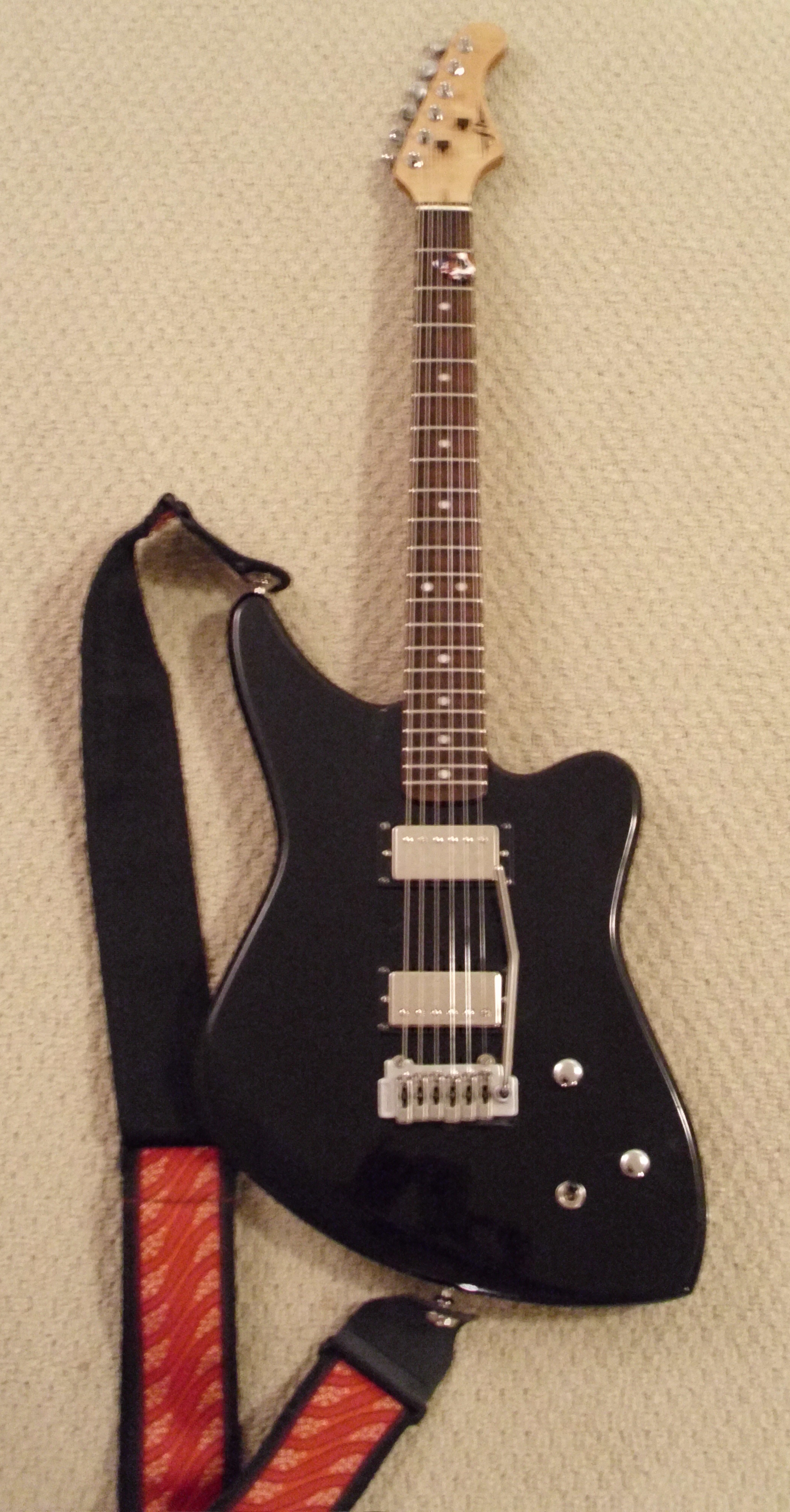
I got a call today (2 days later) that it was done.  Here’s the guitar:

.

.

When I went to go pick it up, I found that Seth had recessed the trem so I could pull up on it like I asked.

.

.

He also threw a back plate on it and did a great job setting it up in general.

.

Lesson 3:  When you tell someone you’ll do something – do it.  

But if you can improve upon that it’s to your benefit to do so.


Seth could have hung onto it for a week and done the job and I never would have known.  Instead, he turned it around asap.  He could have tried charging me a rush fee.  (I’ve had plenty of guys try to pull that before.) Instead – he did much more than I asked him to do.

Do you ever wonder why certain stores go out of business?  The ones’s that don’t repair things competently or when they say they are going to?  The one’s that leave you a bad taste in your mouth after you’ve gone there?  Do you ever wonder why certain musicians who flake on sessions don’t get call backs?

Now when anyone asks me where to take a guitar to get repaired in LA – I’ll send them to Seth.  This is the same level of referral that you should work towards as a musician.

.

Lesson 4:  This is what it means to be a professional.  In your interactions as a professional musician – your word is your bond.


Seth Mayer Guitar Repair

818-427-1543

smayer@yahoo.com

myspace.com/guitarrepair