Making Sense Of The Pentatonic Scale – Diagonal Forms – Part One

Hello everyone!! After a lengthy delay – I’m posting this pentatonic lesson.  The amount of information over the next few posts will keep some of you busy for a while.

.

A general online lesson note:

.

The lessons I post here typically go into quite a bit of detail with the rationale that the reader (i.e. you) can take bite sized pieces of information and return to the material as needed.  If this more information than you will probably be able to process in a single setting, simply take one or two things that sound cool to you and apply them to what you’re currently playing (songs, solos, etc).

.

One idea applied well is worth more than a dozen ideas applied poorly.

.

In this lesson I’m going to combine 2-string pentatonic patterns into a diagonal approach.

.

Note: For those of you who want to adapt these ideas to the blues scale just add in the A#/Bb to the patterns listed below.

.

..

Diagonal Pentatonics

.

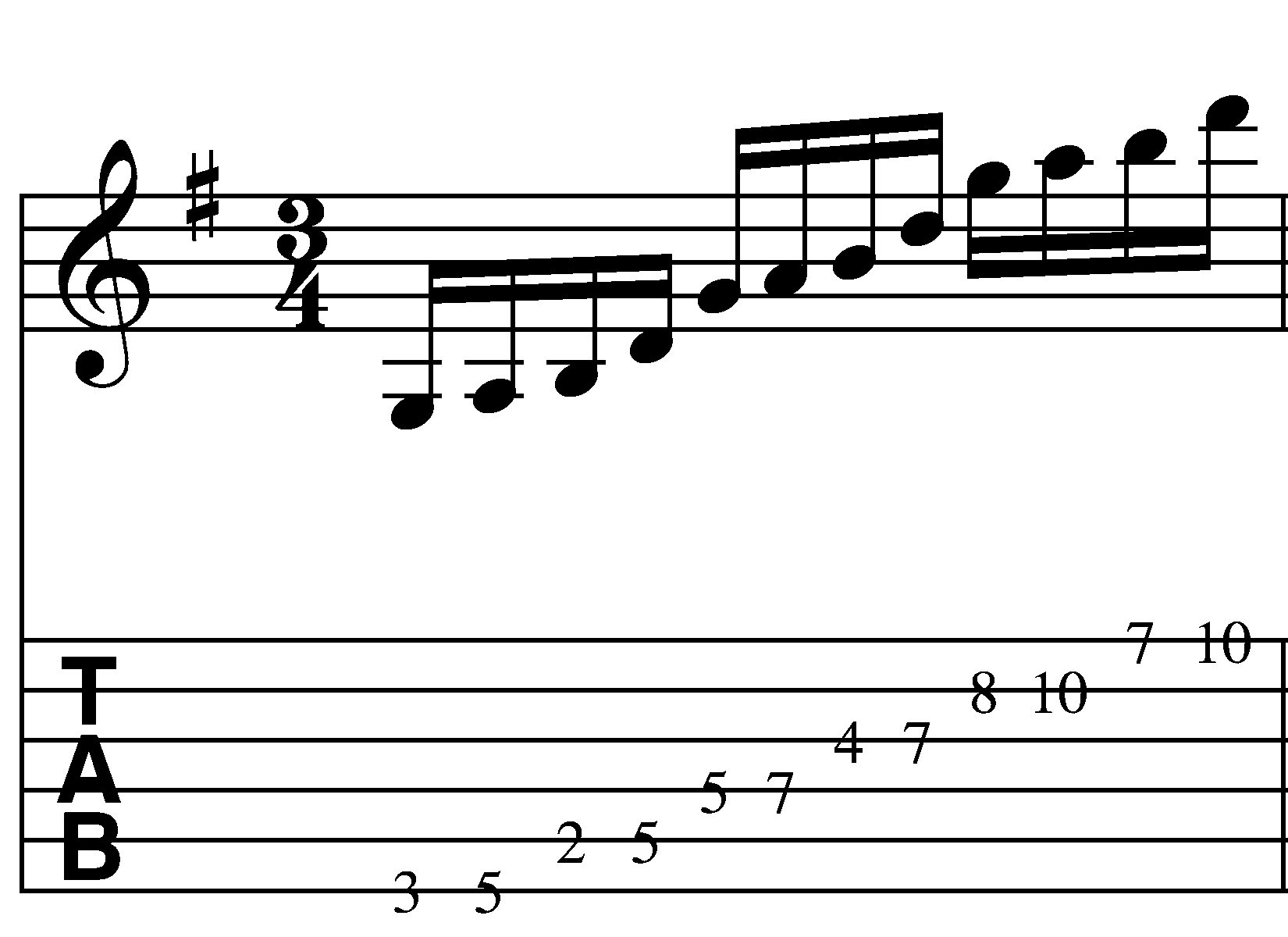
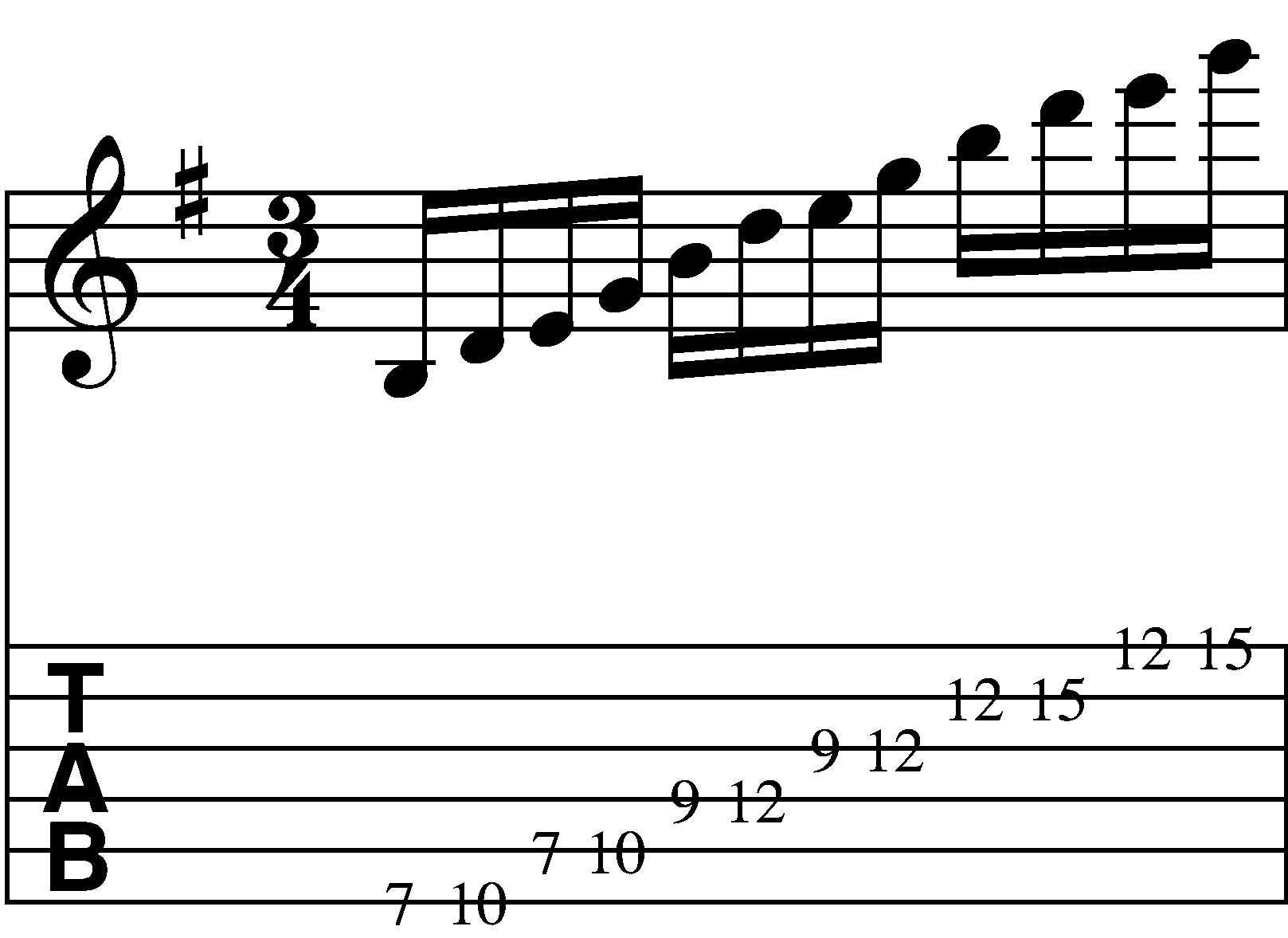
Playing two-string patterns in octaves moves the fretboard shape both horizontally and vertically (i.e. diagonally). Two-string diagonal playing can help with visualization as the same pattern is simply moved to the octave of the starting pitch.

.

To illustrate this – I’ll start with the following four-note shapes.  Use alternate picking for all of the following exercises.  With the exception of the first four notes which use open position, the rest of the patterns use the same fingering.

.

All of the following examples should be practiced with strict alternate picking or legato (i.e. using hammer-ons and pull offs) and (ideally) played over a chord to supply a harmonic context.

.

Some chords to try:

.

  • E minor or Em 7 chord 
  • C Major 7
  • G Major 7
  • F Major 7 
  • D minor 7 
  • A minor 7 or
  • whatever sounds good to you!

.

Here’s the 1st pattern moved in octaves.

.

.

Pattern # 2
.

.

Pattern # 3

.

.

Pattern # 4
.

.

Pattern # 5

.

.

Working with patterns

.

Note:

Pentatonic scales, or any kind of scale in general, are simply a tool in making music, but are not music in and of themselves.  The goal of this process is to use these shapes as a way to visualize sounds and then to be able to manipulate them in real-time.

.

Let’s generate a musical line using this approach. Here’s an idea in the style of Paul Gilbert.  I’m picking every note in the example – but you could use hammer-ons or pull offs for a more legato feel.  It’s played first with sextuplets and then slower at 16th notes to make the notes easier easier to hear.

.

.

.

The drums on this track are just a simple loop I pulled together for a song I was working on called Raga Jam.

.

.

While recorded at 105 bpm – the  mp3 can be downloaded and then slowed down or sped up to accommodate your tempo needs.  A number of applications will do this but if you’re looking for a recommendation –  I recommend Transcribe! by Seventh String Software.

.

There are several ideas here worth exploiting.

.

  • The initial pattern consisting of four notes, is played as sextuplets (groups of six).  Rhythmically, this adds a sense of tension that is absent in phrasing the group of four notes into a 1/16 note pattern.  This idea will be covered more in part two of this lesson.

.

In general, practice playing patterns in a variety of rhythms as you may find ideas you can use later.


  • The B on beat three breaks up the predictable note order a little.  It’s a small variation on the pattern that makes it sound a little less “patternish”.
  • The last five notes of the sextuplet break the four note melodic pattern.  This idea will be explored more in part 2. But in the meantime, here’s an initial fingering to get you going.  I’ve notated it as a group of 5 – But rhythmically it’s part of the sextuplet pattern above.

.

.

The use of the open E and A strings changes the overall fingering shape on the bottom, middle and top two strings which may make the lick more challenging to play.  

.

If you are having difficulty playing something melodically, take a close look at the fingering you’re using and see if it’s the most efficient one.

.

In the example below, I’ve taken the same notes and broken them up into melodic shapes that use the G, A and B pitches on the same string.  You will probably find this much easier to play.

.

Here’s a fingering variation of the above idea (watch the skip from G to B on the D string!)

..

.

.

Going a little further:

.

Sometimes patterns can lead us to unexpected melodic places.  Here,  in this approximation of an improvisation for example,

.

.

.

  • I’ve taken the initial E, G, A and B pattern shape and instead of moving it up a 1/2 step, (to accommodate the B/G string 3rds tuning), I kept the fingering shape the same.  This produces a whole tone shape on the B string that adds a melodic surprise.
  • I’ve then continued the whole tone idea to the high E string  – bringing in a C and then resolving it to B (The 7th fret B is missing in the tab but is on the notation line). The whole steps in the F#, G# and A# passage and the C, D and E passage have the same intervals as the G, A, B of the pentatonic scale.  Even though the G# clashes with the G in E minor – the line has enough of a melodic drive that it can work (as long as you resolve the idea  – in this case to a chord tone).

.

By understanding patterns, it becomes possible to  manipulate them and make them work for you.  In the next lesson we’ll play full pentatonic patterns on 2 string sets and bring in a few other ideas that will spice up your approaches

.

Tones:

.

Finally, for  those of you interested in the technical side of what I’m doing here are some screen shots of my set up. First the AU Lab rig:

.

.

Something that may be of  interest to you – I set Audio MIDI Setup to 88.2k for the DUET  – but run the LA Convolver speaker cabs at 44.1.  That way the audio conversion rate for the guitar signal stays higher but I can use things that run at 44.1 (like the audio player on the Generator 1 strip).

.

.

I’ve mentioned the AUAUDIO File Player on my AU lab posts – but it’s a cool plug-in.  Using it, I can bring in all kinds of samples or tracks and run them live with the guitar signal and record them with the click of the record button.  (It’s how all of these tracks are recorded btw – live into AU Lab).

There are two dirty sounds (I didn’t like my first tones so I re-recorded everything.  When I couldn’t find the first 5 audio files while typing this – I just went with the initial recordings since I didn’t have access to my guitar.)

.

Here’s the dirty side of the main tone (Tube screamer is set at 9%, 53% and 9% – BTW)

.
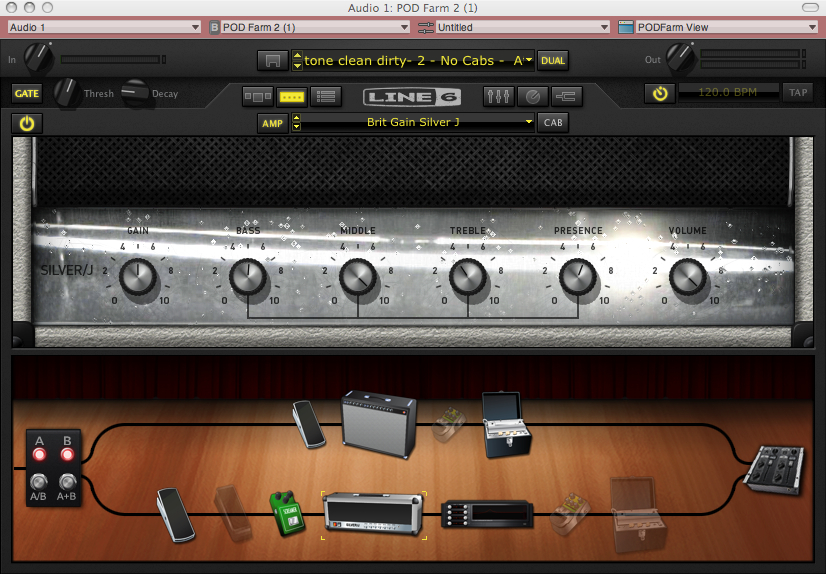
.

and the clean side:

.
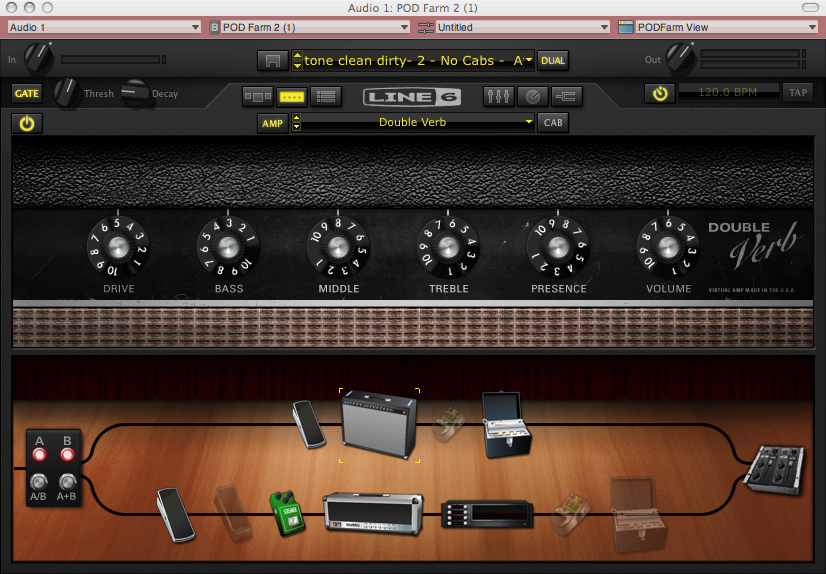
.

Tracks 1-4 are just my standard Marshall Who? settings

.

.

Part two will be up soon!! In the meantime,  if you like this approach, I have a book that includes this material you may be interested in that features this material and much more!

Minor Pent Front

is 100 + pages of licks and instruction and includes demonstrations and breakdowns of two-string fingerings, diagonal pentatonics, sweep picking pentatonics, pentatonic harmony and much more!  It’s available here.

.

Thanks for reading!

-SC

On “It is what it is”

I had a moment to catch up on some things this weekend, and returned a call from a friend of mine at CalArts.  We had a very nice conversation catching up and discussing Higher Education funding, trends, pedagogy and the like and she was kind enough to tell me this:

“You know, in a conversation we had once – you gave me some advice and told me that, ‘it is what it is’.  I thought about that a lot – and about how you’ve brought it up a number of times in our conversations – and it’s something I find myself coming back to as a mantra when I’m facing something difficult.”

She had asked me about where that mindset came from, and I’m sure it’s rooted in growing up in a working class small town in upstate New York.  Compared to many people around me I had it relatively easy.  My parents both worked hard – my dad taught middle school and my mom worked in a factory – and they owned the house we lived in. (A note: Despite a lot of nonsense talk generated in the media earlier in the year, as people living on an educator’s salary, we did not live high on the hog.  We burned wood for fuel (that we cut stacked and dried on our own), did all our own repairs and (for a while) raised animals for food. The two-story house I grew up in with a garage and a 2 story workshop on a 1/2 acre of land sold for well under 40k if that tells you anything about the economics of the region.)

Other people I knew had it really hard.  Farmers (and often their children) who worked from dawn to dusk with spouses working additional odd jobs just to make ends meet.   We had “valley runners” – a term of no endearment reserved for families who would relocate multiple times a year to stay one step ahead of the law.  I’d always see the kids in my classes; they’d show up for a couple of months and then be gone to the next county.  When I’d see them months, or years later, they had always changed for the worse.  They picked up a number of skills they needed to survive when you’re always on the run  (typically manipulation, but sometimes cons or petty theft), that were depressing enough for an adult to have to rely on to get by – much less a child.

Mainly though, I knew a lot of good people who worked hard and were often presented with really difficult situations.  And the response to those situations was to work through it.  I can’t count the number of times that I heard variations of, “No use crying about it – let’s get to work.”

For those of you who resonate with this sentiment, and have never read Marcus Aurelius’ Meditations, it might be worth a moment of your time.  One point Aurelius’ (and other Stoics like Epictetus) bring up repeatedly is the value of seeing things for what they are.  That often means removing the emotional issues associated with the matters at hand and trying to deal with them objectively. (Albert Ellis made an entire career out of this method of inquiry with his REBT (Rational Emotive Behavioral Therapy) approach).

.

Getting emotional about certain things (particularly difficult things) only adds to their difficultly.

.

In my world view, some things are simply facts andviewing those things as such makes it easier to see them for what they are.

.

For example:

2+2=4.

How do you feel about that? (or do you feel anything?)

It’s difficult to get emotionally invested in it because it’s merely a fact.

.

Now here’s the idea applied: where a student might hear, “You’re going to have to put a lot of time in to getting those sweep arpeggios down the way you want.” I hear “2+2=4”.  There’s no emotional involvement  and so there’s less to get tripped up on.

There are a million reasons to procrastinate, and generally only one or two to get something done.  If you’re facing something really daunting there’s a several part process I can share to help make it manageable.

.

Getting it done

.

  1. Know why you need to do what you’re doing. As Viktor Frankl once said, “He who has a why can bear almost any how”.
  2. Deal with problems individually.  Many problems are multi-tiered so break them down into individual components to make them easier to manage.
  3. See the problem for what it is.  Gain a scope of what it is you are trying to do and prioritize what has to happen to complete it.  (For example: If you’re trying to get better at sight-reading – you’re going to have to work on it a lot over a longer period of time.  If you’re trying to get two bars of a solo down – it will probably be a much shorter over-all time investment).
  4. Have milestones and a deadline.  Know what you’re going to complete by when.
  5. Prioritize and address what you can.  Don’t get hung up on big steps here, this stage is all about the specifics of each step (i.e. the grunt work).
  6. Reassess and return.  As milestones are reached verify your progress and start again.

.

I remember reading a David Lee Roth interview where he was talking about how having a drive was the only thing that was going to get you through endless vocal practicing in your bedroom.

There’s nothing glamorous in the work that goes into doing anything well, but it’s necessary to acquire the skills needed to do those things.

.

In other words, it is what it is.

.

Thanks for reading.

-SC

What’s wrong with playing “Flight of the Bumblebee” for a world speed record?

A lot actually, because if speed is the only tool at your disposal you’re not going to be a working craftsman (or craftswoman) for very long.

.

Guitar-squid, (a cool user-generated content guitar site I really like and recommend you check out), recently posted a link to a you-tube clip of of John Taylor trying to break a speed record by playing along with a sequence of Nikolai Rimsky-Korsakov’s Flight of the bumblebee at 600 bpm ( 11:48/12:26 in the video – note:  I think the math here is suspect – it may be 600 bpm if he’s counting it as 1/8th notes – but it sounds like 1/16ths at 250 bpm/300 bpm to me).

.

.

For sheer technical precision you can also see this attempt by Tiago Della Vega at the same song here at a much cleaner 320 bpm. (7:38 or so)

.

.

The Guitar-Squid post was asking the question of whether or not the performance was real or faked.  The real question however should probably be, other than the players themselves, does anyone care?

.

Flight of The Bumblebee

.

I’m not going to bag on either of these players because I respect the work that went into both renditions, but I am going to use this approach as a springboard for:

.

Why I think trying to set Guinness World Records for speed is a musical dead-end.

.

.

  • It’s not emotionally moving.  It’s hard for me to think of a worse piece of music to devote time developing than a solo guitar rendition of the main “melody” of Flight of the bumblebee.  It’s not a particularly memorable melody  and other than the initial exposure of – wow that’s fast – it doesn’t leave you with anything.

.

One reason these particular arrangements aren’t moving is because there’s nothing to contrast the velocity of notes against besides a number of earlier renditions of the same arrangement.  Let me use another analogy.  Say you take a commercial flight somewhere and have a window seat.  Soon you get to cruising height and look out above the peaceful clouds and it feels very calm.  You’re actually moving at over 500 mph but since there’s nothing to contrast it against,  it just seems like a “normal speed”.  If, however, you were to fly at that speed about 20 feet off the ground you’d probably die of fear – because when you saw how fast you were moving past other vehicles and identifiable landmarks, you would understand just how fast you’re going.  When you play quickly, it’s only quick compared to the slowest note you’re playing.  Otherwise, you’re just playing a lot of notes and it’s perceived as cruising speed by the audience.

.

  • It’s not musical.  Perhaps you disagree, and this would be why Flight of the Bumblebee is the number 1 song on your Itunes playlist. 😉 Other than musicians, practically no one listens to renditions of this song because (particularly as a solo guitar arrangement)  – it just isn’t a strong piece of music.

.

In contrast to this, Hendrix’s solo on All along the Watchtower is something I could sing start to finish right now.  Paco De Lucia can play a million notes with every one of them will leaving you breathless – and I’m sure that he could care less about how fast he could play Flight of The Bumblebee. In these examples, both players left me with something even after I stopped listening to the recording, because there’s real expression behind it.  It’s hard to be play a lot of notes with meaning, but it can be done and when it happens – it’s done by people who are playing a lot of notes to get somewhere very specific rather than just to impress you.   I’d point to the best moments of Yngwie or Scotty Anderson as one starting point and Shawn Lane, Allan Holdsworth or Guthrie Gowan as three guys on the more extreme end of the spectrum of note density who have something to say.

.

I’m not going to put all the fault on Rimsky-Korsakov either because the fault lies more in this particular arrangement and the parts people are leaving out as much as it is what they’re playing.  Below is a piano rendition by Maxim.  While it’s nowhere near the velocity of either of the guitar versions above, playing the harmonic component at the same time makes for a more nuanced (i.e.  to my ears – enjoyable ) rendition.

.

.

  • As a career, it’s not sustainable and it’s not going to get you a gig.  This is a little misleading.  You probably  can get a gig from this.  If you make a world record attempt at something like this and you have a news worthy hook (like being particularly young for the child prodigy angle, or physically impaired in some way for the overcoming obstacles angle (yes – this sounds particularly harsh – but believe me, the healthy middle class 22-year-old trying for the record will have great difficulty getting air time)),  you might be contacted to do a version for your regional morning show.  You’ll get to the studio at some inhumanly early hour and (in a best case scenario) get enough time to run the piece and answer some questions.   You’ll be replaced the next day by the local pie baker with an award-winning recipe or the local author with a new parenting book out.

.

If you do get gigs from it, they’ll be clinic type gigs where you play this and (just like the end of the first video) you’ll just getting people demanding that you play it faster.  Not “better” – just faster.  Because all this arrangement has going for it is velocity, and just like your news story will get bumped by other local news, your speed playing will get bumped by a cool extreme sports video or another video of someone wiping out trying to do a stunt.

.

I’ve mentioned some elements of this here and  here as well, but being known as a really good guitar player who has the ability to chop out when you need to will serve your career in a much greater capacity than being known as the player with just a lot of chops.

.

Please note:

I’m not bagging on having chops or trying to develop them (and to do so would be completely hypocritical in my case).    As a musician, you have to have enough ability to express yourself on your instrument and that requires technique.   But technique only exists to help serve the song and the musical moment.  Technique for its own sake is a musical dead-end. 

.

Bonus quiz:

.

Give yourself a B+ if you can name either of the names of the two guys playing the guitar videos above without looking them up.   If you can name either one two days from now without looking it up give yourself an A+.

..

Be the person people hit the rewind button for.

..
Marty Friedman once talked about how a really great solo is the one that you’d stop the recording for and rewind to hear again.

.

We remember things that touch us.  We remember things that move us in some way. We share those things with other people.  People that get excited about the things you do, are more likely to see you perform or seek you out and if you can move them at a show, you’ll see them again.  That’s how you build an audience – one rabid fan at a time.  If you touch people as a musician, you’ll be able to sustain an audience (and a career) a lot longer than someone who merely impresses them.

.

Thanks for reading!

.

-SC

.

ps – if you like this you may also like:

.

VISUALIZING VIDEO GAME LICKS OR AN INTRO TO SYMMETRICAL 12 TONE GUITAR PATTERNS

MAS MODELING!! POD FARM, POD HD, SCUFFHAM AMPS AND A WHOLE TONE LICK

MELVILLE, MADNESS AND PRACTICING – OR FINDING THE DEEPER LESSON PART 2

FINDING THE DEEPER LESSON

INSPIRATION VS. INTIMIDATION

KEEPING YOUR EGO OUT OF THE SONG’S WAY

.

SURVIVING THE GIG

A Lesson In Improvisation And Jargon From A Cooking Show

WARMING UP: FINGER EXERCISES, THE 3 T’S AND THE NECESSITY OF MISTAKES

BUILDING BLOCKS – OR MORE EXAMINATIONS OF A LAPTOP GUITAR SETUP

.

A QUICK LICK – AND A RIG DU JOUR UPDATE FROM HO CHI MINH CITY

“THE LIMITS OF MY LANGUAGE ARE THE LIMITS OF MY WORLD”

A BRIEF THOUGHT ABOUT MUSIC THEORY

.

Books:

LESSONS

.


Practicing:

MELVILLE, MADNESS AND PRACTICING – OR FINDING THE DEEPER LESSON PART 2

Some Useful Online Practice Tools

POSSESSION IS 9/10S OF THE LAW BUT PERCEPTION IS EVERYTHING OR PRACTICING PART VII

TESTING YOUR VOCABULARY OR PRACTICING PART VI

PRACTICE WHAT YOU PLAY OR PRACTICING PART V

.

DEFINITIONS AND DOCUMENTS OR PRACTICING PART IV

TENSION AND THE SODA CAN OR PRACTICING PART III

PROPER POSTURE IS REQUIRED FOR PROPER PERFORMANCE – PRACTICING PART II

PRACTICE MAKES BETTER AKA PRACTICING PART I

.